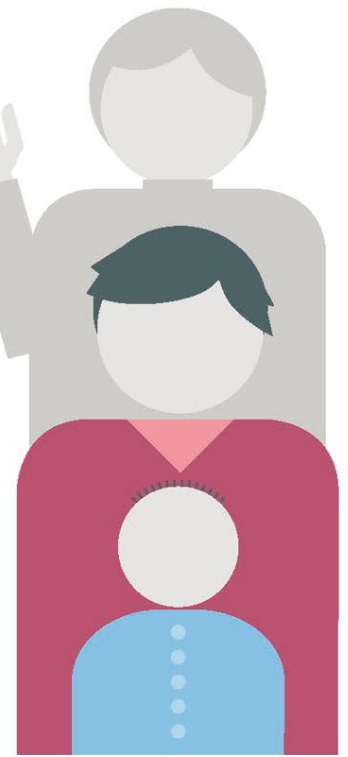
Instead of exploring the unconscious to shed light on the conscious mind, transactional analysis focuses on the three “ego states” of an individual’s personality
What is it?
Rather than asking the client questions about themselves, the therapist observes and analyzes how they interact. Then they help the client develop a strategy for operating from the adult ego state, rather than copying how their caregiver treated them when they were young (the parent ego state) or acting out how that treatment made them feel and behave as a child (the child ego state). Conflict occurs when a person operates simultaneously from different states, for instance, one part of their personality giving orders from their parent state and another part reacting defensively from their child state. Transactional analysis helps the client to recognize these three states and guides them toward using their adult state in all interactions. It helps the client communicate as they wish to, unhindered by patterns formed in childhood. The adult state is based in the present, and evaluates data from the child and parent states to draw a logical, intelligent conclusion that directs behavior.
PARENT Can be controlling and critical or nurturing and supportive
ADULT Makes rational choices in response to the present time
Both of these therapies are offshoots of Freudian psychoanalysis. The therapist uses empathy to understand the client’s unique perspective of life and create patterns of behavior that improve relationships.
What are they?
IN OBJECT RELATIONS, the therapist helps the client relinquish relationships from childhood and replace them with models of behavior appropriate to their adult life.
Both self psychology and object relations focus on experiences in a client’s early life as a way to understand and improve their adult relationships. The premise of self psychology is that children deprived of empathy and support in their early years cannot develop self-sufficiency and self-love as adults. The therapist fulfills the client’s urge to look to others to meet their needs, giving them the self-worth and self-awareness to carry into their own relationships. In object relations—the name for childhood relationships that the adult is repeating inappropriately—the aim is to use the empathy with the therapist as a platform for analyzing past interactions and emotions and applying new positive models of behavior.
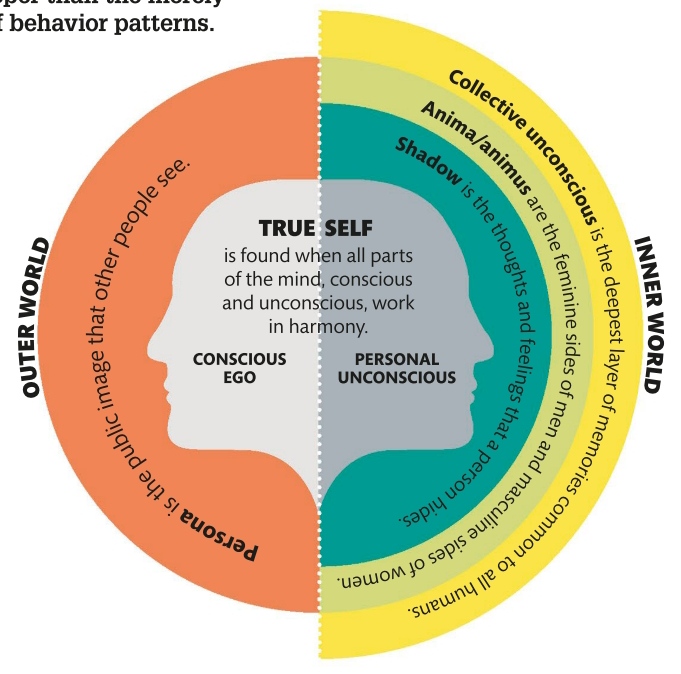
Carl Jung expanded Freud’s ideas—he thought the unconscious mind went far deeper than the merely personal and was at the core of behavior patterns.
What is it?
Like his colleague Sigmund Freud, Jung considered that psychological distress occurs when the conscious and unconscious parts of the mind are unbalanced. But Jung thought that personal memories were part of a much larger whole. Jung noticed that the same myths and symbols occur across the world, whatever the culture. He thought these must be the result of shared experience and knowledge of the human species, remembered by everyone as what he called the collective unconscious. These memories, in the deepest layer of the unconscious mind, take the form of archetypes—instantly recognizable symbols that shape behavioral patterns. The conscious ego is the public image that a person presents to the world. Its archetype is the persona, identifiable as a person being on their best behavior. The darker aspects of the mind that most people hide Jung called the shadow. Further archetypes are the anima (female traits in men) and the animus (male traits in women), which often clash with the conscious ego and the shadow. To find the true self, all the layers of a person’s personality need to work in harmony. Whereas psychoanalysis delves into the top layer of the client’s unconscious, Jungian therapists explore all the layers. Their role is to help the client use the archetypes to understand and change their own behavior. Jungian therapists use techniques such as dream analysis and word association to reveal where the inner archetypes collide with outer-world experiences. This process of analysis enables the client to understand which layers of their mind are in conflict, and then make positive changes to restore the balance. Like psychoanalysis, this therapy is a fascinating journey into the mind and can take years.
NEED TO KNOW
❯ Word association The client says whatever comes into their mind when the therapist presents them with a word.
❯ Extrovert Someone whose attention is directed toward the outside world and other people; outgoing, responsive, active (even reckless), decisive.
❯ Introvert Someone whose attention is directed inward to their own thoughts and feelings; shy, contemplative, reserved, self-absorbed, indecisive.
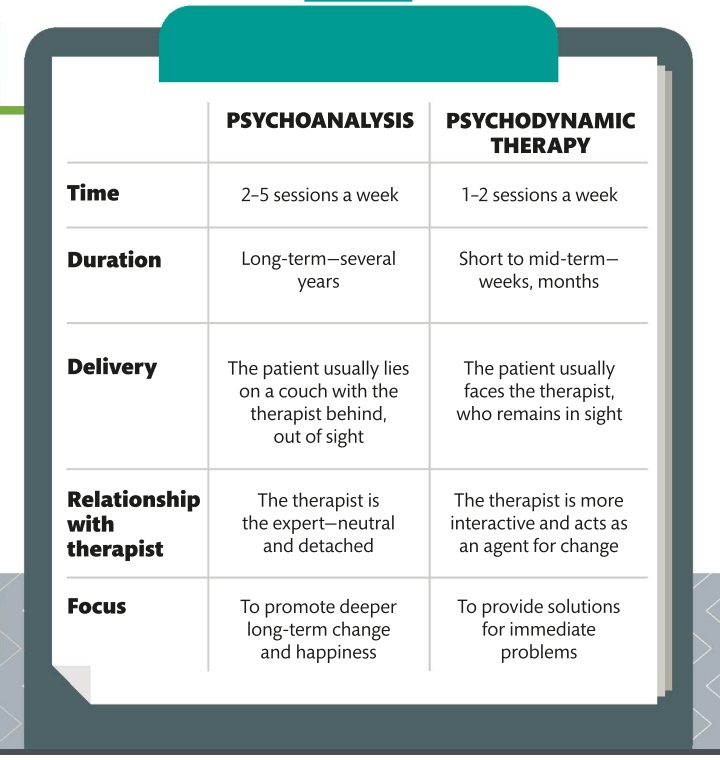
The purposes of psychoanalysis and psychodynamic therapy as specific methods are similar—to integrate the unconscious and conscious mind—but the depths of the processes differ.
What is it?
The founder of psychoanalysis, Sigmund Freud, developed his “talking therapy” after working in Paris with Jean-Martin Charcot, a neurologist who discovered that his patients’ symptoms lessened after they talked about past traumas. In the early 1900s, Freud established techniques such as free association, dream analysis, and resistance analysis, still widely used today. Silences in therapy are often as meaningful as what is said. All psychoanalysis assumes that psychological problems stem from the unconscious; that unresolved issues or repressed trauma hidden in the unconscious mind cause symptoms such as anxiety and depression; and that treatment can raise these conflicts to the surface so the client can resolve them.Psychoanalysis often takes years, deconstructing and rebuilding the client’s entire belief system. It benefits those who are robust of mind, with an outwardly successful life, but are aware of long-term worries or torments, such as an inability to stay in a relationship. Psychodynamic therapy is less intense and focuses on present-day problems, such as a phobia or anxiety.
INTERPRETATION The therapist stays relatively quiet, reading between the lines of what the client says to help them overcome subconscious limitations.
THE THERAPIST The analyst listens but does not judge so that the client need not fear saying something shocking, illogical, or silly.
An umbrella term for all analytic therapies, psychodynamic therapy is also a method in itself. Analytic therapies follow the root aim of Sigmund Freud—to bring the unconscious mind into consciousness.
What are they?
The principle behind the psychodynamic approach is that the unconscious mind harbors feelings and memories, particularly from childhood, that shape thought patterns and behavior in adulthood. The therapist helps the client to talk about these often unwanted feelings and so draw them into the conscious mind. Burying unpleasant memories results in anxiety, depression, and phobias, and bringing them into the light of day gives the client the tools to resolve their psychological problems as an adult. Acknowledging buried memories helps the client to identify, confront, and ultimately change the defense mechanisms they have developed to avoid experiencing painful realities or facing unpleasant facts and unwanted thoughts. These (usually unconscious) mental strategies include denial (refusal to accept reality), repression (burying an unwanted thought or feeling),compartmentalization (mentally separating conflicting emotions or beliefs), reaction formation (acting contrarily to how the person feels), and rationalization (self-justifying an unacceptable behavior). In all psychodynamic therapies, the therapist listens to the client talking about their conscious problems while looking for patterns, behaviors, and emotions that hint at their subconscious feelings. The goal is to enable the client to deal positively with inner conflicts.
The session
All forms of psychodynamic therapy take place in a familiar, safe, respectful, nonjudgmental environment. Sessions are usually one-on-one and last 50–60 minutes.
DREAM ANALYSIS A means of accessing the unconscious, analyzing dreams can reveal hidden emotions, motivations, and associations.
RESISTANCE ANALYSIS Showing the client what, how, and why they are resisting in thoughts, ideas, or emotions can explain defense mechanisms.
FREUDIAN SLIP The client reveals what is really on their mind (their unconscious thought) by saying something they did not intend to.
THE CLIENT In traditional Freudian analysis, the client lies on a couch and cannot see the therapist. In more interactive forms, the client can see the therapist.
FREE ASSOCIATION The client talks spontaneously about whatever comes to mind, without editing what they say or attempting to give a linear structure. True thoughts and feelings emerge.
TRANSFERENCE The client’s unconscious conflicts surface in their relationship with the therapist. They redirect emotions and feelings, often from childhood, from themselves to the therapist.
Psychotherapies use a range of strategies to help people modify the thoughts, actions, and emotions that are harmful to their physical or mental health, and also to promote improved self-awareness.
Therapeutic action
Psychotherapies are often referred to as “talking therapies” because communication with a therapist is the key agent for change. The aim is to manage adversity; maximize potential; clarify thought; provide support, encouragement, and accountability; and cultivate peace of mind and depth of consciousness. Therapy seeks to improve a client’s understanding of themselves, others, and their relational dynamics. It may also be used to define personal goals and organize behavior into achievable systems.Psychotherapy can uncover old wounds and help a client understand how past negative experiences currently affect them in unhealthy ways. It can also help them change the ways they react to external stimuli, and how they internally process and interpret experiences, allowing them to move beyond current states of thought and behavior. Therapy can empower a client to explore their psyche and spiritual self and to achieve more satisfaction in their lives. It is designed to increase self-acceptance and self-confidence, and to diminish unhelpful negative or critical thinking.
Types of therapy
Therapeutic approaches and methods are as diverse and creative as the mind itself, and psychological progress can be achieved in many ways. The main types of therapy are categorized according to the philosophy on which they are based. Methods of delivery vary and might comprise individual sessions, group therapy, or online guidance and task completion.
PSYCHOANALYTICAL AND PSYCHODYNAMIC
These approaches are based on the concept that unconscious beliefs underlie maladaptive thoughts and behaviors. Gaining an insight into these beliefs can explain and relieve problems. The therapist and client also work to develop healthier ways of dealing with these previously repressed feelings, and to foster the client’s inner resources and capability to manage their troubles.
COGNITIVE AND BEHAVIORAL
These therapies stem from the belief that it is not the things that happen to a person that upset them, but it is the way they think about the things that happen to them, and the meaning that they assign to their experience, that upsets them. Cognitive and behavioral therapies show people that they hold the power to change the way they think about things, and the way they react and behave as a result of these thoughts.
HUMANISTIC
This approach prioritizes listening over observing. To this end, therapists use open-ended questions and qualitative tools to study personality and encourage the client to explore their own thoughts, emotions, and feelings. The therapist sees the client as inherently capable of and responsible for achieving personal growth, and not as a set of flawed unconscious drives.
SYSTEMIC
The “systems” approach enables people to work out issues arising from the interplay of relationships. Therapists can gain deeper understanding of problems by working with everyone in a system (family or group), hearing differing points of view, and watching people interact. This allows people to explore their identity as part of a larger group, and also has the advantage of strengthening their community network—useful for issues that worsen with isolation, such as addiction.
ROLE OF MEDICINE The brain and behavior exert a continual reciprocal influence on one another. Medication can alter brain chemistry to improve mood, concentration, memory, and motivation; increase energy; and decrease anxiety. This improved functioning can alleviate the symptoms of mental illness and enable positive behavioral change.
GROUP THERAPIES
12-step program The 12-step model is a group therapy approach specifically used to tackle addictions (such as to drugs, alcohol, or sex), and compulsive behaviors like eating disorders. An essential part of overcoming addictions or compulsions is support from and connection to a community. Group therapy reduces isolation and associated shame, shows people that they are not alone in their struggle, and provides a network for support and accountability.
SHARING EXPERIENCES in a group allows people to give and receive support and feedback, and to pool strategies for change
Self-help groups These support groups focus on self-disclosure. Whereas some groups have a professional lead, others are peer-led. Shared experience is valued over professional knowledge.
28% of people in the UK have consulted a psychotherapist
Scientific research increasingly links our mental health with physical health, and psychologists in this field have developed tools for assessing, and improving, our mind‑body connection.
Making the connection
Health psychologists explore how a person’s state of mind (someone, for example, suffering from the day-to-day experience of stress) affects their body, and they find ways to improve a person’s physical health by helping them change the way they think. This may involve changing their lifestyle, social network, and attitude and perceptions. Health psychologists work in a variety of roles—in the community to help vulnerable and sick people, advising public authorities on health policy, and in hospitals.When assessing an individual, the psychologist looks at all the factors that may contribute to an illness or a problem, and devises a strategy for change. This might include identifying behaviors that damage a person’s health, such as smoking or poor diet; encouraging positive behavior such as exercise, a healthy diet, oral hygiene, health checks, and self-examination; improving sleep practices; and scheduling preventive medical screenings. Health psychologists may also promote cognitive behavior changes that give the person more control over their life.
Managing health conditions
Health psychologists can help when people are diagnosed with conditions that require hospitalization or prolonged treatment, such as cancer, or alcohol or drug addiction. The psychologist will assess what can be changed to help improve the person’s ability to cope mentally with physical pain or discomfort and the potentially life-changing impact of their condition. A diverse range of strategies are also employed to aid rehabilitation. On the psychological front, health psychologists work to build and maintain a patient’s self-esteem and motivation, training them to think more positively. Rallying the support of friends, family, and other health professionals is part of this process. On the physical side, they may implement alternative therapies, such as yoga and acupuncture, to enhance a patient’s well-being, help control cravings, or overcome depression. They may also recommend regular exercise, a nutrition program, or vitamin therapy.
Biopsychosocial model
Health psychologists use this model to assess three different forces meshing like a honeycomb in a person’s life: biological (the impact of physical traits); psychological (thought patterns and attitudes); and social (the influence of life events and other people). Psychologists recognize that these three forces can have either a positive effect or a negative effect on health and well-being.
FORCES FOR HEALTH
BIOLOGICAL A healthy diet, exercise, a life free from addictions, time to relax, and no genetic predisposition to illness.
PSYCHOLOGICAL Stress management, positive thoughts, resilience, mental discipline, and giving and receiving love.
SOCIAL The support of social groups such as friends, family, and religious or other communities, along with access to medical care and health education.
FORCES AGAINST HEALTH
PSYCHOLOGICAL Stress; anxiety; poor coping skills; negative thoughts; and pessimistic, suspicious, or overly aggressive personality.
BIOLOGICAL Poor diet, a genetic predisposition to illness, smoking, pollution, and excessive alcohol or drug
SOCIAL Loneliness; poverty; exploitation; and exposure to violence, abuse, or relationship trauma.
RATING MENTAL HEALTH
When a formal assessment is needed, psychologists use a questionnaire to rate or measure an individual’s state of mind, differentiating between psychological health and emotional well-being.
Psychological health questions
❯ Mood Is your mood generally positive?
❯ Positive relationships Do you have friends or positive emotional ties?
❯ Cognitive function Can you properly think and process information?
Emotional well-being questions
❯ Anxiety Do you suffer from anxiety?
❯ Depression Are you depressed?
❯ Control Do you feel you have lost control or cannot control your feelings?
HOW STRESS AFFECTS THE BODY
Stress is nature’s way of alerting people to danger, putting their bodies into primitive “fight-or-flight” mode . The brain produces a cocktail of chemicals in response to stress, triggering changes throughout the body.
NERVOUS SYSTEM Headaches, irritability, nervousness, heightened sensitivity
CARDIOVASCULAR SYSTEM Fast heartbeat, raised blood pressure
RESPIRATORY SYSTEM Rapid, shallow breathing as muscles tense
GASTROINTESTINAL SYSTEM Diarrhea, nausea, constipation, stomach pain, heartburn
MUSCULOSKELETAL SYSTEM Muscle aches and pains, especially in neck, shoulders, and back
REPRODUCTIVE SYSTEM In women: irregular periods, reduced libido; in men: impotence
Psychologists working in the area of health aim to improve the mental and associated physical health of individuals, specific groups, and the wider population. This involves devising and delivering therapies to prevent and treat mental disorders, and to promote general wellness. They also play a role in evaluating how therapies improve health and which are the most effective. This influences the way psychological treatments are delivered at both the individual and public level.
Roles of a psychologist
Whether working independently, as part of an interdisciplinary health-care team, or in a research institution, psychologists are concerned with improving mental health and general well-being. Their different roles reflect the varied ways of achieving this goal for individuals or groups.
Health psychologist
What do they specialize in? These specialists look at how people deal with illness and the psychological factors that influence their health. They may research and deliver strategies to improve health and prevent disease, for example, promoting weight loss or stopping smoking, or may help individuals manage specific illnesses such as cancer or diabetes.
Who would benefit from their help?
❯ Chronically ill patients needing help adjusting to a serious illness or managing pain.
❯ Population groups needing lifestyle advice to prevent disease.
❯ Health-care providers wanting to know how to improve their services.
❯ Patient groups such as diabetics, who need advice to help them manage their condition.
Where would you find them?
Hospitals, community health settings, public health departments, local authorities, research institutions.
Qualifications
Doctoral level of education, followed by practical training, and continuing professional development.
Clinical psychologist
What do they specialize in?
These psychologists help people to deal with mental and physical health issues such as anxiety, addiction, depression, and relationship issues. After clinically assessing an individual using tests, discussion, or observation, they will provide appropriate therapy.
Who would benefit from their help?
❯ People with anxiety or depression in need of individual or group therapy sessions.
❯ Children with learning difficulties or behavior problems.
❯ Substance abusers who need help to tackle their addiction.
❯ PTSD sufferers in need of therapy to overcome past traumatic events and experiences.
Where would you find them?
Hospitals, community mental health teams, health centers, social services, schools, private practice.
Qualifications
Doctorate in clinical psychology.
Counseling psychologist
What do they specialize in?
These specialists help people facing difficult life issues, such as bereavement or domestic violence, as well as those with mental health disorders. They build a strong client relationship to effect change, and may also undergo therapy to inform their practice.
❯ Children experiencing social, emotional, or behavioral problems, or who have suffered any type of abuse.
❯ Sufferers of stress who can be helped to address underlying problems.
❯ Bereaved individuals needing emotional support and guidance.
Where would you find them?
Hospitals, community mental health teams, health centers, social services, industry, prisons, schools.
Qualifications
Doctoral level of education, followed by practical training, and continuing professional development.
PSYCHOEDUCATION
Increasing people’s awareness of living with mental health issues has become a key part of the therapeutic process. Whether delivered individually, in groups, or electronically via the Internet, psychoeducation helps those with mental disorders better understand their condition and the treatments, and also helps their families, friends, and caregivers provide more effective support. Having detailed information allows people to take better control of their lives and take positive steps to deal with their symptoms. It also improves a person’s compliance with treatment and can play a role in reducing the stigma often associated with mental health disorders.
WHO CAN PROVIDE TREATMENT?
Many mental health specialists can deliver psychological assessments, therapies, and counseling, but only some can prescribe medications to treat disorders.
Psychologists These professionals perform psychological assessments and deliver a range of talking or behavioral therapies, depending on the needs of the individual or group.
Psychiatrists These are medical doctors who specialize in the treatment of mental disorders. They are licensed to prescribe psychiatric drugs as part of a patient’s treatment.
General medical professionals Doctors (GPs and hospital consultants) and advanced psychiatric nurses can prescribe drugs or other therapies.
Other mental health specialists Social workers, psychiatric nurses, and counselors may deliver therapy alone or as part of a mental health team.
More than 75% of GP appointments in the US are attributed to issues related to stress and anxiety







 Vnotes Education