Data warehousing

The process of data warehousing involves information from a company’s internal system, such as invoices and sales logs, as well as data from outside sources, being filed away in an electronic vault.

How it works

The data warehouse is a repository that holds the company’s sales and operational history, as well as relevant economic and trade information from other sources. The data goes through three stages before it is stored in the warehouse, which makes it usable for analytical purposes. Once stored, the data may be accessed by all areas of a company—from accounts and operations to sales and marketing.The data is often used to assess beliefs and intuitions about the business. For example, the marketing manager of a power tools company might presume that 25–35-year-old men are more likely to purchase their products than women in the same age bracket. The manager would test this belief by analyzing sales data and customer records accessed from the data warehouse.

Warehousing process

The data stored is regularly updated. When the business requires information from the warehouse, it is transformed into an accessible format and analyzed using software tools.

Tapping data sources The information a company collects includes online transaction processing (OLTP) data, historical data, and data from external sources.

OLTP Includes
transactions such as sales and
refunds recorded via OLTP

HISTORICAL DATA
Repository of past sales information

EXTERNAL DATA
Includes
government statistics on business

EXTRACT, LOAD,
TRANSFORM (ELT)

Staging data The ELT process converts raw data into a usable format.

USABLE FORMAT

USABLE FORMAT

Storing data The data is stored in three sections: metadata, summary data, and raw data.

  • METADATA Information relating to the data itself
  • SUMMARY DATABusiness activity information
  • RAW DATA The original form of the information

Accessing data Using software, the data can be analyzed and retrieved in three ways: via online analytical processing (OLAP), reporting tools, and data mining.

  • OLAP Accesses data to answer specific questions
  • REPORTING TOOLS Presents data as tables or graphs
  • DATA MINING Finds detailedpatterns in data for analysis

WHO USES THE DATA WAREHOUSE?

The key departments of a company can access the data warehouse to find out how they are performing. The method in which the data is formatted and stored makes it possible for them to seek answers to questions relevant to them. Typical questions various departments might ask include:

FINANCE “What was profit
margin on product sold in a region?”

MARKETING “How did online ad compare to poster ad campaign?”

SALES “What are average sales of product by region?”

HUMAN RESOURCES “How much have we spent on contract staff this year?”

Information management

Monitoring the marketplace and making sense of the vast quantities of data available has become a priority for businesses; the data is crucial for digital marketing, which is taking on increasingly sophisticated forms. Most businesses have a system in place for managing information—and the most successful ones use data not only to monitor day-to-day performance at every level, but to predict future outcomes and plan accordingly.

External

Outside the business, data flows in from production, supply chain, sales outlets, partners, and customers.

Production

Supply Chain

Sales outlets

Legal system The legal system ensures the use of data adheres to privacy and other laws.

Partner

Customer

Internal

Operations

Finance

Human Resources

Marketing and IT The marketing and IT departments are at the center of information management. They are responsible for collecting and analyzing data, and then reporting their findings to executives.

  • Analysis
  • Forecast

Executives


TRANSFORMING DATA INTO DECISIONS

With relevant data easily accessible a business can identify its strengths and weaknesses in order to improve its processes and operations, as well as its customer relationships.

Source raw data Gather customer data.

Store information Store data via data warehousing.

Access knowledge Retrieve data with business intelligence tool.

Gain insight Examine data using business analytics.

Make decisions Plan and budget for future outcome.

7%
of organizations employ a chief digital officer

Intellectual capital

The knowledge within a company that is used to improve business performance is known as its intellectual capital.

How it works

Every business has capital, which refers to the physical, tangible assets that appear on the balance sheet of its financial statements. A business also has
intellectual capital—the knowledge and skills inside the company. This collective knowhow is hard to quantify and measure, but it is essential to a company’s ability to generate revenue. For instance, management must provide training and a handover period for new staff so that human capital does not go down when people leave the company, taking their expertise with them. Management academics have identified three main kinds of intellectual capital: human, structural, and customer.

Human capital

The combined talents of the staff and
T I executives employed by the business. It includes skills and abilities, drive, creativity, and innovativeness, all of which can be quite hard to measure.

  • Top talent
  • Human intellect
  • Volume of practical experience

Customer capital

Goodwill developed between a company and its customers, reflected in customer loyalty to the business and its products. This relational capital can be extended to suppliers, but is very hard to quantify.

  • External links
  • Market relationship
  • How long relationship last

Structural capital

The support structures developed and held by the company, including its own software, databases and other information systems, patents, copyrights, and trademarks. Structural capital is non-physical, so it can be hard to assess.

  • Organizational routine
  • Innovation
  • Internal link

MEASURING INTELLECTUAL CAPITAL

Various different methods have been developed to quantify and measure a company’s intellectual capital.

Watson Wyatt index A survey conducted every two years in public companies to assess the value of human capital and HR practices.

Intellectual capital monitor Matrix that measures the past effects, present power, and future potential of the intellectual capital in a company.

FIVA Framework of intangible value areas (FIVA): an eight-step system used to calculate the worth of a company’s intellectual capital.

Knowledge capital scorecard Method developed by New York University professor Baruch Lev to rate a company’s intellectual capital and assess its contribution to a company’s success.

NEED TO KNOW

Strategic capital A company’s knowledge of its market and the business model needed for success

Intellectual property Creations or inventions that are legally recognized as belonging to a particular entity or individual on a balance sheet

Intangible capital All knowledge assets belonging to a business or organization; can be audited under various systems

“The only irreplaceable capital an organization possesses is the knowledge and ability of
its people.”

Andrew Carnegie

Customer retention

Existing customers help businesses generate the majority of profit and growth through making additional sales and referrals, and so retaining these customers is a high priority for marketers.

Measure customer retention level Track how many customers repeat purchase or buy more products.

How it works

There are two stages to the process of customer retention: measuring the current rate of retention, and applying strategies to manage and improve it.
Practices include identifying the most valuable customers and nurturing relationships with them. The least valuable or most costly customers may be dropped if they show little development potential.

Identify satisfied customers

Customer referral Measure the number of referrals an individual customer generates.

Loyalty Pinpoint customers who are active in the brand’s loyalty program.

Identify the dissatisfied

Defection Find out why certain customers have left and which competitor they have gone to.

Complaint analysis Examine written customer complaints and call-center records.

Introduce retention improvement strategy

Early warning systems Anticipate any problems and alert customers in advance.

Recovery programs Apologize for any mistakes and make amends to woo dissatisfied customers back.

Customer feedback surveys Listen to customers and identify people at risk of defecting.

Loyalty programs Reward customers with improved incentives for staying loyal.

Boost customer service service
Offer employees incentives to build customer relations.

Monitor and measure by analyzing

Customer satisfaction Assess rate of customer complaints and recommendations.

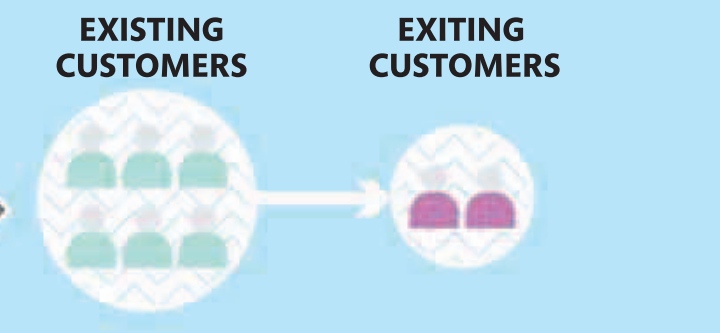
Attrition rate Calculate the number of customers retained (existing), lost (exiting), or gained in a given period.

Revenue targets Measure revenue targets against cost of customer retention efforts.

Upsell and cross-sell leads Identify customers who may buy larger products, or related items.

Net promoter score ® Use management tool to gauge how likely a customer is to recommend company to others.

Customer retention savings Calculate savings made in marketing spend by retaining existing customers.

TOP FIVE REASONS FOR LOSING A CUSTOMER

Senses indifference from provider

Dissatisfied with product or service

Unhappy with price

Lured by competition

Natural attrition (death, relocation)

NEED TO KNOW

Customer lifetime value (CLV) Measure of the amount customer will contribute to company revenue in the long term

Customer retention rate (CRR) The number of customers retained over a given period, expressed as a percentage

Customer acquisition cost (CAC) The amount company spends to gain a customer; also called cost of customer acquisition (COCA)

Lead conversion

The process of turning a customer’s interest into a sale is called lead conversion. The task requires not only a sales pitch to promote the product or service, but also an approach tailored to the customer.

How it works

Sales and marketing departments are responsible for generating sales income for a company. The first step is to locate or identify potential customers—lead generation. The second step is to make contact with those potential customers and entice or persuade them to buy—lead conversion. A sales pitch is used to convert
leads into customers. However, nowadays the stereotypical spiel delivered by an overzealous salesperson has been largely replaced by more sophisticated tactics, such as live chat on shopping websites, which inform customers and invite them to participate in a dialogue, rather than simply pestering them.

Raw lead Potential customer—
perhaps a website visitor, or a suitable person who can be approached by cold-callingq

Suspect Raw leads show their interest by remaining on website or by not ending phone conversation with cold-caller.

Prospect One step away from becoming a customer, prospects need a final enticement to convince them to buy the product.

Inactive Prospect isn’t ready to buy immediately, but shows enough interest to suggest they might buy in the future.

Customer Raw lead has committed to buy; focus is now on retaining the customer and enticing them to make repeat purchases.

Dead lead Lead will not convert, but may be worth trying to revive in future.

Online lead conversion

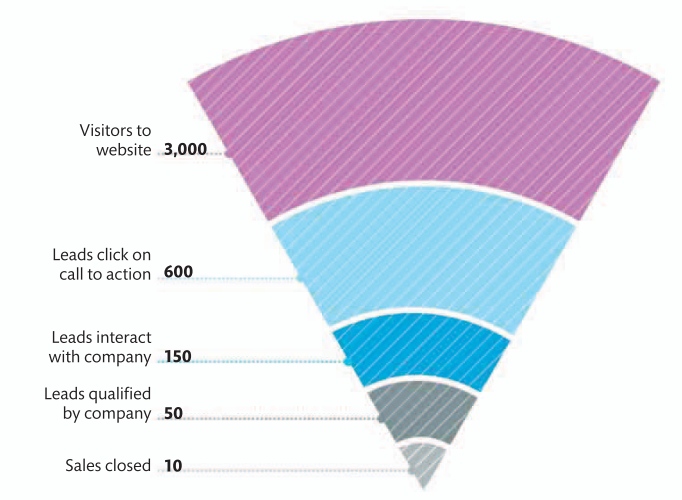
A strategy is required for steering website visitors through every step of the lead-converting process. It is often presented as a funnel. Once visitors have arrived at a website, they are enticed to click on a “call to action” (CTA) button, which takes them farther into the funnel.

THREE CLASSIC SALES PITCHES

High concept Catchy introduction that captures the vision or key idea of a product or business; intended to grab attention and interest

Elevator Short summary (under a minute long) that explains the why, what, and how of a business or product

20-minute deck Presentation that explains the product or business in detail; how it can serve the need a prospective customer may have

NEED TO KNOW

Lead scoring System used to measure the readiness of leads for conversion

Sales pipeline Visual tracking of the number of leads, suspects, and prospects at each stage in order to monitor sales process

Lead nurturing Informal contact with a lead designed to gradually win them over as a customer

Cost per touch Measurement of the cost of sales labor each time a lead is “touched” (contacted)

Lead generation

For a business to grow, one of its basic goals is to acquire new customers. Lead generation is the strategy it uses to locate, target, and nurture leads (potential customers).

How it works

The purpose of generating leads is to find consumers who may need or want to buy the product a business is selling. Sales teams do not want to waste resources on people who have no interest in the product in the first place, so the process of lead generation helps to define and capture the potential customers who seem most inclined to become actual customers—known as high-quality leads. To generate leads, marketing and sales departments typically collaborate on a campaign, offline or online, designed to identify and recruit promising customer prospects. Acquiring contact information is the first part of the process. Converting leads into sales is the next step.

Lead-generation process

Generating leads is a multi-step process that involves sales, marketing, and customer service teams working together to plan, design, produce, test, and refine a campaign.

Plan the approach Set goals and parameters, including expected return on investment (ROI) and number and quality of leads.

  • REVIEW OBJECTIVESCheck that they are realistic;
    compare with previous efforts.
  • PLANNING Ensure that sales, marketing, and customer service are working together.
  • AUDIT Assess current lead generation.
  • SYSTEMATIZE Integrate customer relationship management (CRM) software to manage the leads.

Identify target customer Define the characteristics of the customer the business is aiming to capture in as much detail as possible.

Design campaign Craft a multi-channel message to entice the lead to opt in and give contact information.

  • BIG IDEA Devise a compelling message to engage and entice leads.
  • RESEARCH A certain which media and touch point are most effective.

Produce campaign Create and deliver materials for each medium involved in the campaign.

  • SEO/PPC Integrate search engine optimization (SEO) efforts and pay-per-click spend
  • EMAIL BLASTS Include a benefit for the recipient and a call to action
  • TELEMARKETING Review key message and call script with customer service team.
  • Trade show invite potential lead to visit the company and meet face to face.
  • ADVERTISING Generate broad interest with ads on selected media.

Test campaign Monitor the initial hours and days of the campaign and make any corrections that are needed.

Measure Track and measure the response from the various campaign activities to gauge effectiveness.

  • RESPONSE RATES Tally how many leads have been generated so far.
  • QUALIFIED LEADS Determine percentage of initial contacts with purchase capability.
  • CONVERSION RATES Calculate percentage of web visitors converted to leads.
  • ANALYZE PERFORMANCE Identify adjustments needed to keep campaign on track.

Refine Fine-tune the filtering process to ensure that leads being generated are high quality and likely to buy.

B2B LEAD GENERATION

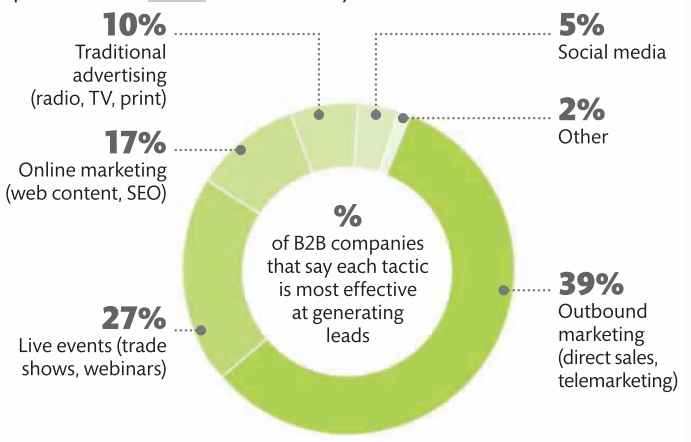
Most businesses selling to other businesses (B2B) identify lead generation as one of their most important digital marketing priorities. But which tactics do they find most effective?

TOP FIVE STRATEGIES FOR LEAD GENERATION

Create content such as a viral video or a newsworthy business report that takes leads to a sign-up page.

Use both online and offline channels, as most customers will respond to just one channel.

the customer touchpoint— the point at which a customer comes into contact with the product—before, during, and after purchase. Touchpoints may range from online reviews to billing.

Tailor the call to action to the channel, such as inviting trade show visitors to enter a competition.

Design effective opt-in web forms to capture data, such as asking customers to sign up for updates.

NEED TO KNOW

Owned media Channel owned
by a business, such as a website, blog, or social media profile

Attention, interest, desire, action (AIDA) Model for effective marketing messages

Cost per lead (CPL) Amount it costs the company to acquire one potential customer

Branding and rebranding

A brand is defined by the characteristics that mark a particular product. Branding is used to communicate a product’s qualities to a consumer, and create a lasting bond between supplier and customer.

How it works

When a supplier develops a brand, it creates a defined set of values, expressed in product imagery, colors, logo, slogan, jingles, promotional imagery, and association with high-profile individuals or characters. The brand works for both the supplier and the customer, aiming to eliminate uncertainty and risk and to convey key attributes. Social media helps to promote brands—for example, 29 percent of Facebook users follow a brand and 58 percent have “liked” a brand.

The branding cycle

There are typical stages to branding a product. In order to rebrand (redevelop) a product, the supplier starts over at the beginning.

Develop the concept Marketer focuses on positioning (where brand sits among competition in terms of function and look) and building a consistent and clear personality.

Choose brand personality

Sincere Down to earth, honest, kind, thoughtful

Rugged Tough, strong, outdoorsy, masculine

Sophisticated Exclusive, romantic, elegant

Bold Carefree, spirited, youthful

Competent Reliable, intelligent, authentic, successful

Apply marketing mix

  • Product
  • Price
  • Promotion
  • Place

Apply promotion mix

  • Brand name
  • Tagline
  • Design and packaging
  • Audiovisual elements

The consumer

  • Physical needs Assert product’s usefulness
  • Psychological needs Make brand alluring
  • Buying power Use brand values to optimize sales

Research Is it time for a
rebrand to make
product more appealing?

Brand audit

Audit passed

Rebrand

NEED TO KNOW

Brand equity Power of a well-respected brand to generate more sales than the competition

Brandwidth Measure of the effectiveness with which a brand connects across a wide range of consumers

Brand architecture Overarching plan to develop one or more brands and create a hierarchy

Business development

The overall goal of sales and marketing teams is to generate customer contact and convert it into revenue. This is the core of business development, and it involves a continual process of drawing in potential customers, enticing them to purchase, and keeping them engaged. During this process, marketers and sales people use a range of strategies and channels to attract customers and to earn their long-term commitment to a brand and product.

Collaborative process

Marketing departments generate brand identity while sales teams do the selling. Working together, they aim to take potential customers on a journey from brand awareness to repeat sales, communicating the message through various channels.

Build brand awareness Target customer groups with content and/or ad campaigns to inform them about the brand and its values. This will lay the foundation for a long-term relationship.

Generate leads Use a combination of inbound and outbound marketing strategies to entice potential customers to seek out the brand

Convert leads into sales Once potential customers are interested, entice them to buy with targeted messages, offers, and well-designed e-commerce sites.

Retain customers Follow up sales with efficient delivery, excellent customer service, and personal contact to reinforce positive customer relationships.

Review effectiveness Track marketing spend on each channel and analyze results to gauge return on marketing investment (ROMI).

Develop intellectual capital Nurture talent and foster creativity in order to optimize ongoing marketing efforts.

BUSINESS DEVELOPMENT STRATEGIES

Business development is reliant on growth. Sales and marketing teams can increase long-term profitability by building up a customer base and then trying to retain it. There are several ways to ensure that the customer base remains buoyant.

Chart customer journey from before to after sale

Think of ways to reduce cost of sale and increase customer satisfaction

Integrate sales processes with marketing to gain and retain customers; think about ideal customer

Monitor and evaluate these processes regularly

15%
of companies have specialized business development staff who are not involved in sales

Search engine optimization (SEO)

SEO is a process marketers use to acquire traffic from search results on search engine sites. SEO software tools are available to help the user create web pages that will appear at the top of search engine listings.

How it works

Companies that have a web presence must ensure that their website has a high ranking on search engine listings. To achieve this, they frequently use SEO tools to monitor where their website appears when keywords are searched for, and take steps to keep it moving up the search results page. Some of the important measures marketers take include coming up with the right keywords, linking to other websites, and generating content that includes frequently searched keywords or phrases, so that their website remains relevant to a wide variety of search queries. Search engines offer pay-per-click,
a service that places a company’s listing at the top of a search results page. Every click generates a fee payable to the search engine.

SEO process

Keyword research Use SEO tools to research the most popular keywords.

  • ❯ Brainstorm keywords
  • ❯ Find words in top engines
  • ❯ Test traffic using words

Keyword selection Use a combination of intuition and analysis to choose words.

  • ❯ Think of key phrases
  • ❯ Avoid overused words
  • ❯ Try variations of a word

Competition analysis Check competitors’ rankings to
ascertain how to rise above them.

  • ❯ See ranking with SEO tool
  • ❯ View rival web links
  • ❯ Find top-ranked domain

Link-building Add links from related websites to point back to own site.

  • ❯ Link to high-profile sites
  • ❯ Contribute to forums
  • ❯ Ask partners to link

Reporting and tracking Use tools to track traffic and report on website ranking.

  • ❯ Focus on quality of visits
  • ❯ Check server reports
  • ❯ Tally sales from searches

Keyword revision Monitor search results from current keyword selection and make adjustments.

  • ❯ Make sure terms aren’t broad
  • ❯ Avoid specialized words
  • ❯ Alter word order

SEO spider Software that crawls the internet, adding content to search engine databases

SEO TIPS

Avoid single words because multiple-word phrases rank higher.

Add blog to offer content that search engines will pick up.

Use reputable sites with relevant content to link back to your site.

Monitor search statistics using Google Keyword Tool, for example.

Prioritize
good content and update it regularly with keywords.

Give headings keywords that relate to content
on page.

NEED TO KNOW

Robot.txt Text file that stops web crawler software, such as Googlebot, from crawling certain web pages

Search algorithm Step-by-step calculation that looks for clues to decide on search rankings

Metadata Information that describes stored data – data about data

Cloaking Technique for improving SEO by making some web content invisible

Panda and Penguin Two updates to how Google calculates its website rankings, preventing unfair rankings from SEO tools

Blogging

Businesses post information articles on web logs, or blogs, as a way to attract consumers to their websites. They may blog on their own website or rely on independent bloggers to achieve this goal.

How it works

Unlike a conventional website, a blog is a site that consists purely of informational posts or entries that appear in chronological order, starting with the most recent. Blogs first started appearing in the mid-1990s, when new web tools made it possible for non-experts to publish material online. This type of web content has since become one of the most common sources of information and opinion on the internet. Although it was once only individuals who published blogs, many are now commissioned or professionally edited and produced by the company’s marketing department.

Blogging process

Marketers may use SEO tools to gain insight into what’s being talked about online, which helps them to determine the most suitable topics for blogs. Many companies have the in-house talent to create blog content.

Select key word or question Determine key word, phrase, or question that appeals to the target audience.

Create content Base content on key word/ question, and ensure that it gives readers valuable insight into the chosen topic.

Add links Cite industry experts and research reports; add photos or videos, and provide links to the original sources.

Post Publish blog entry on internet using web software or specialized corporate blogging platforms.

Syndicate/share Submit blog to syndication sites and share with social media networks, such as Facebook, Twitter, Instagram

Track and measure Monitor key blog statistics, such as the number of unique visitors and the number that
sign up for RSS feed and email.

Blogging vital statistics

Top five statistics to track

Number of visitors Potential customers visiting blog and their route in—via links or direct entry

Bounce rate Share of visitors who leave site within 10 seconds

Pages per visit Number of pages viewed by visitor

Conversions Proportion of visitors who subscribe to blog

Keywords Common words visitors use to find blog site

Three blogging mistakes

Obsession with SEO Although SEO is important, focus should be on publishing quality content

Omitting facts Posts should offer factual information, not just opinion or repackaged content

Lack of legibility Poorly designed blogs with unclear typography will discourage customers from reading content

NEED TO KNOW

Disclosure Statement of whether blog is sponsored, or if reviewed products are given to blogger or were independently bought

Splog Spam blog containing fake articles designed to increase the search engine rankings of specific websites


Podcasting/vidcasting

Businesses may post audio or video files on the internet to attract and engage website users; the goal is to convert first-time users into subscribers. Once consumers engage with podcasts or vidcasts, companies try to sell products either through advertising on the podcast or the podcast download page, or by sponsoring the podcast or vidcast to create brand reinforcement.

Podcasting/vidcasting process

In order to get commercial results from a podcast or vidcast, a company needs to create and publish interesting and informative content.

Capture content Decide on topic, and create an outline, then film video for vidcasts or record audio material for podcasts.

Process content Edit video footage or audio track for background noise, mistakes, repetitions; test and edit further, if necessary.

Select correct format Save podcasts in MP3 format; save video in small-screen format; compress file size for optimal download speed.

Publish contentn Embed and publish content on new
post. Use app to generate feed address; submit to iTunes or other platform.

Tracking Count number of subscribers; use web feed services to access user location, level of interaction, and other statistics.

BUSINESS BLOGGING AND PODCASTING ETHICS

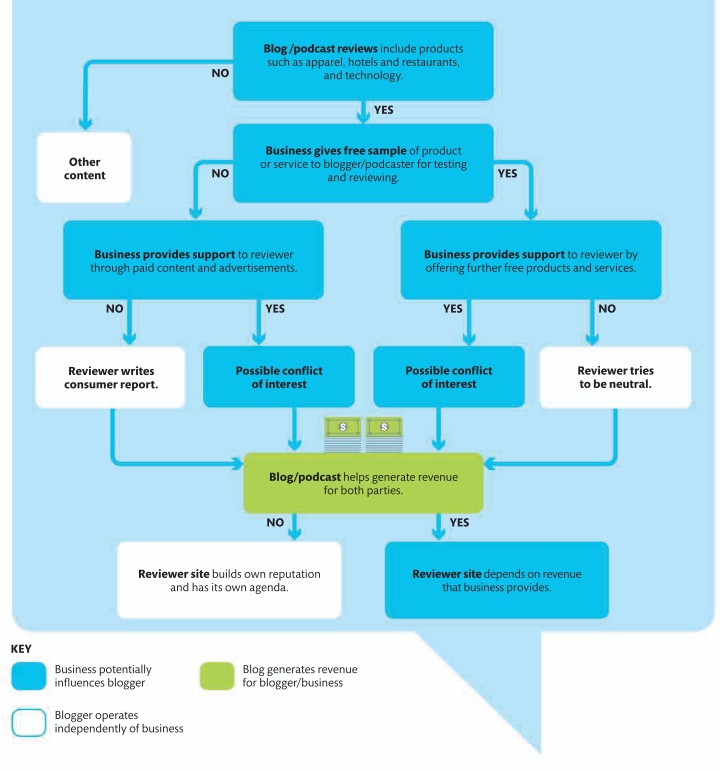
Independent online reviewers often collaborate with businesses, which is beneficial to both. However, business promotion on blogs/podcasts is not regulated like advertising, and ethical boundaries can become blurred.

NEED TO KNOW

❯ Vodcast Alternative term for vidcast (both short for videoon-demand broadcasts)

Rich site summary (RSS) Format used for frequently updating text, audio, and video content online

Mobcast Podcast that is created and published on a cell phone

1 billion+
users subscribe to Apple’s podcast app

Outbound vs. inbound marketing

Outbound marketing interrupts consumers to promote a product or brand, but inbound marketing needs consumers’ permission—they have to seek out information that leads to the marketing message.

How it works

Before the rise of the internet and the phenomenon of social media, most marketing strategies were outbound. In other words, marketers pushed messages at consumers by interrupting them with advertisements or direct mail. The same principle applies to outbound marketing that appears on the internet, with pop-up ads interrupting the content the consumer wishes to access. However, because consumers from all over the world now use the internet to search for information and entertainment, marketers have adopted inbound strategies instead, providing content that draws the consumer to the brand or product, rather than pushing marketing messages at them.

Pros and cons

Marketers interrupt consumers with hundreds of outbound marketing messages every day, but they also use subtle inbound marketing tactics to attract consumers. Each strategy has its advantages and drawbacks.

Company

Inbound

Pros

  • ❯ Campaign results can be forecast and measured
  • ❯ Marketing material is easier to create
  • ❯ Campaigns can be tightly controlled

Cons

  • ❯ Customer conversion rates are low❯ Marketing campaigns are expensive to create
  • ❯ Effects of campaign are often short-lived

bound

Pros

  • ❯ More likely to draw customers with long-term interest in the brand❯ Non-intrusive approach preferred by customers
  • ❯ Cost-effective compared with outbound campaigns

Cons

❯ Response from market may take longer
❯ New content must be
generated regularly to keep customer interested
❯ Campaign results can be difficult to measure

NEED TO KNOW

Push or interruption-based Alternative marketing terms used to describe outbound marketing

Pull or permission-based Alternative marketing terms used to describe inbound marketing

60%
of marketers have added inbound marketing to their existing outbound strategies

Inbound marketing

Inbound marketing lures customers by offering them appealing content, and engaging with them. The approach pulls customers into a relationship with a brand rather than “pushing” them into making a purchase, which is how advertising works. Inbound marketing is also known as permission marketing as potential customers are giving a business permission to communicate with them. In other words, they are actively interacting with the company or brand.

Inbound marketing process

Content forms the core of inbound marketing. It includes text, images, and video that consumers seek out online, especially on social media sites, or in person at events, such as trade fairs, and share with their network of friends, family, and colleagues. Potential customers respond to inbound marketing because the business or brand is offering interesting and relevant information, entertainment, or content with emotional value. Businesses expect this interaction to culminate in a sale, or create brand recognition that leads to a sale.

Exploration Publish and actively promote content; use search engine optimization (SEO) to attract consumers online

Search engines, social media networks, web publishers, and third-party blogs

Decision-making Ensure that content captivates potential customers or solves problems for them; encourage two-way communication

Company website, blog, podcast, community, and interactive tools

Purchase Entice interested site visitors to become customers; make shopping online an easy and positive experience

E-commerce process, product, price, discount, and promotion

Advocacy Provide excellent customer service; spur customers to make recommendations and share on social media

Customer championing of product or service

Top types of content marketing

  • 1. Blogs
  • 2. How-to guides
  • 3. Images
  • 4. Infographics
  • 5. Videos
  • 6. Testimonials/reviews
  • 7. Case studies
  • 8. Internet memes
  • 9. Email newsletters
  • 10. E-books
  • 11. Podcasts
  • 12. Twitter chat
  • 13. Newsjacking (giving content to news media)

INBOUND MARKETING STRATEGIES

Offline

Optimize retail space Provide a well-designed physical environment that will both draw customers in and encourage them to come back.

Engage media Generate press releases to gain media coverage. Focus on topics of real interest, especially ones that can be backed up by statistics and research.

Interact face to face Conduct events in stores that provide a new experience/benefit to customers; rent a stand at a trade event and offer key information.

Online

Post blogs Update company blog with appealing content to attract visitors.

Create podcasts Produce content relevant to customers searching for information; engage experts to add value.

Produce other content Post articles, photos, and videos on social media sites; target influential users to encourage viral sharing.

Apply search engine optimization (SEO) Fill search engine listings with key phrases that answer specific questions; add inbound links from popular sites.

NEED TO KNOW

Top of funnel marketing (TOFU) Offers content to grab the initial attention of potential customer

Middle of funnel marketing MOFU Offers more detail and encourages participation

Bottom of funnel marketing (BOFU) Attempts to win a sale with low pricing, offers, or via customer recommendations

Relationship marketing

The strategy of relationship marketing is to develop and manage a trusting, long-term association with customers and other markets that have links with the company.

How it works

Relationship marketing aims to replicate the type of interaction that village stores once had with their customers, offering a high level of personalized service to win them over for a lifetime. While small, local businesses naturally work this way, large corporations have now changed their focus from making the sale to relationships, and from short-term reward to long-term gain. The marketer can extend the network beyond the engaged customer to include employees, suppliers, and others.

Six markets model

Relationship marketing has established a strategy for communicating with the customer. This strategy defines six markets—not just traditional customer markets—where companies should direct their marketing efforts.

Influence markets To maintain good public
relations, the company works with regulators and consumer or environmental groups.

Supplier markets Building a relationship of collaboration with
suppliers makes good commercial sense.

Referral markets Customers can be word-ofmouth advocates for a company. Related businesses may also refer trade.

Internal markets A company’s employees are its internal customers, working together to represent its goals, mission, and strategy.

Recruitment markets To attract the best
employees, a company may market itself by offering incentives to staff.

Customer markets The main marketing focus is on customers, but activities are based more on building long-term customer relationships than on acquiring new customers.

CASE STUDY

Starbucks
The strategy of coffee-shop chain Starbucks exemplifies effective relationship marketing. Centered on core customer and internal markets, it also involves suppliers, referrals, and recruitment (employee) markets.

Marketing to customers

  • ❯ Social media
  • ❯ Business crowdsourcing
  • ❯ Familiarity with customers
  • ❯ Loyalty program
  • ❯ Reward card app
  • ❯ Mobile payments

Marketing internally

  • ❯ Barista training
  • ❯ Tech development opportunities

Marketing to employees

  • ❯ Stock options
  • ❯ Medical insurance
  • ❯ Partnership

Marketing to suppliers

  • ❯ Fairtrade programs
  • ❯ Quality control

NEED TO KNOW

Key account management (KAM) System that coordinates departments in a businessto-business (B2B) company to serve big clients

Frequency marketing Promotion aimed at increasing repeat sales by rewarding customers for repeat purchases

Direct response (DR) Marketing that invites consumers to respond directly to the advertiser, by mail, telephone, or email

Transaction marketing Strategy that aims to persuade customers to make additional one-time purchases at the point of sale

“Ignore the human element of marketing
at your own peril.”

Bob Garfield

Sensory marketing

Sensory marketing targets multiple senses to sway purchasing decisions. Based on research showing how the brain responds to sensory input, this type of marketing acts covertly on the customer.

How it works

Sensory marketing is most obviously used by the food and drinks industries, but its use extends to diverse products and services: computers designed with tactile materials, hotels scented to relax customers, and even fireworks displays featuring edible confetti. Typical channels for sensory
marketing include field marketing (in-store events, samples, and person-to-person sales), direct mail, and product delivery. For online businesses, however, finding a way to use it remains a challenge.

Sight Technology is making advances with this, the most stimulated sense in marketing, by using optical illusions, digital effects, 3-D, and 360-degree photography

Smell Customers are willing to
pay more for a product sold in an environment that is scented appealingly

Taste Taste sensations can be enhanced or subtly altered by combining them with touch, sight, and especially the closely linked sense of smell.

Touch Marketers use 2-D and 3-D textural print techniques for promotional materials and packaging, as well as to sell products with tactile appeal.

Hearing Sound is more effective than sight in triggering the brain areas that process emotions

Attitude, memory, behavior, and mood

The sensory input results in a short- or longterm effect on attitude, memory, behavior, and mood. This can be influenced by the intensity of sensory data and by using it to stimulate more than one sense at the same time.

Perception The brain receives stimuli from one or more senses.

Emotion Sensory stimuli tap into the store of
emotional memories, as Cognition
both are processed by the same area of brain.

Cognition After processing
sensory stimuli, the brain embeds memory,
regulates emotion, and makes decisions.

NEED TO KNOW

Sensory testing Assessment of products by panel members with exceptional sensory perception

Haptic technology Invention that simulates touch through vibrations on computers

3-D marketing An immersive form of consumer marketing

81%
of consumers born from 1980 to 2000 value experience over material items

Engagement marketing

By involving customers directly in the development of a brand, marketers hope to build a strong two-way relationship with customers and win long-term loyalty.

How it works

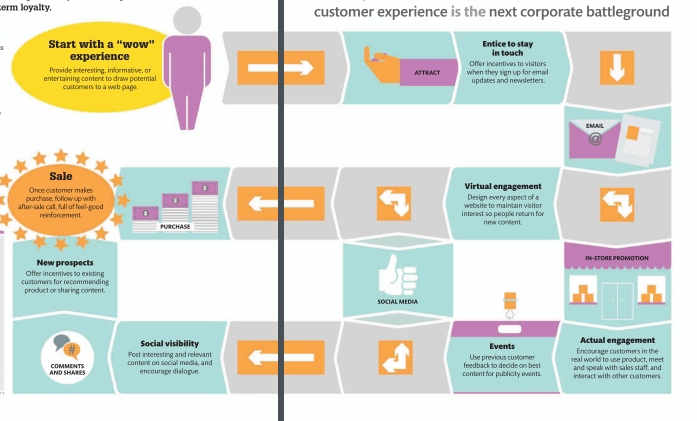
Engagement marketing harnesses several online and offline strategies to draw a customer’s interest and get them talking about products and services. This contrasts with the more traditional style of marketing in which a brand concept and product proposal are presented to the customer as fixed, to be either accepted or rejected. Engagement marketing, on the other hand, encourages customer input so that they feel closer to the brand. The goal is to lure potential customers to the website with an initial experience, and then work hard to keep them there.

Start with a “wow” experience
Provide interesting, informative, or
entertaining content to draw potential customers to a web page.

Entice to stay in touch Offer incentives to visitors ATTRACT
when they sign up for email updates and newsletters.

Virtual engagement Design every aspect of a
website to maintain visitor
interest so people return for new content.

Events Use previous customer
feedback to decide on best content for publicity events.

Social visibility Post interesting and relevant content on social media, and encourage dialogue.

New prospects Offer incentives to existing
customers for recommending product or sharing content

Sale Once customer makes purchase, follow up with
after-sale call, full of feel-good reinforcement.

Actual engagement Encourage customers in the
real world to use product, meet and speak with sales staff, and interact with other customers.

NEED TO KNOW

“Sticky” customers Consumers who are loyal to a company and return to make more purchases

Decision simplicity Ease with which consumers can find trustworthy information about a product

Churn rate Percentage of customers that cut ties with the company in any given time period

WOM Word-of-mouth marketing, which relies on satisfied customers recommending products to others

Digital marketing

Using the internet, marketers can connect directly and instantly with current and potential customers to build brand recognition, collect data, and encourage word-of-mouth recommendations.

How it works

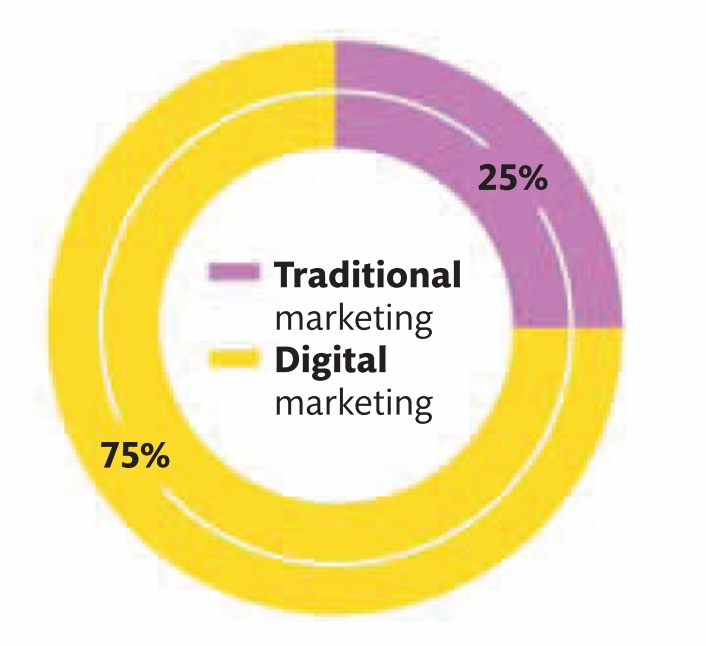
Unlike traditional offline marketing, digital marketing gives a business direct, two-way communication with customers. Digital marketing employs some conventional approaches, such as “pop-up” or “banner” ads on web pages, but it also relies heavily on the power of social media for raising awareness of a product or brand. This makes it harder to measure return on investment. Digital marketing is often used in conjunction with traditional marketing techniques, a hybrid known as “tradigital” marketing.

Tradigital in practice

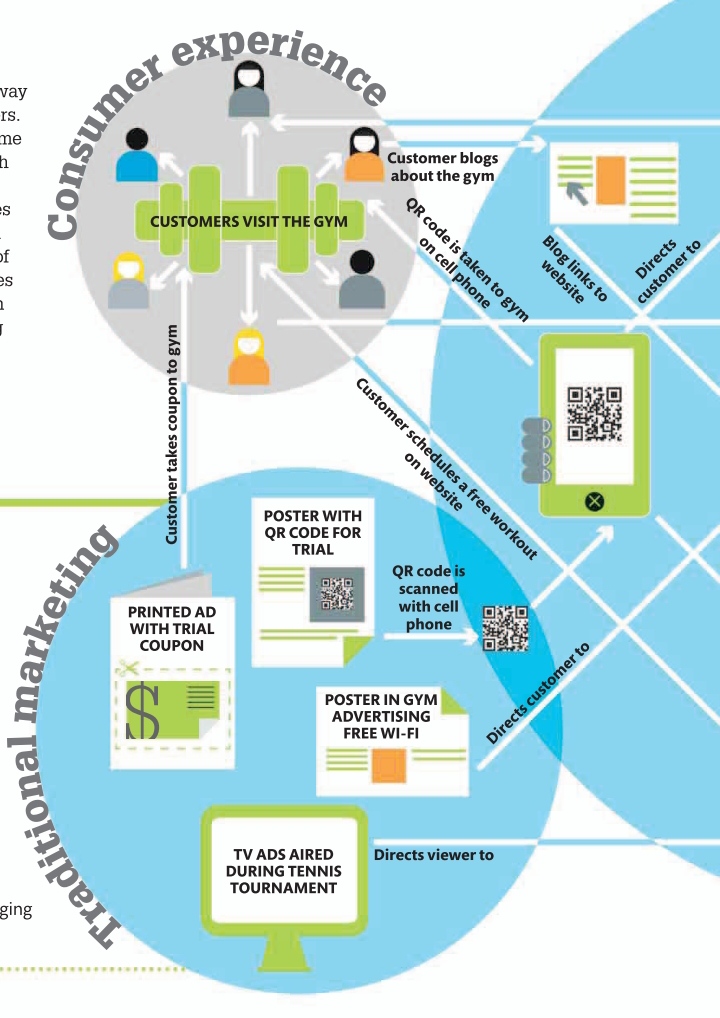
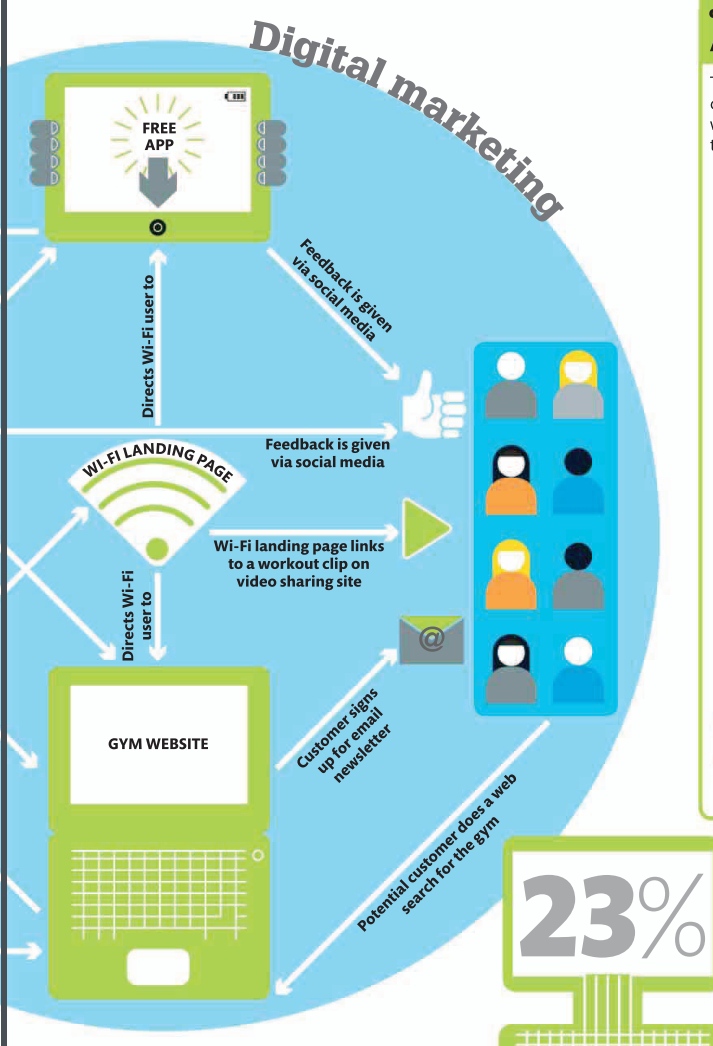
A new health club is launched
using a tradigital approach to marketing. TV ads are aired with a call to action to visit the gym’s website and schedule a free workout with a fitness trainer. Print ads feature a coupon or a QR (quick response) code to scan and present at the health club for a free trial. At the club, members get free Wi-Fi access. The Wi-Fi landing page has a link to the gym’s free app. The club may also use pop-up ads, podcasts, email, and text messaging to attract or retain members.

Traditional marketing

Before the digital age, marketers relied exclusively on non-digital channels, such as TV, radio, and print media, as well as direct mail, events, and cold-calling, to convey their message to the consumer.

Traditional marketing process

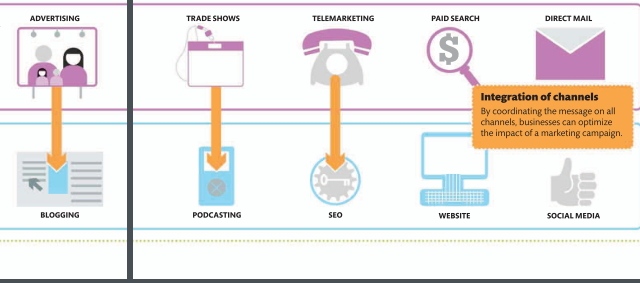
Small and large businesses use a range of conventional marketing channels, and often integrate them with digital marketing strategies.

Events Staging sports activities, themed displays, parades, or exhibits to promote a product, cause, or brand.

TV Promoting sales through TV ads, program sponsorship, or product placement.

Face-to-face Approaching customers directly to create brand awareness or persuade them to buy a product.

Telemarketing Calling potential customers who have an identifiable need for a product with a sales pitch.

Direct mail Mailing catalogs or circulars to a targeted list of consumers, often promoting special offers on products.

Brochures and flyers Promoting through mailing or locally hand-distributing printed materials to promote businesses.

Radio Using commercial slots on radio
to promote products either locally or nationally, depending on the station’s reach.

Product samples Offering free samples of a product to customers, giving them the opportunity to try it before making a purchase—an effective way to launch new products and build a customer base.

Billboards Renting large outdoor advertising
spaces to market products. Cost depends on the size of space, its visibility, and the amount of traffic that passes the location.

Newspapers and magazines Buying space in print media to run advertisements, or creating advertorials to market products or services.

Networking Interacting with other people at special events to develop professional contacts.

Niche vs. mass marketing

Two fundamental choices traditionally face marketers: whether to try to sell a product with broad appeal to as many people as possible, or to focus on selling a tailored product to a defined group.

How it works

Both niche and mass marketing strategies offer businesses the potential to make a high return on investment. A niche approach generally works on the basis of lowvolume sales at a premium price to a specific group of consumers, while a mass approach tends to use heavy promotion to a wider audience and aims to achieve high-volume sales. In reality, businesses tend to mix
up both approaches, launching a niche product and then expanding it to a mass market. Marketers also use internet channels to promote the same product to different groups of customers within a mass audience.

Niche market

❯ Business targets a select group of consumers with specific need and wants.

❯ Customers often prepared to pay a premium price for an uncommon product.

❯ Sales volume of niche product low, so does not benefit from production economies of scale (manufacturing large quantities to decrease the unit cost of production).

Mass market

Who and how

❯ Business targeting a large group of consumers with generalized wants and needs.

❯ Requires high marketing spend to promote products, which must be widely distributed.

❯ Marketplace often crowded with other competitors selling a similar product.

HYBRID APPROACHES

Using social media to identify and reach more than one target market, marketers have developed hybrid approaches that are more flexible than conventional niche or massmarket positioning of products.

Mass market An unfocused strategy that aims at the broadest customer base.

Large segment Channels marketing resources to one large segment of the mass market.

Adjacent segment Once large segment is fully penetrated, product expands into related segment.

Multi segment Markets to several segments at once, with a customized strategy for each.

Small segment Markets to a small segment with few competitors, if resources are limited.

Niche segment Focuses marketing resources on a specific group of customers.

Mass customization Customizes a strategy for each sub-segment within the mass market.

NEED TO KNOW

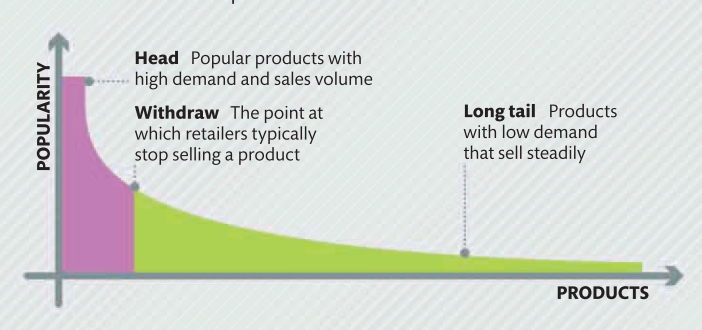
Coined by Wired magazine editor Chris Anderson, the term “long-tail marketing” takes its name from a demand curve (see below) depicting products with low demand or sales volume—niche products—that continue to sell and make profit over time.

20%
of sales can make up to 80% of profit

Marketing approaches

Every product launch requires strategic planning to make sure messages about a new product reach the right types of consumers, are communicated through the most effective combination of channels, and have the most relevant content and style. Once marketers have researched the market and defined their target audience, they face several key decisions on how to make their approach.

Types of approaches

Whom to target and how to go about it are crucial to success. Marketers may use several complementary approaches to different groups of potential consumers.Rather than sending the same message via different media, they usually adjust the tone and style of the marketing pitch to suit the channel as well as the target consumer.

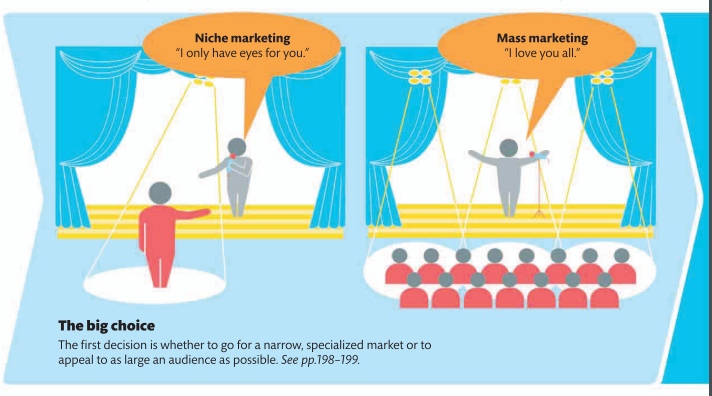
The big choice

The first decision is whether to go for a narrow, specialized market or to appeal to as large an audience as possible.

How to tell the customer

Marketers often get the best of both worlds by using traditional and online channels in varying styles.

Traditional channel allied with a dominating style. “Let me tell you,” it blares.

Digital channel allied with a soft approach. “Let me woo you,” it whispers.

Sensory marketing “Wake up and smell the roses.” It seduces the customer with sights, sounds, and smells.

Engagement marketing “Come dance with me.” It entices the customer to collude in product sales.

Relationship marketing “Let’s be friends.” It builds a rapport with its audience of consumers

Making a move Turning the buying transaction into an experience the consumer enjoys can help sell a product.

85%
of all purchasing decisons in the US are made or influenced by women

Market segmentation

In order to make decisions about who to sell their product to, marketers try to identify distinct groups of consumers with similar wants and habits who together form a “segment” of the market.

How it works

Marketing departments use a strategy of market segmentation to find the potential customers who are most likely to buy a particular product, thereby increasing the chances of a successful product launch. They divide a broad group of consumers into subgroups based on many factors, including age, lifestyle preferences, location, family structure, household income, and occupation. This process narrows down a potentially huge market into segments, allowing marketers to identify the ones more inclined to buy a given product. For example, after applying this strategy, a company trying to launch premium-price organic baby food realizes that instead of marketing to all women who have young children, it should aim its product at working mothers with children under six months, above-average incomes, and an interest in healthy eating.

Defining market groups

To establish different consumer groups, marketers create five segments and focus on each individually. Besides identifying groups by geography and demographics, marketers also explore psychology to ascertain how consumers behave, so that they gain a better idea of which products might appeal to which consumer groups.

Behavioral

Focuses on behavioral patterns when it comes to
shopping. Understanding this helps marketers adapt campaigns to target specific groups. Potential focus areas include:

  • ❯ Brand loyalty
  • ❯ Regularity of purchases
  • ❯ Credit card usage
  • ❯ Typical expenditure
  • ❯ On- or offline shopping
  • ❯ Heavy product user

Sociographic

Identifies individuals’ connections on social media, or membership of political and other groups, helping marketers learn about consumers’ passions and interests. Potential focus areas include:

  • ❯ Group memberships
  • ❯ Number of friends on social media

Psychographic

Focuses on consumer’s interests, values, and opinions to help marketers develop relevant messages and find the right media channels to target a segment. Potential focus areas include:

  • ❯ Risk taker
  • ❯ Charitable
  • ❯ High achiever
  • ❯ A tendency towards expensive tastes
  • ❯ A preference for email contact

Geographic

Concentrates on a customer’s place of residence, so that any product launched is made relevant to their environment. Potential focus areas include:

  • ❯ Post code
  • ❯ Continent
  • ❯ City
  • ❯ Neighbourhood
  • ❯ Population density
  • ❯ Climate

Demographic

Uses basic consumer data, such as gender or age, to accurately categorize needs and target products appropriately. Potential focus areas include:

  • ❯ Income
  • ❯ Nationality
  • ❯ Family size and age
  • ❯ Ethnic background
  • ❯ Occupation
  • ❯ Religion

NEED TO KNOW

Baby Boomers Section of population born between 1946 and 1964

Generation X People born between 1966 and 1980

Millennials Section of
population born between 1980 and the early 2000s

“Market segmentation is a natural result of the vast differences
among people.”

Donald Norman

Promotion

Promotion is necessary for generating interest in and sales of a product or service. A complex and expensive part of the marketing mix, it involves communicating to customers and influencers such as peer groups.

How it works

The primary purpose of promotion is to boost sales by attracting new customers, while enticing existing ones to try out something new. Most companies use a number of communication activities to inform and remind their target audience of a product’s benefits . One of the long-term benefits of
communicating with customers is that it helps to build brand loyalty.

Customer service Provides customers with information about the product; offers updates and special deals.

Personal selling Interact with customers face to face and tailor sales messages to their needs.

Advertising Run ad campaigns
through media channels most likely to reach target market, and stick to budget appropriate for the product.

Direct marketing Send product offers and information directly to the potential consumer, via mail or email.

Sales promotion Entice customer with
offers, free samples, gifts, competitions, packaging, and point-of-sale displays.

Public relations Generate positive interest in the company by
sponsoring events and charities, or pitching news content to media.

Interactive marketing Build long-term relationships with
customers using twoway communication, especially online.

NEED TO KNOW

❯ Integrated Marketing Communication (IMC) Promotion of the same brand message across all media channels

❯ MarCom (Marketing Communication) Full range of promotional activities used to reach out to the market

Place

Knowing where customers shop, where a product is sold, and how efficiently goods can be delivered to the consumer—called “place” in marketing terms—is essential to sales success.

How it works

Whether a company sells goods or services, customers must be able to find and buy those products as easily as possible. Businesses have to decide on the best sales outlet and sales channel to get their products to customers in a way that benefits both parties.
A sales outlet is the place where a product is sold, suchas stores, catalogs, or e-commerce sites. Sales channels are the merchants, agents, and distributors who take a product from the seller and bring it to the consumer.

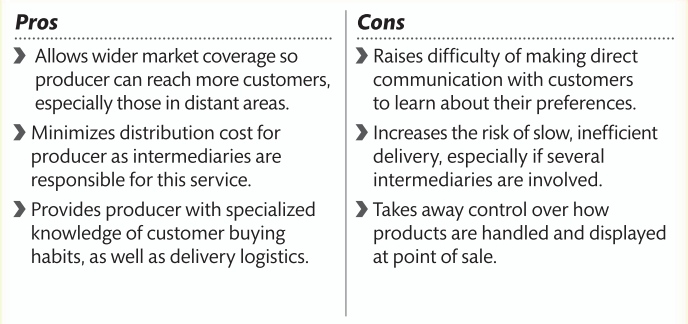
PROS AND CONS OF USING INTERMEDIARIES

Main distribution channels

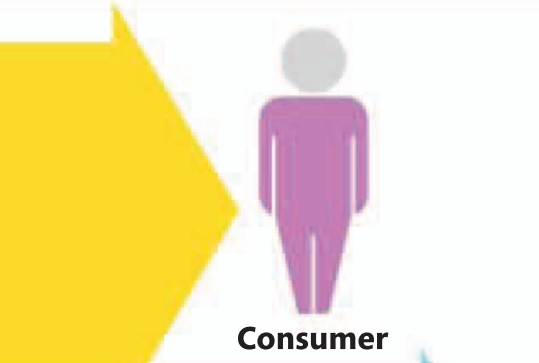
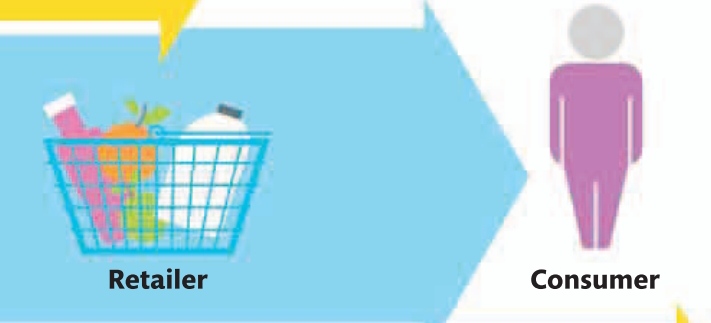
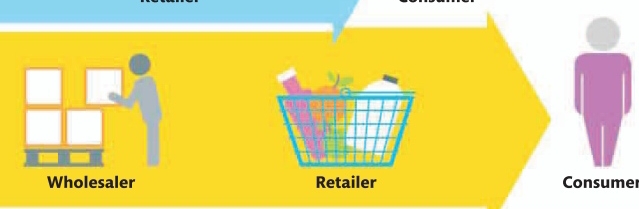
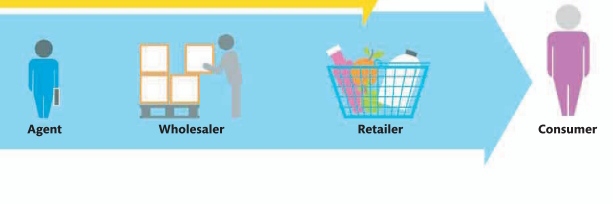
A product reaches the marketplace through one of four main types of distribution channels. The most suitable distribution channel is usually dictated by where customers prefer to buy the product.

Producer A producer chooses the distribution channel, or a combination of channels, that will maximize the number of customers it can reach while keeping costs as low as possible.

Selling direct to consumers Product is sold directly by the producer, online, or through a mail-order catalog, and delivered to customer without intermediary.

Example E-commerce site selling vitamins; they are sent to customer by mail or delivery service.

Selling through retailers Goods are delivered by producer directly to retail outlets; retailer adds a markup onto the price they pay to producer.

Example Electronics company distributes its television sets to a chain of retail stores.

Selling through wholesalers and retailers Products are distributed in two stages: by producer to wholesaler and then wholesaler to retailer.

Example Farmer sells apples to wholesaler, who sells them on to supermarkets.

Selling through an agent Products are distributed in three stages: from producer to agent, from agent to wholesaler, and then on to retailer.

Example Chocolatier in France uses import agent in Japan to sell its products to wholesalers and on to retailers.

NEED TO KNOW

Channel margin The cost intermediary adds to producer’s selling price, which is added to price paid by customer

Push strategy Method in which producer promotes products to wholesalers, wholesalers to retailers, and retailers to customer

Pull strategy Use of advertising and promotion to sell to customer

Price

Price is a crucial variable of the marketing mix: it generates revenue, while product, promotion, and place yield costs. Pricing may also be the marketer’s most potent tool because even minor tweaks affect returns.

How it works

To set the price of a product, marketers adopt a pricing strategy based not only on the actual cost of production but also on the perceived attractiveness of the product to consumers. If consumers think a product has a high value, they will be prepared to pay more for it, but if they believe the value of the product is low they will look for the cheapest price among competing products. A business must also take into
account the price charged by rival organizations, particularly in competitive markets. Setting a price above that charged by competitors can only work if the product is superior to others.

Pricing strategies

A number of different strategies can be used to determine the price of a product. Cost-plus pricing is a retail markup used by many companies to ensure a profit is made. For example, adding a markup of 50 percent to a product that costs $2 to make means that every unit will sell for $3, generating a $1 profit.

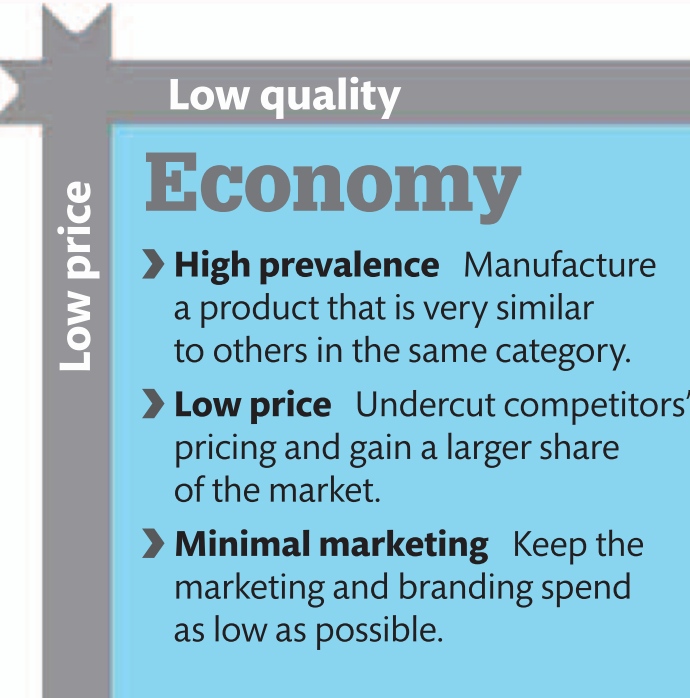
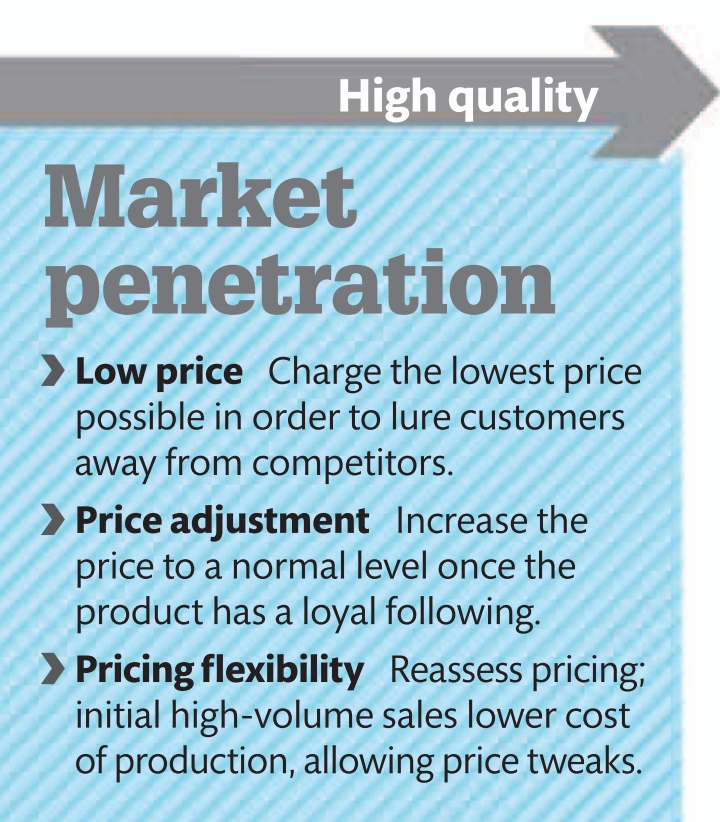
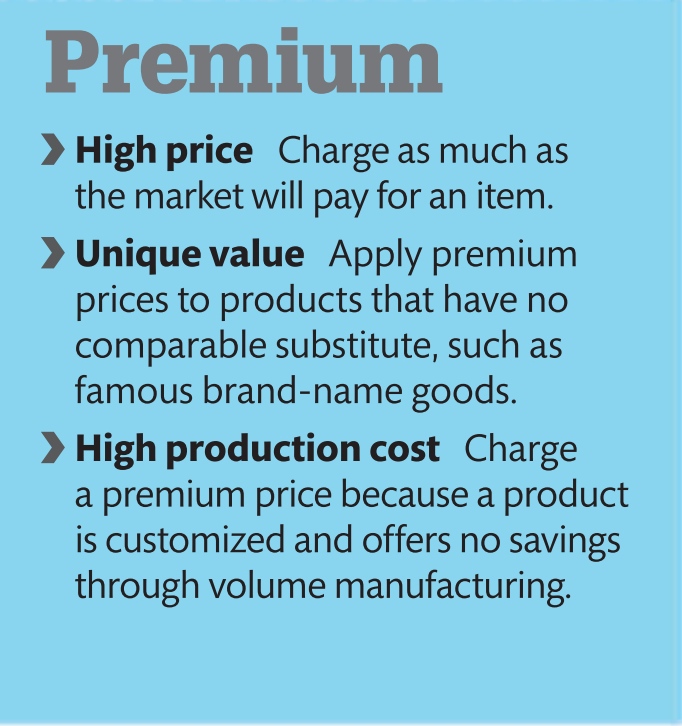
Pricing matrix: price vs. quality

A product’s quality affects its price tag— the higher the quality, the more money consumers will pay for it—but marketers use strategies that play on the interaction between price and perceived quality.

Low quality

Economy

High prevalence Manufacture a product that is very similar to others in the same category.

Low price Undercut competitors’ pricing and gain a larger share of the market.

Minimal marketing Keep the marketing and branding spend as low as possible.

Skimming

High launch price Charge more than usual in the short term while a product is seen as unique.

Correct timing Set a higher price when the business has a temporary advantage in the marketplace, before competing products appear.

Price adjustment Reduce the price once competitors enter the market, or to draw more customers.

High quality

Market penetration

Low price Charge the lowest price possible in order to lure customers away from competitors.

Price adjustment Increase the price to a normal level once the product has a loyal following.

Pricing flexibility Reassess pricing; initial high-volume sales lower cost of production, allowing price tweaks.

Premium

High price Charge as much as the market will pay for an item.

Unique value Apply premium prices to products that have no comparable substitute, such as famous brand-name goods.

High production cost Charge a premium price because a product is customized and offers no savings through volume manufacturing.

Other pricing strategies

Psychological pricing Manipulate a customer’s emotions, appealing to their thrifty side or desire for prestige.

Bundle pricing Offer several products for an overall price, providing better value than buying separately.

Geographic pricing Charge different prices for the same product in different locations.

Non-pricing strategies Avoid adjusting the price to attract sales, promoting superiority of product instead.

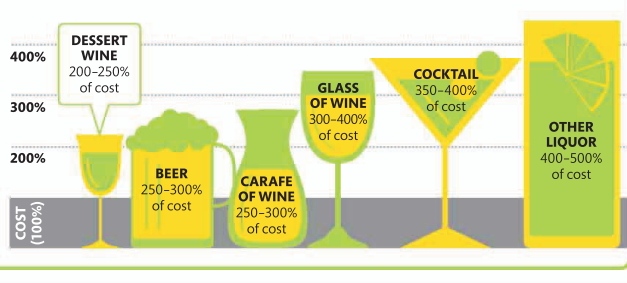
PRICING MARKUP COMPARISON

Different industries adopt different approaches to markups. A markup of two to five times the cost is typically applied to drinks served in bars and restaurants. The highest markup is usually applied to the second-cheapest bottle of wine on the wine list, as people tend to avoid the cheapest item.

NEED TO KNOW

Price, value, and cost Price refers to the amount a product sells for; value refers to the product’s actual worth; cost is the amount that has been spent to manufacture the product.

5%
increase in price is worth more than a 5% increase in market share

Product life cycle

Every successful product launched on the market experiences growth followed by decline. To maximize profitability, business managers must recognize and manage each stage of the product’s life span.

How it works

There are typically six identifiable stages in a product life cycle, with the product’s rate of growth measured by time and revenue. Most businesses have more than one product on the market at any time, and strategic manipulation of the portfolio of products at their different stages in the cycle is crucial to maintaining business growth. The life of older products may be prolonged by extension strategies, but if they are no longer grabbing new market share, the business must consider launching new products in order to continue generating revenue.

Introduction Sales are typically low and cost per customer is high as the market takes time to accept the new product.

Launch Business outlay is high due to product development costs and marketing budget. There is no return on investment.

Growth Sales increase and the cost per customer falls as profits rise. There are more customers—and more competitors.

Saturation Sales peak and the cost per customer is at its lowest. Profits are now high and competition is intense.

Withdrawal The product is phased out as sales stall or continue to fall. The business introduces a replacement product before the old one is withdrawn.

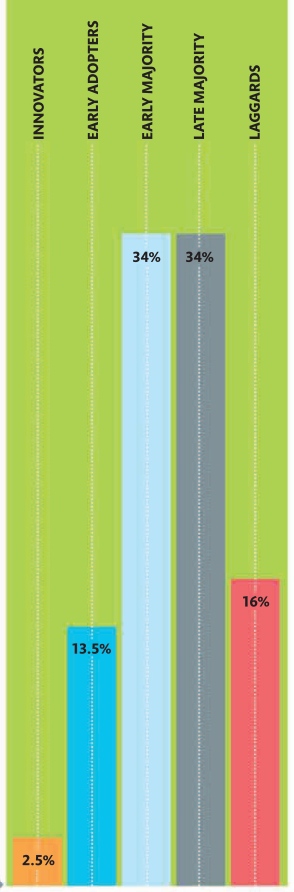
Diffusion of innovation (consumer uptake) %

Marketers identify five distinct customer types according to how quickly they pick up on a new product.

PORTFOLIO ANALYSIS

Rising stars Products with a high market share in a
high-growth market; they require a big marketing spend to keep them growing.

Cash cows Products with a high market share in a
low-growth market; they generate money to support rising stars.

Problem children Products with a low market share in a
high-growth market; they need a big marketing spend.

Dogs Products with low market share and low growth; they may stay in portfolio to keep customers happy.

NEED TO KNOW

Extension strategy Revival of a product by rebranding, or repackaging, repricing it, or finding new markets

Portfolio analysis Each of a company’s products measured by growth rate and market share to determine marketing spend

Product life cycle management (PLM) Tracking of product data from inception to withdrawal

6 months
the length of time a product can be labelled as “new

Product positioning

A vital step in the process of deciding how to market a product is defining how it is distinct from the competition—what is unique about it and what are the qualities that make it better than rival products.

How it works

Before a company launches a product, the marketing department has to decide how to position it in the marketplace compared to competitors’ products. To determine the positioning of a product, marketers must define the most important features and values of the product or brand, and clarify how it is different from similar types of products offered by competitors. They also need to identify the criteria that customers are most likely to use when choosing a particular product or brand. With this information the marketers can then create a product positioning matrix or map.

Product positioning maps

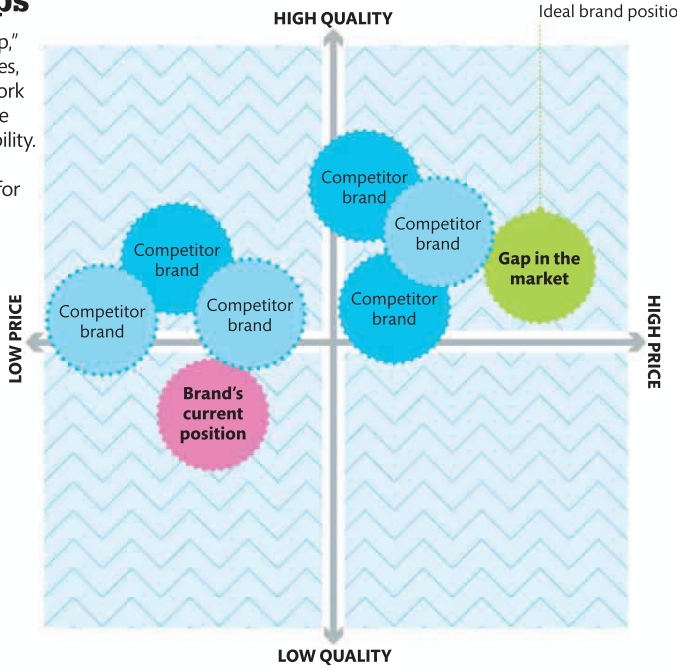
Marketers commonly create a perceptual “map,” using a product’s two most important attributes, presented as variables on an x and y axis, to work out where to position it. Attributes may include price, quality, status, features, safety, and reliability. Once the map is labeled, existing products are placed on it to reveal the best position or gap for the proposed launch.

Product positioning template

The map shows how marketers position competing products in the marketplace according to the price/quality variables (the most commonly used) to identify a gap for the new product.

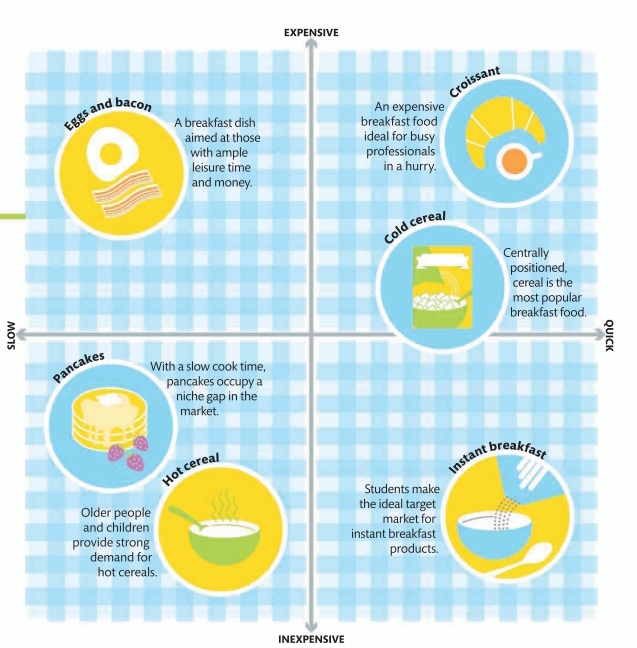
Breakfast positioning map

The positioning of the various breakfast foods has been determined by the speed at which the food is prepared, measured from slowest to fastest, and the price of each food type, from the least expensive to the most expensive.

FOUR POSITIONING STRATEGIES

Value positioning A product plotted on the map so that it has an attractive price while delivering good functional qualities

Quality positioning A product that is located on the map on the basis of its perceived quality or superiority.

Demographic positioning A product mapped according to its appeal to a specific population segment, such as consumers with a particular occupation.

Competitive positioning A product that is very similar to those of competitors, relying on correct pricing to find a viable position in the marketplace

“Positioning is not what you do to a product. (It) is what you do
to the mind of the prospect.”

Al Ries and Jack Trout

Product

The goods and services a company sells are its product. A product can be defined in terms of features, design, size, packaging, service type, return policies, and warranties, together intended to meet the customer’s needs.

How it works

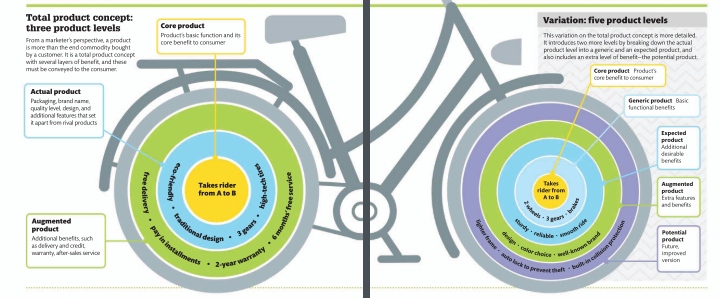
Consumers can be said to buy benefits rather than products. For the marketer, the product itself is that benefit to the consumer, as packaged and presented.Marketers identify the goods and services they sell in three or five product levels, with the benefit at the core. The marketer’s job is to translate and communicate each product level as an offer to the consumer.

Total product concept: three product levels

From a marketer’s perspective, a product is more than the end commodity bought by a customer. It is a total product concept with several layers of benefit, and these must be conveyed to the consumer.

Actual product Packaging, brand name, quality level, design, and additional features that set it apart from rival products

Augmented product Additional benefits, such as delivery and credit, warranty, after-sales service

Core product Product’s basic function and its core benefit to consumer

Variation: five product levels

This variation on the total product concept is more detailed. It introduces two more levels by breaking down the actual product level into a generic and an expected product, and also includes an extra level of benefit—the potential product.

Core product Product’s core benefit to consumer

Generic product Basic functional benefits

Expected product Additional desirable benefits

Augmented product Extra features and benefits

Potential product Future, improved version

NEED TO KNOW

Personal branding Promoting oneself as a product with a distinct brand personality

Fast-moving consumer goods (FMCGs) Sold quickly and at relatively low unit cost, such as food and household products

42%
of new product launches can be
expected to fail

Marketing mix

The successful marketing of a product depends on the consideration of four key elements—the product itself, its price, how it is promoted, and where it is sold. This combination is called the marketing mix, and it is used as a tool for planning product launches and campaigns. Before focusing on the marketing mix, marketers need to define the target market for their product by determining which groups of customers are most likely to purchase it.

The 4Ps and 4Cs of the marketing mix

First proposed in 1960, the classic marketing mix tool contains the 4Ps: product, price, promotion, and place. In the 1990s, these were recast as the 4Cs, which emphasized the customeroriented dimension of the tool.

Commodity

Has the product been specifically engineered and designed to meet and exceed customer expectations?

Product

❯ Is the product the right design, size, and color to appeal to customers?

What are its unique features? How does it compare with competitors?

Price

What is the value of the product to prospective customers?

What is the usual price point for this type of product?

Cost

How much will the product cost the customer, and will it be seen to represent a good buy?

Communication

What is the most meaningful way
to get marketing messages to customers and provide them with useful information?

Promotion

What combination
of marketing and media channels will be most effective?

When is the best time to run promotions?

Place

Where should the product be sold—stores, online, or catalogs?

Where do competitors sell, and is there a way to stand out in the same place?

Convenience

How easy is it for busy customers to find and buy the product?

The 7Ps of the marketing mix

Some marketers use a more detailed model of the marketing mix, which has three additional elements.

  • Product
  • Price
  • Place
  • Promotion
  • People Does the business employ the right people to deliver optimum service to customers?
  • ❯ Physical environment Does the design and layout of the business premises appeal to customers?

The 7Cs of the marketing mix

This model offers a customerfocused variation of the 7Ps, adding three more elements to the 4Cs.

  • ❯ Commodity
  • Cost
  • ❯ Convenience (or Channel)
  • ❯ Communication
  • ❯ Corporation How do company structure, stakeholders, and other competitors affect marketing?
  • ❯ Consumer What are the customer’s needs and wants? Is the product safe? What product information is available?
  • ❯ Circumstances Can the business deal with external factors, such as laws, weather, economy, culture?

DEFINING THE MARKET

In order to establish a marketing strategy for the product they are introducing to the marketplace, businesses have to define the customers they aim to sell to by researching and segmenting the market.

Market research

❯ Identifies gaps in the market for the launch of new products

❯ Measures customer reactions to new offers and campaign messages

Market segmentation

❯ Breaks down the market into smaller customer groups with similar needs

❯ Allows more focused campaigns with a greater chance of success

“ Product, promotion, and place create value. But price harvests value.”

Create a free website or blog at WordPress.com.

Up ↑

Design a site like this with WordPress.com
Get started