The emotions an individual feels on a daily basis dictate the type of person they feel they are. And yet it is a series of biological processes in the brain that generate every feeling a person has.
What is emotion?
Emotions impact hugely on people’s lives—they govern their behavior, give meaning to their existence, and are at the core of what it is to be considered human. Yet in reality emotions result from physiological responses in the brain triggered by different stimuli—the psychological significance read into emotions is an entirely human construct. Emotions evolved to promote human success and survival by initiating certain behaviors: for example, feelings of affection prompt the desire to find a mate, reproduce, and live in a group; fear generates a physiological response to avoid danger (fight-or-flight); reading emotions in others makes social bonding possible.
Processing emotion
The limbic system (p.26), located just under the cortex, generates all emotions. They are processed via two routes, conscious and unconscious (below). The primary receptor that “screens” the emotional content of all incoming stimuli is the amygdala, which signals to other areas of the brain to produce an appropriate emotional response. Connections between the limbic system and the cortex, in particular the frontal lobes, enable emotions to be processed consciously and experienced as valuable “feelings.” Each emotion is activated by a specific pattern of brain activity— hatred, for example, stimulates the amygdala (which is linked to all negative emotion) and areas of the brain associated with disgust, rejection, action, and calculation. Positive emotion works by reducing activity in the amygdala and those cortical regions linked to anxiety.
Conscious and unconscious emotive routes
Humans experience their emotional responses through an unconscious route, which is designed to prepare the body for rapid action (fight-or-flight), or via a conscious route, which enables a more considered response to a situation. The amygdala responds to threat and can detect stimuli before the person is even aware of it, provoking an automatic, unconscious reaction. A simultaneous, but slower, transmission of sensory information to the cortex creates a conscious secondary route for the same stimulus, and can modify this initial reaction.
Conscious
Thalamus All sensory information comes to the thalamus for distribution to the amygdala for quick assessment and action, and to the cerebral cortex for slower processing to conscious awareness.
Sensory cortex All sensory information comes to the sensory cortex for recognition. It extracts more information along this path, but the process takes longer than the unconscious route.
Hippocampus Consciously processed information is encoded in the hippocampus to form memories. The hippocampus also feeds back stored information, confirming or modifying the initial response.
CONSCIOUS FACIAL EXPRESSIONS
The motor cortex allows a person to control facial expression and so hide or express genuine emotion.
unconscious
Amygdala The amygdala instantly assesses incoming information for emotional content. It sends signals to other areas for immediate bodily action. It operates unconsciously and so is liable to make errors.
Hypothalamus Signals from the amygdala come to the hypothalamus, which triggers hormonal changes that make the body ready for “fight or flight” in response to emotional stimuli. The muscles contract and the heart rate increases.
REFLEX FACIAL EXPRESSIONS
The emotional reaction caused by the amygdala sparks spontaneous, uncontrolled facial expressions.
EMOTIVE BEHAVIORS AND RESPONSES
Typical behavioral patterns in response to emotion have evolved in order to neutralize any perceived threat, through either fight or appeasement. In contrast, moods last longer, are less intense, and involve conscious behaviors.
EVERY EMOTION sparks a slightly different pattern of activity in the brain.
“Human behavior flows from … desire, emotion, knowledge.”
Every experience generates a memory—whether it lasts depends on how often it is revisited. Intricate neural connections allow memories to form, and these can strengthen, aiding recall, or fade away.
What is memory?
A memory is formed when a group of neurons fire in a specific pattern in response to a new experience— these neural connections can then refire in order to reconstruct that experience as a memory. Memories are categorized into five types (right). They are briefly stored in the short-term (working) memory but can fade unless the experience is of emotional value or importance,in which case it is encoded (below) in the long-term memory. In recalling a memory, the nerve cells that first encoded it are reactivated. This strengthens their connections and, if done repeatedly, solidifies the memory. A memory’s component parts, such as related sounds or smells, reside in different areas of the brain, and in order to retrieve the memory all of these brain parts must be activated. During recall a memory can merge accidentally with new information, which fuses irrevocably with the original (known as confabulation). Endel Tulving explained memory as two distinct processes: storing information in long-term memory, and retrieving it. The link between the two means that being reminded of the circumstances in which a memory was stored can act as a trigger to recall the memory itself.
TYPES OF MEMORY
❯ Episodic memory Recalling past events or experiences, usually closely linked with sensory and emotional information.
❯ Semantic memory Retaining factual information, such as the name of a capital city.
❯ Working memory Storing information temporarily; capable of holding between five and seven items at any one time; also known as short-term memory.
❯ Procedural (body) memory Using learned actions that require no conscious recall, such as riding a bicycle.
❯ Implicit memory Bringing back an unconscious memory that influences behavior, such as recoiling from a stranger reminiscent of someone unpleasant.
CASE STUDY: BADDELEY’S DIVERS
Studies by psychologists indicate that in retrieving memories humans are aided by memory cues. British psychologist Alan Baddeley conducted an experiment in which a group of divers were asked to learn a list of words—they learned some words on dry land and some underwater. When they were later asked to recall the words, most divers found recall easier in the physical environment in which they had first memorized them, so it was easier to remember the words learned underwater when they went underwater. Baddeley’s experiment suggested that context itself could provide a memory cue. Similarly, when a person goes to collect an object from another room but on arriving cannot recall what they were looking for, often returning to the original room triggers that memory cue.
How memories form
The process of laying down (encoding) a memory depends on many factors. Even once encoded a memory can take two years to be firmly established.
1. Attention Focusing attention on an event helps to solidify the memory: the thalamus activates neurons more intensely, while the frontal lobe inhibits distractions.
2a. Emotion High emotion increases attention, making an event more likely to be encoded into a memory. Emotional responses to stimuli are processed in the amygdala.
2b. Sensation Sensory stimuli are part of most experiences, and if of high intensity they increase the chances of recollection. Sensory cortices transfer signals to the hippocampus.
3. Working memory Short-term memory stores information until needed—it is kept active by two neural circuits that incorporate the sensory cortices and the frontal lobes
4. Hippocampal processing Important information transfers to the hippocampus, where it is encoded. It can then loop back to the brain area that first registered it, to be recalled as a memory.
5. Consolidation The neural firing patterns that encode an experience carry on looping from the hippocampus to the cortex—this firmly fixes (consolidates) it as a memory.
“Memory is the treasury and guardian of all things.”
Based on the premise that physical factors, such as genes, determine behavior, this approach can explain how twins brought up separately exhibit parallel behavior.
What is it?
Biological psychology assumes that people’s thoughts, feelings, and behavior all derive from their biology, which includes genetics as well as the chemical and electrical impulses that wire the brain to the nervous system. This assumption implies that the blueprint laid down in the womb—people’s physiological structure and DNA—dictates their personality and behavior as they go through life. Some of these ideas are based on the results of twin studies, which have shown that twins separated at birth and brought up in different households display remarkably similar behavior in adult life. Biopsychologists argue that this phenomenon can be explained only if the twins’ genetics influence them so strongly that not even the role of their parents, friends, life experiences, or environment have much impact. An example of biological psychology in action is the research into how teenagers behave. Scans of teenage brains using imaging technology have revealed that adolescent brains process information in a different way than adult brains. These differences help to offer a biological explanation for why teenagers can be impulsive, sometimes lack good judgment, and can become overly anxious in social situations.
Evaluation
Many of the ideas in biological psychology emphasize nature over nurture. As a result, critics consider the approach to be oversimplistic, giving undue weight to the influence of biology and built-in physical attributes. Little credit is given to the influence of events or people on an individual as they grow up. On the other hand, few argue with the rigorous scientific backbone of the approach, which places importance on the systematic testing and validation of ideas. And biopsychologists have enabled important medical advances—using research from neurosurgery and brain imaging scans, they have made positive contributions to treatment for patients with both physical and mental problems, including Parkinson’s disease, schizophrenia, depression, and drug abuse.
EVOLUTIONARY PSYCHOLOGY
Psychologists in this field explore why people’s behavior and personality develop differently. They investigate how individuals adapt their language, memory, consciousness, and other complex biological systems to best cope with the environment they find themselves in. Key ideas include:
❯ Natural selection This has its origins in Charles Darwin’s hypothesis that species adapt over time or evolve mechanisms that facilitate survival.
❯ Psychological adaptations This looks at mechanisms people use for language acquisition, for differentiating kin from non-kin, for detecting cheats, and for choosing a mate based on certain sexual or intelligence criteria.
❯ Individual differences This seeks to explain the differences between people—for example, why some people are more materially successful than others.
❯ Information processing This evolutionary view suggests that brain function and behavior have been molded by information taken in from the external environment, and so are the product of repeatedly occurring pressures or situations.
Different approaches
Physiological This approach is based on the assumption that biology shapes behavior. It seeks to discover where certain types of behavior originate in the brain, how hormones and the nervous system operate, and why changes in these systems can alter behavior.
Medical This branch explains and treats mental disorders in terms of physical illness. Disorders are considered to have a biological basis, such as a chemical imbalance in the body or damage to the brain, rather than causes linked to environmental factors.
Genetics This field attempts to explain behavior in terms of patterns that are laid down in each person’s DNA. Studies of twins (especially twins separated at birth and raised in different homes) have been used to show that traits such as IQ are inherited.
“In the last analysis the entire field of psychology may reduce to biological electrochemistry.”
A branch of psychology that considers the mind to be like a complex computer, the cognitive approach analyzes the way people process information and how that dictates their behavior and emotions.
What is it?
When the computer arrived in offices in the late 1950s, it sparked comparisons between artificial information processing and the operation of the human mind. Psychologists reasoned that in the same way that a computer accepts data, codes it for storage, and retrieves it, the human mind takes in information, changes it to make sense of it, stores it, and recalls it when needed. This computer analogy came to be the foundation for cognitive psychology. The theories behind cognitive psychology can apply to virtually every aspect of daily life. Examples include the brain receiving and processing sensory information to make a judgment (such as recognizing that a carton of milk has soured from its bad smell); reasoning with logic to reach a decision (such as whether to buy an expensive shirt that may last longer than a cheap one); or learning how to play a musical instrument, which requires the brain to make new connections and store new memories.
Evaluation
Although cognitive psychology emphasizes internal processes, it aims to be strictly scientific, relying on laboratory experiments to back up any theory. What happens in controlled experiments, however, can be difficult to apply to real-life scenarios. Similarly, the assumption that the human mind functions like a computer does not take into account realities such as people getting tired and emotional, and critics claim it treats humans as machines, reducing all behavior to a cognitive process such as committing things to memory. Critics have also pointed out that this approach ignores the roles of biology and genetics. However, cognitive psychology has proved useful for treating memory loss and selective attention disorders. It is also valuable in understanding child development, allowing educators to plan appropriate content for each age group, and to decide the best tools for delivering it. In the legal system, cognitive psychologists are regularly called on to assess eyewitness reports in order to determine whether a witness has accurately recalled a crime.
Information processing
Using evidence from controlled experiments, psychologists have built theoretical models of how the mind deals with information. According to these models, the human brain handles information in the same sequence a computer uses to handle data—from input, through transformation of the data, to retrieval.
INPUT (from environment)
A person’s sense organs detect stimuli from the external world and send messages to the brain as electrical impulses containing information. For example, if a person’s car breaks down, their brain focuses on warning signs, such as unexpected sounds from the engine, visual cues like smoke, or the smell of burning rubber.
PROCESSING (mediational mental event)
After receiving information via the senses, the brain must sort through it to analyze it and decide what to do with it. Cognitive psychologists call this process mediational because it happens between (“mediates”) the environmental stimulus and the brain’s eventual response to that stimulus. In the case of a car breakdown, the brain might analyze the smell of burning rubber, and connect it with an earlier memory of a similar smell.
OUTPUT (behavior and emotion)
When the brain has retrieved enough information, it can make a decision about what response to make, in the form of either a behavioral or an emotional reaction. In the example of the car, the brain recalls memories of previous breakdowns, together with any relevant mechanical information stored, and then runs through a mental checklist of possible causes and solutions. It remembers that the smell of burning rubber previously indicated a broken fan belt. The person pulls over, turns off the ignition, and opens the hood to check.
“Disconnected facts in the mind are like unlinked pages on the Web: they might as well not exist.”
Steven Pinker, Canadian cognitive psychologist
COGNITIVE BIAS
When the mind makes an error in the course of thought processing, it results in a skewed judgment or reaction, known as a cognitive bias. This may be related to memory (poor recall, for example) or lack of attention, usually because the brain is making a mental shortcut under pressure. Biases are not always bad—some are the natural outcome of having to make a quick decision for survival purposes.
Examples of bias
❯ Anchoring Placing too much importance on the first piece of information heard.
❯ Base-rate fallacy Abandoning original assumptions in favor of a new piece of information.
❯ Bandwagon effect Overriding own beliefs in order to go along with what other people are thinking or doing.
❯ Gamblers’ fallacy Mistakenly believing that if something is happening more often now, it will happen less often in the future— for example, if the roulette wheel consistently falls on black, thinking it is bound to fall on red before long.
❯ Hyperbolic discounting Choosing a smaller reward now, rather than patiently waiting for a larger reward.
❯ Neglect of probability Disregarding true probability, for example, avoiding air travel for fear of a plane crash, but fearlessly driving a car even though it is statistically far more dangerous.
❯ Status quo bias Making choices to keep a situation the same or alter it as little as possible, rather than risking change.
Unlike other psychological approaches, humanism places central importance on the individual’s viewpoint, encouraging the question “How do I see myself?” rather than “How do others see me?”
What is it?
Whereas behavioral psychology is concerned with observing external actions and psychoanalysis delves into the subconscious, humanism is holistic, focusing on how a person perceives their own behavior and interprets events. It centers on a person’s subjective view of themselves and who they would like to be, rather than the objective view of an observer. Pioneered by Carl Rogers and Abraham Maslow in the 1950s, humanism offers an alternative way of trying to fathom human nature. It assumes that personal growth and fulfillment are primary goals in life, and that emotional and mental well-being comes from achieving this. The principle of free will, exercised in the choices a person makes, is also key.
“The good life is a process, not a state of being.”
Carl Rogers, American humanist psychologist
Evaluation
Rogers and other humanist psychologists suggested a number of new methods of investigation, such as open-ended questionnaires in which there were no “right” answers, casual interviews, and the use of diaries to record feelings and thoughts. They reasoned that the only way to really get to know someone was to talk to them. Humanism is the theory that underpins person-centered therapy (p.132)—one of the most common therapies for depression. The humanistic approach is also used in education to encourage children to exercise free will and make choices for themselves, and in researching and understanding motivation. However, humanism ignores other aspects of the individual such as their biology, the subconscious mind, and the powerful influence of hormones. Critics also say that the approach is unscientific, because its goal of self-realization cannot be accurately measured.
Road to fulfillment
INCONGRUENT
INCREASINGLY CONGRUENT
SELF-ACTUALIZATION
GESTALT PSYCHOLOGY
Influenced by humanism, gestalt psychology examines in detail how the mind takes small pieces of information and builds them into a meaningful whole. It emphasizes the importance of perception—the laws that govern how each person perceives the world. Part of gestalt assessment involves showing clients a series of images to discover how their eye perceives each one. The Rubin Vase illusion is the best known of these, and illustrates the law of “figure” and “ground”: a person’s mind always works to distinguish a figure (words, for example) from its background (a white page), and in doing so, makes a decision about priority and what to focus on.
THE RUBIN VASE ILLUSION offers the viewer a perceptual choice between seeing two faces in profile and seeing a white vase.
INDIVIDUAL OR GROUP?
Humanism is rooted in Western ideas of personal identity and achievement, sometimes called individualism. In contrast, collectivism subordinates the person to the group.
Individualism
❯ Identity defined in terms of personal attributes— such as outgoing, kind, or generous
❯ Own goals take priority over those of the group
Collectivism
❯ Identity defined by which group someone belongs to❯ Family, then workplace, are most important groups
Behavioral psychology analyzes and treats people on the basis that their behavior is learned by interacting with the world and that the influence of the subconscious is irrelevant.
What is it?
The starting point for behavioral psychology is a focus on only observable human behavior, leaving out thought and emotion. This approach rests on three main assumptions. First, people learn their behavior from the world around them, and not from innate or inherited factors. Second, because psychology is a science, measurable data from controlled experiments and observation should support its theories. Third, all behavior is the result of a stimulus that triggers a particular response. Once the behavioral psychologist has identified a person’s stimulus-response association, they can predict it, a method known as classical conditioning (below). In therapy , the therapist uses this prediction to help the client change their behavior.
Evaluation
The strength of the behaviorist approach—that it can be scientifically proven, unlike Freud’s psychoanalytic approach , for example—has also been seen as its weakness. Many of the behavioral experiments were carried out on rats and dogs, and humanists (min particular rejected the assumption that people in the world acted in the same way as animals in laboratory conditions. Behavioral psychology also takes little account of free will or biological factors such as testosterone and other hormones, reducing human experience to a set of conditioned behaviors.
OPERANT CONDITIONING
This method for inducing behavior change, in this case training a dog, involves positive or negative actions on the part of the owner to reinforce or punish the dog’s behavior.
❯ Positive reinforcement Giving a reward encourages good behavior. For example, the dog receives a treat for sitting on command. It quickly learns that repeating that behavior will earn it another treat.
❯ Negative reinforcement The owner removes something bad to encourage good behavior. The lead goes slack when the dog walks close to its owner. The dog learns to walk to heel without pulling and so avoid the choking sensation.
❯ Positive punishment The owner does something unpleasant to discourage bad behavior. When the dog pulls ahead on the lead, its collar feels uncomfortably tight around its throat.
❯ Negative punishment Taking away something that the dog enjoys is used to discourage undesired behaviors. For example, the owner turns their back on the dog to deprive it of attention if it jumps up. The dog learns not to jump up.
Themes of behaviorism
John Watson developed behavioral psychology in 1913. His theory agreed with the early 20th-century trend toward data-backed science rather than concentrating on the subjective workings of the mind, and the behaviorist approach was influential for decades. Later psychologists interpreted behavioral theory along more flexible lines, but objective evidence remains a cornerstone of research.
METHODOLOGICAL BEHAVIORISM
Watson’s theory became known as methodological behaviorism because of its focus on scientific methods:
❯ He viewed psychology as a science, its goals being the prediction and control of behavior.
❯ It is the most extreme theory of behaviorism because it rules out any influence from a person’s DNA or internal mental state. Neutral stimulus Unconditioned response Unconditioned stimulus Conditioned stimulus Conditioned response EXTERNAL
❯ It assumes that when people are born their minds are a blank slate and they learn all their behavior from the people and things around them (classical conditioning, left). For example, a baby smiles back when their mother smiles, or cries if their mother raises her voice.
RADICAL BEHAVIORISM
In the 1930s B. F. Skinner developed radical behaviorism, which allowed for the influence of biology on behavior:
❯ Like Watson, Skinner believed that the most valid approach to psychology was one based on scientifically observing human behavior and its triggers.
❯ Skinner took classical conditioning a step forward with the idea of reinforcement— behavior that is reinforced by a reward is more likely to be repeated (operant conditioning, above).
PSYCHOLOGICAL BEHAVIORISM
Conceived by Arthur W. Staats, psychological behaviorism gained dominance over four decades. It informs current practice in psychology, especially in education:
❯ A person’s personality is shaped by learned behaviors, genetics, their emotional state, how their brain processes information, and the world around them.
❯ Staats researched the importance of parenting in child development
❯ He showed that early linguistic and cognitive training resulted in advanced language development and higher performance in intelligence tests when children were older.
This psychological theory proposes that the unconscious struggles of the mind determine how personality develops and dictates behavior.
What is it?
What is it? Founded by Austrian neurologist Sigmund Freud in the early 20th century, psychoanalytical theory proposed that personality and behavior are the outcome of continual conflicts in the mind. The individual is not usually aware of the discord because it takes place at a subconscious level. Freud suggested conflict occurs between three parts of the mind: the id, superego, and ego (below, right). Freud believed that personality develops from birth in five stages, which he called psychosexual because they involve both sexuality and mental processes. At each stage a person’s mind focuses on a different aspect of sexuality, such as oral pleasure when they suck their thumb as a baby. Freud believed that the psychosexual stages trigger a battle between biology and social expectations, and the mind must resolve this conflict before a person can move on to healthy mental development.
Evaluation
Although Freud’s model has been hugely influential in highlighting the role of the subconscious , it has proved controversial because it focuses on sexuality as the driver of personality. Many critics view his model as too subjective and too simplistic to explain the complex nature of the mind and behavior.
Topographical model
Freud divided the mind into three levels of consciousness. The conscious mind forms only a small part of the whole. Although it is completely unaware of the thoughts in the unconscious mind, the latter still affect behavior.
Psychoanalysis In this therapy , the client tells the analyst about their childhood memories and dreams in order to unlock the unconscious mind and reveal how it is controlling or triggering undesirable behavior.
Conscious mind This contains the ideas and emotions that people are aware of.
Preconscious mind This stores information such as childhood memories, which can be accessed through psychoanalysis.
Unconscious mind This hides most of a person’s impulses, desires, and thoughts.
Dreams Dreams are seen as a channel for unconscious thoughts that people cannot usually access because many of them are too disturbing for the conscious mind to cope with.
Structural model
The conscious mind is just the tip of the iceberg, a small part of a hidden whole. Psychoanalytical theory is based on the concept that the unconscious mind is structured in three parts—the id, ego, and superego—which “talk” to one another to try to resolve conflicting emotions and impulses.
NEED TO KNOW
❯ Inferiority complex When self-esteem is so low that a person cannot function normally. The idea was developed by neo-Freudian Alfred Adler.
❯ Pleasure principle What drives the id—the desire to obtain pleasure and avoid pain.
❯ Neo-Freudians Theorists who built on Freud’s psychoanalytic theories, such as Carl Jung, Erik Erikson, and Alfred Adler.
Well-being is not just a matter of luck: it can also, to some extent, be an attitude. If we can find ways to be open, friendly, giving, optimistic, and calm, we may tap into a mood that makes success more achievable.
Success, according to one convincing perspective on the subject, is not a finishing line we cross, but a way of living. We cannot usefully separate success from the rest of our lives, as it connects in complex ways with our happiness, our self-image, and the people we care about. In fact, it’s healthy to treat success as a process, so that we’re not so much reaching a pinnacle as walking a path. When working on our ambitions, it’s good to think of our lives as a whole. Focusing on our well-being, as well as on our individual goals, can enlarge us as individuals and make success both more meaningful to us and more reachable.
Which comes first?
STEPS TO WELL-BEING
According to American psychologists Lisa Mainiero and Sherry Sullivan, as we develop we go through specific stages (see below). How we handle each stage impacts our well-being and what we deem to be important.
■ Challenge—the key factor at the beginning of our career
■ Balance—our priority in midlife ■ Authenticity—the driving force in our late career
experienced positive emotions— the “P” in positive psychology’s PERMA scheme of well-being (see p.49)—were more likely to do well in life. These emotions didn’t have to be dramatic: in fact, the best predictor of happiness was lowlevel but regular experiences of positive feeling. For these people, happiness, either by nature or by cultivated mental practice, was a habit. The result? They met with more success. People assessed as happy were found to be more likely to earn bigger salaries a few years after the assessement. Their careers were demonstrated to be measurably more successful, as the following indicators suggest:
■ If interviewed, they were more likely to get a callback■ They were less likely to lose their jobs or become unemployed ■ If they did find themselves out of work, they were more likely to find another job
■ Their colleagues were more supportive toward them.
The reason for their success was, basically, that happiness made these people engage in successattracting behaviors. They had more energy and were friendlier. They cooperated better with others and were less confrontational. Their problem-solving was more creative, and they set themselves higher goals, persisted longer, and were more optimistic. Happiness naturally inclines us to behave in ways that make other people more willing to work with us and that improve our own performance. Taking care of well-being is, in fact,one of the soundest investments for your future that you’re likely to be able to make.
Lifelong well-being
What’s the basis for long-term wellbeing? It’s partly what American psychologists Sonja Lyubomirsky and Kennon M. Sheldon call our “chronic happiness” capacity. This is created by a mix of factors:
■ Our genetically determined setpoint, which may be relatively happy or relatively sad
■ Our life circumstances
■ The activities we engage in.
While we may not be able to do much about our genes, the pursuit of success is very much about changing our circumstances and activities for the better. As we do this, it’s wise to remember that well-being is a lifelong project. When planning our success, we can help ourselves by building the resources that we anticipate may satisfy our future needs. You can’t anticipate everything, of course, but if you treat success as a lifelong process, you can look beyond narrow forms of achievement and truly experience a successful and fulfilling life.
WHY HAPPIER PEOPLE ARE MORE EFFECTIVE
American psychologists Julia K. Boehm and Sonja Lyubomirsky, in an article entitled “The Promise of Sustainable Happiness,” have summarized some of the reasons why happy people tend to be more effective in pursuit of their goals. Below are four chains of cause and effect based on these findings, showing how happiness tends to lead to enhanced effectiveness. Unhappy people, conversely, follow negative chains, leading to diminished effectiveness.
Can we ever achieve the perfect “work-life balance”? Maybe, but only with compromises. In any case, your priorities will shift as time goes by, so you need to keep reviewing your needs as your circumstances change.
Many people find themselves struggling to balance earning a living, being part of a family, and following their dreams. The ideal is for these things to support each other, but this can be hard to achieve.
Work and life
A concept psychologists have studied in recent years is that of “role accumulation”—that is, how we have to manage being different selves in different situations, such as home and work. Depending on how we handle things, this mix can be either a blessing or a burden. On the positive side, family can support work and vice versa. Studies confirm that if we’re happy in one area, we can carry a good mood into the other; likewise, skills can be transferred—parenting can make us more comfortable with responsibility, work can teach us time-management skills that help with the family calendar, and so on. At the same time, these factors can buffer each other—if work is going badly, a good social life can support us, while pride in our job can keep our self-esteem high if things aren’t going so well at home. How can we attain a good balance? A 2007 study for the Journal of Vocational Behavior argues that we need a high “CSE,” or Core Self-Evaluation. This means having:
■ High self-esteem
■ Low neuroticism—not seeing ourselves as vulnerable
■ A high internal locus of control
■ High self-efficacy
If our CSE is positive, we are better able to use our work to help in our home life, and vice versa. A negative CSE, on the other hand, leaves us feeling that each interferes with the other. It’s worth noting that people with a high CSE may seek greater challenges and put themselves under more pressure, so the ideal state of mind is to rate ourselves well but beware of overcommitting. Understanding ourselves and our goals throughout our lives helps us to make choices and take actions to maintain balance and avoid burnout.
Pain or gain?
A 2012 study for the College of Business in Florida points out that, while role accumulation can be beneficial, it also has its negative side. If we’re deeply committed to both work and home, it can be hard to avoid exhaustion. The answer is to seek authenticity: what matters to you most? If you’re reaching for your dreams, juggling roles tends to seem more worthwhile.
RETRO-PLOTTING
Psychologists Farid Muna and Ned Mansour suggest a technique for analyzing what matters to you based on reflecting on past experiences. On a graph, plot events that made you happy or sad in relation to the high-to-low happiness axis. Don’t dwell in the past, but try to understand what it was that made events either happy or sad, so you can learn the lessons and apply them to your current situation.
PLOT WHAT MATTERS TO YOU MOST
To identify which areas of your life matter to you most, American psychologists Farid Muna and Ned Mansour suggest that you draw your life as a series of interlocking circles, like in the example below. Vary the size of the circles depending on how important each area is to you, and show where areas of your life overlap.
When you’ve mapped out your life and aspirations, talk over the following questions with your partner, trusted friends, mentors, and family. If you prefer, substitute “I” for “We.”
■Do I have a long-term wish list? ■What will make me happy 10, 20, or 40 years from now?
■What do I imagine are my future goals? ■What threats, opportunities, strengths, and weaknesses do I face? ■How will these impact my success? ■What do I want to accomplish with the rest of my life?
A loving relationship does not just happen: it is grown, with attention and work from both partners. Communication skills play a big part, alongside patient acceptance of personal differences.
A key concept in the psychology of romance was developed in the mid20th century by psychologist John Bowlby. According to his “attachment theory,” our childhood relationships and subsequent experiences combine to create different attachment styles, or ways of relating to a partner (see “Attachment styles and your relationship,” opposite). People with different styles can want very different things—and if we are looking for success in our romantic partnerships, it’s important to understand these differences and be prepared to work around them.
Emotional security
Secure people tend to have the most secure relationships, but it’s also true that a bond needs only one secure partner to obtain the necessary stability. If the secure partner is content to give reassurance and is not threatened by the idea of being needed, an anxious person can relax, and is often devoted and loving. An avoidant type will often want to spend time alone, and the secret of success here is in the other partner not taking that personally.
Communication
Constant communication gives built-in protection to any relationship, providing a healthy basis for any compromises needed. Sacrifices silently endured tend to fester, whereas a willingness to talk often leads to solutions even to issues that may initially have seemed impossible to resolve. Emotional security also requires acceptance of your partner’s own personality, needs, and feelings, and a willingness to find welcoming space for all of these in your life.
Companionship
It is important to share activities, and to keep outside pressures from limiting the time available for these. Constant nurture of a relationship, mutual enjoyment, and affection contribute to a loving future.
3–6% OF HAPPINESS Haven’t found Mr. or Ms. Right? Don’t be too downhearted. According to a 2007 report for the Journal of Happiness Studies, romantic relationship quality only accounted for 3–6 percent of people’s total happiness.
ATTACHMENT STYLES AND YOUR RELATIONSHIP
Psychologist John Bowlby identified three attachment styles, or ways that you relate in a relationship: secure, anxious, and avoidant. It is possible for any permutation of these styles to work in a romantic partnership, but certain combinations are particularly well matched and others will tend to be successful only if certain pitfalls are avoided, and each partner deals patiently with the other’s tendencies. The chart below characterizes each style in terms of typical thought patterns. At the bottom of the page is guidance on how to get the best out of all six possible matches.
How can your “atttachment style” combination work well?
While working to make a success of your life, consciously attend to building and nurturing relationships and friendships. Human connection is the core of well-being, and good relationships can make us more productive.
Studies confirm that friendships aren’t just for mutual support and shared leisure: people with a good social circle tend to enjoy better mental and physical health and greater life satisfaction, and are even longerlived. If friendships are the key to well-being, productivity, and success, is there a key to friendship?
Are we all alike?
It is commonly believed that female friendships are more intimate than male ones—or that closeness between men tends to be through bonding over shared activities rather than shared revelations. This way of looking at things distinguishes between “side-byside” and ‘‘face-to-face” closeness. However, this distinction does not hold; men value and need the same dynamic in their friendships. Studies confirm that men, too, rate “self-disclosure” as an important part of friendships, and feel less satisfied when their friends are not confiding. Research suggests that when it comes to platonic.relationships, men and women’s needs are more similar than we might think. What seems clearer is that the number of our friendships shrinks as we move through adulthood. According to the studies, though, this doesn’t necessarily mean older adults are lonelier. Instead, we go through what longevity psychologist Laura Carstensen calls a “pruning effect”: in our thirties and forties, as family and work responsibilities limit our free time, we drift away from people who can’t support our “new normal” and become closer to those who do. Older social circles tend to be smaller, but also more robust: in our maturer years we replace quantity with quality.
The essence of friendship
What are the essential qualities of a friendship? Canadian psychologist Beverley Fehr, in a series of surveys in 2004 with both men and women, found that certain ideas of what a friend should provide were rated more “prototypical”—that is, closer to the core concept of friendship— than others (see “Dimensions of friendship”, right). Both men and women were more likely to be upset by violations of prototypical friendship rules than of more peripheral rules—but at the same time, more likely to forgive transgressions by friends whose prototypical support could be relied upon. Friendship seems to be a mix of support, acceptance, loyalty, and trustworthiness: if someone can give us those, other things matter less.
DIMENSIONS OF FRIENDSHIP
What are the most fundamental friend-like behaviors? Psychologist Beverley Fehr found the following statements were most “prototypical,” or essentially friend-like. Use them to assess your own friendships.
✔ If I need to talk, my friend will listen. (Women rated this higher than men, but men still put it at the top of the list.)
✔ If I’m in trouble, my friend will help me.
If I need my friend, she or he will be there for me.
✔ If I have a problem my friend will listen
✔ If someone was insulting me or saying negative things behind my back, my friend would stick up for me.
✔ If I need food, clothing, or a place to stay, my friend will help.
✔ If I have a problem or need support, my friend will help.
✔ No matter who I am or what I do, my friend will accept me.
✔ If we have a fight or an argument, we’ll work it out.
✔ Even if it feels as though no one cares, I know my friend does.
✔ If my friend has upset me, I feel I can let him or her know.
✔ If I have a secret, I can trust my friend not to tell anyone else.
Success doesn’t necessarily mean acquiring great wealth, but lack of financial resources may make you feel like an underachiever. Money can be an emotional subject, so how do you cultivate a healthy attitude?
Ever since psychologist Sigmund Freud defined the need to hoard wealth as a sign of an “anal-retentive” personality, psychologists have been studying our relationship with money. How can you get a balanced view of this difficult subject?
What does it mean?
Is money a source of stress, a moral pitfall, or a valid symbol for one of life’s winners? In the 1990s, Taiwanese psychologist Thomas Li-Ping Tang developed what he called the “Money Ethic Scale” (MES), which is a good way to judge how we value money. Tang found that people who ranked money highly as a sign of achievement tended to experience less life satisfaction, and also that people working to a modest budget tended to be more content. Hence, the evidence suggests that treating money as a practicality rather than as a measure of your worth may make you happier. He also found that people who value money highly aren’t necessarily richer than those who don’t, so giving money low priority probably won’t end up impoverishing you!
What can it buy you?
What do you see as the main purpose of money? A useful three-point scale was devised by American psychologists Kent Yamauchi and Donald Templer, alongside a questionnaire you can use for self-testing (see “Test your money focus,” opposite). These writers posit that our relationship with money can be measured by the following three factors:
Power and prestige. Using money to obtain influence over and/or impress other people.
Security. Using money to protect ourselves against various types of fear or want.
Retention. Saving for the sake of saving itself, sometimes to the point of parsimony or even obsessiveness.
They note that security and retention can overlap. Both, for example, can be apparent in a desire for “time retention,” which is when we’re motivated to be prepared for a rainy day. And both
He is rich or poor according to what he is, not according to what he has.
Henry Ward Beecher American social reformer
can be a sign of distrust, such as when we worry about someone cheating or overcharging us.
Money as opportunity
The sense of our being poised to embark on some new project or other experience can be very satisfying—especially when we’re conscious of having enough money to pursue a chosen plan. Issues, however, may arise when we aren’t yet ready to commit to— and spend money on—a particular course of action. Perhaps we haven’t made up our minds between alternatives. Having to spend cash may heighten the importance of certainty. Or even if we have decided, our sense of cutting off an alternative future for ourselves, for which the money could equally well have been used, can result in paralysis: unable to commit, we do nothing. In such situations, it’s good to reassess your relationship with money. If you believe it should be a tool, what’s the point of a tool you don’t use?
Money magnifies
All this illustrates how money can magnify our psychological issues. It can make relationship problems much harder to deal with—just think of money’s role in many celebrity divorces. And having no spare cash can further lower an already low sense of self-esteem. The message from all this is: don’t allow money to have symbolic force unless you want it to. And by extension, don’t mistake a wealthy lifestyle for happiness. True wealth lies elsewhere.
Mostly A: Power and prestige are motivators for you. Action: Avoid obsessive ambition. Be sure not to neglect love and friendship.
Mostly B: You’re motivated by security. Action: Check that you’re not neglecting opportunities. Challenge yourself. Mostly C: You have a tendency toward “retention,” or hoarding. Action: Make sure your behavior doesn’t turn to meanness. Give generously.
TEST YOUR MONEY FOCUS
Research on attitudes about money by American psychologists Kent Yamauchi and Donald Templer was based on asking participants to answer a revealing questionnaire. Use the same questions for your own self-assessment. Which of the three statements in each bubble resonates most with you? Use the concluding summary for self-assessment, and work on the action points given.
We often hope other people will approve of our character, actions, and opinions. However, this can leave us with a dilemma: to what extent should we try to win respect by doing as others wish?
Feeling community gives us peace of mind: it is one of the best boosts for our confidence and our relationships with ourselves and others. But how do we present our most admirable self while being true to who we really are?
Presenting a respectable self
Social disapproval is a powerful deterrent, and all of us, to some extent, will want to maintain a public face that people accept. Psychologists refer to the process as “impression management” (IM). This can sound rather manipulative; and indeed studies confirm that individuals with a high IM score are more willing to be economical with the truth when their reputation is on the line. Recent research, though, has argued that such people are not truly confident— instead, they are defensive, and anxious about losing face. Israeli psychologist Liad Uziel argued in 2010 that a more accurate term would be “interpersonally oriented self-control,” a useful phrase that flags the difference between negative covering up and positive self-presentation. Showing yourself worthy of respect can be a skilled performance, but it needn’t be a cynical one. At times it may even increase your creativity (see “Not so shallow,” opposite).
Respect for ourselves guides our morals; respect for others guides our manners.
Laurence Sterne Irish novelist and clergyman
Respect and giving
While it’s good to be generous, it’s also common knowledge that people don’t usually respect a pushover. When considering this aspect of your standing with others, ask yourself a few questions:
■ Do I have a hard time refusing unreasonable requests?■ Do I often feel taken for granted? ■ Do I often put my own needs last? ■ Do I do more favors for others than they do for me? ■ Do I get the low-grade work no one else wants?
■ Do I worry people will reject me if I say no?
As anthropologist David Graeber observes in Debt: The First 5,000 Years, nonreciprocal giving is a mark of hierarchy rather than equality—think of giving candy to a child or bringing a tribute to a king. In such imbalanced relationships, giving once creates the expectation that you’ll give again. If you give too much, you may actually be indicating that you consider yourself lower-status. If so, finding ways to say no (see p.131) might actually raise your standing. Respect begins with respecting yourself, so work on showing your value and following your principles.
Maintaining respect
Respect, lost in a moment, may take great effort to restore—though at times a single great effort can win over others and recover your position. Don’t skimp on what’s needed to rebuild your standing: respect is worth striving for.
NOT SO SHALLOW
There’s a tendency to think of people who pay a lot of attention to their “impression management” (IM) as more superficial than those who don’t. A 2010 study by Israeli psychologist Liad Uziel, however, found that a desire for respect may increase creativity in front of an audience. Asked to create stories in a test setting, people rated as having low IM performed better when alone. However, given an audience, it was people with high IM who carried the day.
THE EFFECT OF “IM” ON CREATIVITY
STEPPING OFF THE GUILT TRACK
If you feel under pressure to accept every responsibility pushed your way, you’re probably a decent person— but you may gain more respect if you can draw some reasonable boundaries. This may mean letting go of guilt. Here is one example, showing a possible set of negative thoughts about a situation, alongside alternative, more positive responses.
Negative responses
■ “If I say no, that’ll make things worse for them”
■ “That’s selfish of me”
■ “People don’t like selfish people”
■ “Maybe I’ll lose my friendship”
You feel guilt and anxiety
■ “OK, I guess I’ll make time” You do, and your work suffers
■ “Why am I so inadequate? Maybe people are right not to respect me.”
Positive responses
■ “This favor is something I just can’t manage right now”
■ “I don’t have to sabotage myself to be a good person” ■ “If I take care of myself, I can be more help to them another time” ■ “If they’re my friend, they’ll understand this” You feel regret combined with confidence
■ “I’ll make it up to them later.” You say no, and your own life stays under control
A reputation for being trustworthy is an essential asset. A person with low credibility misses opportunities, while a good track record wins loyalty. Each action and decision we make has an impact on our credibility.
Credible people are those whom others believe in. Without credibility, you’ll find that your judgments or even the “facts” you present are mistrusted, and that you fail to inspire confidence. The essential thing is to make sure that what you say and what you do line up. It’s easier to lose credibility than to restore it, so be mindful of how authentic you’re being, and how you appear to others. And if things do go wrong, be prepared to do the serious work necessary to address the situation directly.
Align what you say and do
Numerous studies confirm that credibility comes down to a very simple fact: if somebody’s statements don’t align with their behavior, if they profess ideals they don’t uphold, or if they make promises they don’t keep, then we don’t trust them.A 1994 US study funded by the National Institute of Mental Health and the Stern School of Business found that volunteers presented with ambiguous messages were much more likely to trust sources seen as credible—and that on relatively low-stakes decisions, credibility was the only factor people considered, no matter how strong or weak the arguments they heard. When it comes to day-to-day living, credibility may be the only currency that counts.
Amending mistakes
Hopefully your aim is to live with integrity, but everybody makes mistakes. Sometimes it’s impossible to keep a promise, or our self-control weakens and we bend our own rules. If others observe you doing this, you have a problem. If you go wrong, what can you do? Studies suggest that if you’re seen as untruthful, that extends to your “excuses,” so apologies and promises need to be carefully formulated. A 2002 study published in Organization Science found that the question, “What will it take for you to cooperate again?” proved much less effective than, “What can I do to get you to cooperate again?”—shifting the burden of action onto the wrongdoer. The same study found that offers of making amends tended to obtain forgiveness, but they didn’t need to be large: small ones worked equally well in showing goodwill, as long as they made a real attempt at reparation.
THE RATCHET EFFECT
We know from experience, and multiple studies confirm, that it’s far easier to lose trust than it is to gain it. Psychologist Tony Simons calls this the “ratchet effect.” In the same way that the angled teeth of a ratchet allow it to turn in only one direction, so each time we are perceived as unreliable, our credibility is damaged in a way that’s hard to reverse—even if most of our actions are perfectly honest.
THE TIMELINE OF TRUST
How do we decide whether we can trust someone? American psychologist Tony Simons argues that the question involves first making a judgment of someone’s “behavioral integrity,” based on their past actions. From there, we decide on their “credibility” and anticipate their future behavior—as shown in the example below. To strengthen your own credibility and inspire confidence, try to make sure that your deeds align with your words: do what you say you will. That way, you will be perceived as an honest and credible person.
A good mentor can be a precious asset. To build a strong mentoring relationship, work creatively to optimize your learning and growth, and be clear about how both sides can benefit from the process.
When a person with greater knowledge or experience takes you under their wing, it can make a positive difference to your life in a variety of areas. Mentoring is a key way for skills to be passed on, both inside and outside the professional sphere. A mentor can benefit you when you’re embarking on a new kind of activity, seeking help with life’s challenges, or trying to grow yourself creatively, intellectually, or professionally.
Finding a mentor
Good mentors don’t come along every day, so what’s the best way to recruit one? When seeking someone to be your guide, bear in mind the following factors:
■ Decide at the outset why you want a mentor. For example: do you need introductions in a particular field, a reliable critic of your performance, or someone to watch in action? Having a clear idea of your expectations can prevent disappointment.
■ Identify, and make use of, networking opportunities. Many industries offer mentoring programs: you might wish to find out where your colleagues found their mentors; look into places where the people you admire spend time and are open to socializing. Remember, no one mentor will “have it all”—to optimize your success, you will need multiple mentors.
■ When meeting people, be sensitive to their responses. If somebody doesn’t seem willing to help you, there’s no point in pushing—this will only alienate them. But don’t expect them to read your mind. Say clearly that you’d value any advice they can offer you. If they’re polite but vague, that’s probably a “no.”
■ Be open to unexpected connections. The right mentor for you might work in a field you hadn’t thought of, or have a very different personality from you. They don’t have to be the person you aspire to be yourself: all that matters is good rapport.
Maintaining the relationship
Once you’ve established a good connection with someone, put careful thought into how you can continue to get the best out of the mentor–mentee dynamic. Try out these methods:
■ Be reciprocal. Offer them any connections or introductions you can. Support and promote their work. Be prepared to assist them. A mentee with staying power knows to give something back.
■ Show initiative. It’s not very rewarding to mentor someone who seems too dependent. What a mentor values is a protégé with energy and enthusiasm, who is worth helping because they’ll make the best of what you give.
■ Accept what’s offered. Some mentors may not wish to provide emotional support, for example, but can still give good practical help. If you need something your mentor doesn’t want to give, look elsewhere to fill that need.
■ Finish the mentor–mentee dynamic when it feels right. If you’re no longer finding your mentor helpful, maybe it’s the natural time to move forward.
MENTORING CONSTELLATION
Support from those with more experience can obviously be valuable, but don’t overlook “sideways” and even “upward” mentoring. A 2013 US paper for the Center for Creative Leadership describes a “constellation” of relationships in which mutual support and guidance between equals, as well as backing from those below you in a hierarchy, can be just as fruitful as a top-down pattern.
90% VALUE FEEDBACK A 2009 US study found that more than 90 percent of mentors thought it was important to encourage candid feedback from their protégés.
We all know the importance of learning from others, but it can be surprisingly difficult to really “hear” what someone else is saying. How can we become better listeners and absorb the best of what we are told?
A good listener is someone able to absorb more information. If you want to improve your listening skills, what are the best strategies?
Mirror, mirror
If you see two people “mirroring” each other’s body language in conversation, you may think this shows the pressure of social conformity. But in fact it may be part of an attempt to understand each other. One scientific theory calls this “embodied simulation” (See “Picture the listening process,” opposite). We can’t see into people’s minds, but we believe that private thoughts and feelings will be reflected in overt motor behavior such as facial expressions and body posture—and if we mimic these things, the feedback into our brains can help us fully understand. We tend to do this subconsciously, but if you’re having trouble grasping someone’s motivations, try making a deliberate effort to discreetly copy their body language to increase your intuitive understanding.
Active listening
Psychologists are increasingly recommending the process of “active listening” for effective learning. Whereas “passive listening” involves simply staying quiet and hearing what’s being said, active listening is the practice of engaging so that the conversation really connects. Try the following techniques:
■ Listen with your body. Mirror, smile, make eye contact, lean in slightly. Don’t fidget, as that distracts the speaker: make your whole posture about paying attention.
■ Share the viewpoint. Show from what you say in response to the other person that you’re trying to see how things look from their perspective.
■ Be composed and pleasant. The speaker will pick up on your manner just as you pick up on theirs, so maintain a calm and approachable presence.
■ Show “altercentrism” (focus on the other person). Ask open questions; don’t interrupt; reflect back or paraphrase some of what they say; if you’re not sure what they mean, ask them to clarify.
■ Defer judgment. Don’t anticipate what they’ll say or jump in with counter-arguments. Let them finish before you form your opinion.
■ Validate. If someone is distressed, always focus on showing that you support their right to feel what they feel. This may make them more coherent.
■ Reflect. Say something like: “So if I understand you, what you’re saying is…” This gives them space to correct any false impressions and shows you’re striving to understand.
■ Summarize. Recap what they say at regular intervals. This proves your interest, and gives them the chance to stress anything you’ve missed.
Any social situation gives you the opportunity to practice listening, so begin as soon as you can and see where your new skills can take you. Test your own memory, and resolve to listen better. Bear in mind that a good listener is a facilitator, who empowers others to communicate.
PICTURE THE LISTENING PROCESS
American psychologists Graham Bodie, Debra Worthington, and Lynn Cooper, along with German psychologist Margarete Imhof, propose a “unified field theory” of how we manage conversations. This graphic shows how a conversation operates. The more care and skill we can deploy at the process stage, when we make our contribution, the more valuable the outcomes of any discussion will be.
Cooperating well with others means being comfortable with feedback—both giving it and receiving it. Opening channels of response, in both directions, is often the key to a successful endeavor.
Now matter how much confidence we have in our own opinions, we can all benefit from views expressed by others. Both in and out of the workplace, knowing how to gather feedback is often a significant factor in attaining success. However, you must be prepared to have your own ideas criticized— even, at times, demolished.
Taking it well
Neurological evidence suggests that we’re wired to fear criticism.There’s even some research to suggest that negative comments are processed by different, more sensitive neural circuits than those that handle positive input. Fundamentally, fear of criticism is fear of rejection. No matter how tactfully a negative comment is phrased, a part of our brain hears the threat of, “You’re fired” or, “No one will love you.” Faced with anxiety-inducing feedback—for example, a negative appraisal from your manager—try the following:
■ Listen for the facts. It’s helpful to separate fact from opinion. Even if you don’t agree with the conclusions, you can often pick up good information and store it for later use.
■ Consider the motivation. Is the speaker trying to help you, even if they’re being blunt? Or are they trying to reinforce their own authority or score points? These different motivations require different responses.
■ Make it impersonal. If you did make a mistake, present yourself as an ally with your criticizer: “Yes, I notice I sometimes do that. What can you suggest?”
■ Ask for time. If you don’t think you can respond constructively at once, say you appreciate the feedback and you’d like time to give the matter serious thought.
Giving as well as taking
Numerous studies confirm that giving feedback to people who share your goals can be at least as helpful as receiving it. Having to assess somebody else’s efforts forces our brains to think objectively about:
■ The purpose of what everyone is trying to achieve ■ What criteria this can be judged by ■ What a good example might look like ■ Possible remedies when things aren’t quite as they should be.
Such an approach will develop your critical-thinking skills in ways that can benefit all areas of your life.
BET AND BEAR
American psychologists Patricia L. Harms and Deborah Britt Roebuck describe two different models for giving positive and negative feedback—“BET” and “BEAR,” respectively. If you have to tell someone what you think of them, follow one of these approaches
85% PEER TO PEER According to a 1994 Australian study, 85 percent of students felt they learned more from peer assessments than reviews from authority figures.
Knowing the full cost of creating each product that a business sells is vital because it helps a company price its products appropriately and assess the performance of the business.
How it works
Both direct and indirect costs contribute to the production cost of a product, whether it is a manufactured good or a service being provided. In order to calculate the cost of a product, it is treated as one unit of production. The direct and indirect costs involved in creating that single unit are then assessed and added together to create the full cost.
38% the average total of US business costs that can be accounted for by indirect costs
NEED TO KNOW
❯ Absorption costing Allocation of all production costs to product
❯ Differential costing Difference between the cost of two options ❯ Incremental (marginal) costing The change in total costs incurred when one additional unit is made ❯ Throughput costing An analysis of the impact that one extra unit of production will have on sales
❯ Cost-plus pricing Product price is based on direct and indirect costs, plus markup percentage
OTHER COSTING METHODS
There are several different approaches to costing and pricing depending on the industry, the type and size of the business, and the method of production.
JOB COSTING Used for a customized order made to a client’s specifications—for example, a printing company that prints brochures for a client
BATCH COSTING Used when a batch of identical products is made—for example, an electrical goods company manufacturing television sets
CONTRACT COSTING Used for a large one-time job, often the result of a tender process (when a company bids for work) and carried out at the client’s site—for example, a construction company building homes in a new residential development
PROCESS COSTING Used for an ongoing job that often involves several manufacturing processes, making it difficult to isolate individual unit costs—for example, an oil refinery which processes crude oil into diesel oil
SERVICE COSTING Used when the product being sold is a standard service offered to customers—for example, a nail salon offering an express manicure and pedicure within a set period of time and for a fixed price
Full cost pricing
Direct costs can be measured in terms of how materials and labor are used to produce each unit. Indirect costs (overheads) are harder to assess but also need to be factored in so that the full cost of each product can be calculated. Managers and accountants must apportion indirect costs to reflect their contribution to the cost of creating a single product. Once this is ascertained, the full cost of that product can be determined. In general terms, the price is worked out by adding the direct and indirect costs of production with a profit margin that gives an appropriate selling price.
Direct costs
❯ Materials
❯ Direct labor
❯ Direct expenses
❯ All used exclusively to create a product or service for sale
Share of indirect costs
❯ Production and service overheads❯ Administrative and management overheads
❯ Sales and distribution overheads
Profit margin
❯ Must be able to generate profit for the company
❯ Must be in line with how the product has been marketed
❯ Must be
pitched realistically so that customers will buy
Selling price
❯ Low: in order to gain market share, or to match competitors
❯ Cost-based: recover direct and indirect costs and profit margin that the market will accept
❯ Service-based: flexible since no manufacturing or distribution cost
Costs are the direct or indirect expenses that a business incurs in order to carry out activities that earn revenue, such as manufacturing goods or providing a service.
How it works
There are two main ways of classifying costs: direct, or variable, costs, which increase as more goods and services are sold, and indirect costs, which contribute to the overall running of the business and can either vary with the level of production or stay fixed. There are three main costs that businesses need to account for. The first is labor—wages paid to people employed to carry out a particular task. Labor can be regarded as direct or variable, or as a fixed cost or overhead. The second is the raw materials used in production and other materials used in service industries—these costs are variable. The third is expenses, which are other costs incurred in the course of the business’s activities.
NEED TO KNOW
❯ Break-even point (BEP) The point at which total sales revenue is equal to total costs
❯ Questionable costs Costs that can be treated as fixed or variable ❯ Sunk costs Costs incurred in the past that cannot be recovered
❯ Prospective costs Costs that may be incurred in the future depending on which business decisions are made
Fixed and variable costs
One way of looking at costs is to split them into two categories: fixed costs, which do not change with the level of business activity, and variable costs, which do change with the level of business activity. This helps accountants to determine how changes in business activity (for example, cutting or increasing production) will affect costs. In reality, some fixed costs will increase once business activity reaches a certain level—these are called stepped fixed costs.
Fixed costs
RENT AND INSURANCE COSTS
LAUNDRY SERVICES
STAFF SALARIES
CLEANING BILL
A restaurant rents premises to cater for 40 diners. The fixed costs are the same whether the restaurant serves 30 or 40 diners a night.
Stepped fixed costs
HIGHER RENT AND INSURANCE COSTS
EXTRA LAUNDRY SERVICES
HIGHER STAFF COSTS
HIGHER CLEANING BILL
The restaurant becomes popular, so the owner rents the premises next door to serve an additional 40 diners a night. The costs that were fixed at a certain level have now doubled.
Variable costs
The head chef orders the ingredients that will be required each day. For peak evenings the cost of the food order is higher; for quieter nights, the food order is lower.
LARGE FOOD ORDER
PEAK EVENINGS
QUIETER EVENINGS
SMALL FOOD ORDER
40% of business owners say that payroll is their greatest expense
A company’s possessions, or assets, are divided into two categories: fixed (or long-term) assets and current (or short-term) assets. Current assets consist of cash in the bank and inventory.
How it works
Fixed assets are items that enable a business to operate. They tend to be long-term holdings and cannot be easily converted into cash. Fixed assets can be categorized as either tangible or intangible: tangible assets are material objects, while intangible assets have no physical form.Current assets are held for the short term and used mainly for trading. The most important category in terms of generating revenue is current assets. The key component of these is inventory. Inventory can be finished goods ready for sale, but it can also be the raw materials that will be used for producing the goods.
NEED TO KNOW
❯ Asset valuation A method of assessing the value of a company’s holdings. Asset valuations may take place prior to a merger or the sale of the business, or for insurance purposes
TYPES OF INVENTORY
Inventory can include three types of stock, depending on the kind of business being carried out: raw materials, unfinished goods, and finished goods
Raw materials
Materials and components scheduled for use in making a product. For example, a chocolate factory will have:
❯ Ingredients in the form of sugar, cocoa mass, cocoa butter, additives, flavorings, and perhaps milk or nuts.
❯ Foil, plastic, and paper for the wrappers and packaging
Work in progress
Materials and components that have begun their transformation into finished goods; these may be referred to as “unfinished goods.” For instance, a graphic designer will have:
❯ Layouts and designs that are being developed and are awaiting client approval
Finished goods
The stock of completed products, or goods ready for sale to customers. A bookstore, for example, will have:
>Hardback and paperback books of various genres and formats supplied by publishing houses ❯ Gift items such as greeting cards and notebooks
Assets and inventory in practice
The partial balance sheets below show the current assets of a branch of Super Sports Inc., a sportswear and sports accessories company. These assets include cash in the bank and inventory held by the company. The inventory in this case consists of all the items in the shop that are ready for sale.
Types of fixed assets
Super Sports Inc. owns a range of tangible and intangible fixed assets. Compared to tangible fixed assets, the worth of intangible fixed assets can sometimes be harder to evaluate.
Setting the budget for a business involves planning the income and expenditure for the accounting year. This is usually broken down into months so that planned budget and actual figures can be compared.
How it works
Every business needs to budget for anticipated revenue and operating costs within the financial year. Unlike capital budgeting, in which senior management allocates what will be spent on specific projects or assets, revenue budgeting focuses on the overall projections for money coming in and money going out for each month of the coming financial, or accounting, year. Accountants compile operating budgets from each manager in the business, along with expected cash-flow projections for the business, to create a master budget. The master budget can also include figures for any financing that the company is expected to need over the coming year. As the year progresses, the projected budget and the actual money coming in and going out are monitored on a daily, weekly, or monthly basis, so that any deviations from the original budget can be identified, and, if necessary, remedied.
INCREMENTAL AND ZERO-BASED
There are two main approaches to setting budgets
Incremental budget
The budget for the year ahead is based on the previous year’s budget. This budget takes into account any changes, such as inflation, which could have an impact on the new calculations. The downside is that previous inaccuracies may be carried forward.
Zero-base budget
The coming year’s budget starts afresh, with no reference to previous years. This means that each item entered into the budget is carefully scrutinized and has to be justified by the department managers. This method makes it easier to see the full cost of all planned changes.
NEED TO KNOW
❯ Planning, Programming, and Budgeting Systems (PPBS) A budgeting system used in public service organizations such as city councils and hospitals ❯ Virement An amount saved under one cost heading in a budget is transferred to another cost heading to compensate for overspend ❯ Budget slack Deliberately underestimating sales or overestimating expenses in a budget
Setting and controlling budgets
Budget-setting is a process that takes place between the department managers, senior management, and finance department in a company to establish and control the cost of each department or project.
Consultation
Senior management sets out the company’s objectives to the departmental managers. Each manager is then responsible for working out the budget required by their individual department, in order to meet those objectives for the coming year.
Prepare the budget
The budget is usually based on the accounting year, but broken down into shorter periods. Departmental managers submit their budgets to senior management for approval. These may cover areas such as operating costs (salaries and supplies) and administration (office expenses).
Master budget
Once approved, the budgets from each department are combined into a master budget for the year, which includes: a budgeted profit-and-loss account, a projected balance sheet, and a budgeted cash-flow statement that typically shows a month-bymonth breakdown.
Measure performance
After each month (or equivalent time period set in the budget), the actual figures realized by the company are compared with the original budget projections. Variations are examined closely to work out whether they are significantly different from the figure in the original budget.
Take action
If necessary, the budget is revised to take into account any unforeseen and continued expenditure, or any savings that were not anticipated. If income is less than expected, action may be taken to alter departmental processes or campaigns in order to reach the targets set in the budget.
The money coming in and going out of a business is its cash flow; the balance of inflow and outflow is key to survival. Inflows arise from financing, operations, and investment, while outflows are expenses.
How it works
Cash flow is the movement of cash in and out of a business over a set period of time. Cash flows in from sales of goods and services, loans, capital investment, and other sources. Cash flows out to pay employees, rent and utilities, suppliers, and interest on loans. Timing is key—having enough cash coming in to pay bills on time keeps the company solvent.
Sales revenue
Cash for goods and services sold
❯ Revenue generated by core operation
❯ Basis of profit—does not have to be repaid, unlike loans or capital
❯ Company must be able to turn revenue into cash (get paid) to maintain cash flow
❯ Also known as cash flow from operating activities
Capital
Investment and lump sums
❯ Main source of cash inflow for start-ups
❯ Additional cash injection after initial start-up or at key stages in a company’s growt
❯Revenue from flotation of private companies (going public) and shares issued by public companies
❯ Also known as cash flow from investing activities
Loans
Bank loans and overdrafts
❯ Working capital loans to meet shortfalls, with anticipated inflows as collateral$ $CASH IN$ CASH OUT
❯ Advances on sales invoices from factoring companies
❯ Short-term overdrafts
❯ Also known as cash flow from financing activities
Other revenue
Grants, donations, and windfalls
❯ Grants from government or other institutions, usually one-time sums for research and development❯ Donations and gifts (applicable to nonprofit organizations)
❯ Sales of assets and investments
❯ Repayment of loans made to other organizations
❯ Tax refunds
“ Cash comes in, cash goes out, but the tank should never be empty.”
CASH OUT
Salaries and wages
Payments to employees
❯ Money paid to employees who are directly involved in the creation of goods or provision of services
❯ Salaries paid to staff as a fixed amount monthly or weekly (based on an annual rate)
❯ Wages paid to contractors for hours, days, or weeks worked
Overheads
Payment of bills
❯ Day-to-day running costs
❯ Rental cost of commercial property; utility bills—water, electricity, gas, telephone, and internet; office supplies and stationery
❯ Salaries and wages of employees not directly involved in creating goods and services (known as indirect labor)
Loan repayments
Debt servicing and shareholder profit
❯ Interest on long-term loans for asset purchases and on shortterm loans for working capital
❯ Repayments on capital loans
❯ Commission paid to factoring companies
❯ Cash distribution to shareholders via share repurchases and dividend payments
Suppliers
Payments for materials and services
❯ Cost of raw materials needed to manufacture goods for sale
❯ Cost of stock, imported or local
❯ Fees for services such as consulting or advertising to generate revenue
❯ Payments to contractors involved in goods and services creation
Tax
Payments to tax authorities
❯ Corporation tax based on annual financial statements
❯ Payroll tax paid by employers on behalf of employees
❯ Sales tax on goods or services
❯ Varies from country to country, depending on tax law
Equipment
Purchase of fixed assets
❯ Cost of buildings and equipment, such as computers and phones, office furniture, vehicles, plant, and machinery
❯ Offset by depreciation
Cash-flow management
The handling of cash flow determines the survival of any business. Equally important is a company’s ability to convert its earnings into cash, which is known as liquidity. No matter how profitable a business is, it may become insolvent if it cannot pay its bills on time. New businesses may become victims of their own success and fail through “insolvency by overtrading” if, for example, they spend too much on expansion before payments start coming in and run out of cash to pay debts and liabilities. In order to manage cash flow, it is essential for companies to forecast cash inflows and outflows. Sales predictions and cash conversion rates are important. A schedule of when payments are due from customers, and when a business has to pay its own wages, bills, suppliers, debts, and other costs, can help to predict shortfalls. If cash flow is mismanaged, a business may have to pay out before receiving payment, leading to cash shortages. Some businesses, such as supermarkets, receive stock on credit but are paid in cash, generating a cash surplus.
WARNING
Top five cash-flow problems
❯ Slow payment of invoices
❯ Credit terms on sales invoices set at 60 or 120 days, while credit terms on outgoings are 30 days
❯ Decline in sales due to change in economic climate or competition, or product becoming outmoded
❯ Underpriced product, especially in start-ups trying to compete
❯ Excessive outlay on payroll and overheads; buying rather than renting assets
NEED TO KNOW
❯ Factoring Transaction in which a business passes its invoices a third party (factor), which collects payment from the customer for a commission
❯ Accounts payable Payments a business has to make to others
❯ Accounts receivable Payments a business is due to receive
❯ Aging schedule A table charting accounts payable and accounts receivable according to their dates
❯ Cash-flow gap Interval between payments made and received
Cash conversion
Successful businesses convert their product or service into cash inflows before their bills are due. To make the conversion process more efficient, a business may speed up:
❯ Customer purchase ordering
❯ Order fulfillment and shipping
❯ Customer invoicing
❯ Accounts receivable collection period
❯ Payment and deposit
80% of small business start-ups across the world fail because of poor cash-flow management
Positive and negative cash flow
Positive cash flow Cash flowing into the business is greater than cash flowing out. Cash in the tank—stock—increases. A business in this position is thriving.
Stable cash flow Cash flows into the business at the same rate as it flows out. Cash stock remains stable—a sign that a business is healthy.
Negative cash flow Less cash is flowing into the business than is flowing out. Over time, the stock of cash will decrease and the business will face difficulties.
Bankruptcy If cash flowing out continues to exceed cash flowing in, cash stock levels will drop so low that the business becomes insolvent—it has no assets left to continue trading.
HANDLING THE FLOW
Managing a surplus
❯ Move excess cash into a bank account where it will earn interest, or make profitable investments.CASH IN CASH IN HAND DECREASES NO CASH IN/OUT
❯Use cash to upgrade equipment to improve production efficiency.
❯ Expand the business by taking on new staff, developing products, or buying other companies.
❯ Pay creditors early to improve credit credentials, or pay down debt before it is due.
Managing a shortage
❯ Increase sales by lowering prices, or profit margins by raising them.
❯ Issue invoices promptly and pursue overdue payments.
❯ Ask suppliers to extend credit.
❯Offer discounts on sales invoices in return for faster payment.
❯ Use an overdraft or short-term loan to pay off pressing expenses.
❯ Continue to forecast cash flow and plan to avert future problems.
For a company’s management to anticipate profit and loss, plan cash flow, and set effective goals for the business, the coming year’s incomings and outgoings need to be set out in detail. Unlike financial accounting, which is primarily for external users such as investors, lenders, or regulators, management or cost accounting takes place within a business to project expected sales revenue and expenses, so that the business can decide how to best use its available resources.
80% of accountants and financial professionals in the US are employed within a business or organization
COST ACCOUNTING PRINCIPLES
The Chartered Institute of Management Accounting (CIMA) in the UK and the American Institute of Certified Public Accountants (AICPA), with members in 177 countries, have established Global Management Accounting Principles.
❯ Communication provides insight that is influential Facilitate good decision-making through discussion.
❯ Information is relevant Source best material.
❯ Stewardship builds trust Protect financial and nonfinancial assets, reputation, and value of organization.
❯ Impact on value is analyzed Develop models to demonstrate outcomes in different scenarios.
Management accounting process
Planning is done for the financial (fiscal) year that lies ahead—this is also called the accounting year and is made up of 12 consecutive months. Start and end dates differ from country to country.
Department budgets Managers estimate what funds will be needed for expected outgoings
Purchase orders (POs) POs tell the finance department exactly how much money to reserve for payment.
Timesheets Staff employed on an hourly or daily basis fill in timesheets; these help managers to calculate overall staff costs
Invoices Invoices submitted by contractors and suppliers have to be matched against purchase orders and paid out.
Goods received Employees log receipt of merchandise, describing what the goods or services are and the quantity received.
Management
Managers create budgets and document business costs to monitor business performance, and plan for the short and medium term. The information they collate sheds light on the financial implications of ongoing projects
Information is passed to finance department
Finance department
Accountants in the finance department (or contracted from outside the business) receive information about the costs from managers. They then use these to generate reports and statements for the managers, who use this information to make decisions for the next financial year.
Profit-and-loss statement Also called an income statement, the P&L statement tells management how much money the business made or lost over a particular time period.
Balance sheet The balance sheet estimates the value of assets and inventory held, so that management can reduce it if necessary.
Cash-flow statement This shows how well the business will be able to meet its financial obligations and generate cash in the future.
Budget reports Reports help management to determine the accuracy of budgets and analyze business performance.
Cost of production report (CPR)CPR shows all of the costs that can be charged to a particular department
Similar concepts to depreciation, amortization and depletion are used by accountants to show how intangible assets and natural resources respectively are used up.
How it works
Amortization is how the cost of purchasing an intangible asset, such as copyright of an artwork, is spread over a period of time, usually its useful lifetime. It is shown as a reduction in the value of the intangible asset on the balance sheet and an expense on the income statement. In lending, amortization can also mean the paying off of debts over time. Depletion shows the exhaustion of natural resources such as coal mines, forests, or natural gas.
GOODWILL
In business, goodwill describes an intangible asset based on a company’s reputation, including loyal customers and suppliers, brand name, and public profile. Goodwill arises when one company buys another for more than its book value (total assets minus total liabilities). For example, if Company A buys Company B for $10 million but the total sum of its assets and liabilities is $9 million, the goodwill is worth $1 million. According to International Financial Reporting Standards since 2001, goodwill does not amortize, so it does not appear as amortization in financial statements. However, if the value of goodwill falls (through negative publicity, for example) it can be recorded as an impairment.
NEED TO KNOW
❯ Intangible assets Nonphysical assets, such as patents, trademarks, brand recognition, and copyright; their valuation is sometimes subjective
❯ Patent A license granted by a government or authority giving the owner exclusive rights for making or owning an invention
Amortization in practice
There are two types of amortization, one for spreading the cost of an intangible asset, the other for loan repayment. Both are calculated in similar ways, but loan repayments are worked out as a percentage.
Intangible assets
In this example, a company buys an intangible asset— a patent for a new, revolutionary type of tennis racket—for $20,000. The patent will be useful for 10 years, so its cost is recorded as a $2,000 amortization (expense) each year rather than as a one-time cost. Unlike tangible assets, a patent does not have a salvage value.
Loan percentage
If a company has an outstanding loan worth $150,000, and pays off $3,000 of this loan each year, then $3,000 of the loan has been amortized. It can also be said that 2 percent of the loan has been amortized, as it will take 50 years to repay the loan at this rate.
How to calculate depletion
Like amortization, depletion is calculated using the straight-line methods unless there is a particular reason to use another method.
In this example, a logging company buys a forest with an estimated 60,000 trees for $10 million. The original salvage value is $1.5 million, but the company spends $500,000 on road building in the forest, bringing it down to $1 million. The company cuts down 6,000 trees during each accounting period.
When a company buys an asset, its cost can be deducted from income for accounting and tax purposes. Depreciation allows the company to spread the cost, by calculating the asset’s decline in value over time.
How it works
If a business buys a long-lived asset, such as a building, factory equipment, or computer, to help it earn income, this expenditure can be offset as a cost against income earned. However, not all this income will be generated in the year of purchase and, over time, the asset will age and become less beneficial to the business, until it becomes outdated or unusable. Accountants do two things to turn the declining value into a tax advantage. Firstly, they work out how much the asset’s value decreases over a period of time—typically a year. Secondly, they match that loss in value to the amount of income earned in that period, so depreciation becomes a deduction from taxable income. There are several different ways to calculate depreciation. The method a company uses may depend on the kind of business, the type of asset, tax rules, or personal preference. In the United States, per IRS guidelines, companies must use MACRS (Modified Accelerated Cost Recovery System), a combination of straight-line and double declining balance methods.
NEED TO KNOW
❯ Fixed/tangible assets Items that enable a business to operate but are not a part of trade; assets lasting a year or more qualify for depreciation
❯ Useful/economic life Length of time an asset is fit for its purpose and has monetary value
❯ Salvage/scrap/residual value Worth of an asset once it has outlived its useful life—often set by the tax authority
❯ Book value An asset’s worth on
paper at any point between its initial purchase and salvage
TYPICAL LIFE OF FIXED ASSETS
Tax authorities often specify the typical useful (economic) life of a particular asset. This helps to standardize depreciation, and to eliminate uncertainty about value and the number of years over which an asset can be depreciated.
60%
the value the average car loses after three years
Calculating depreciation
The straight-line method is the simplest way of working out depreciation and can be applied to most assets. Depreciation is calculated along a timeline, with value loss spread evenly over the asset’s economic life. Scrap value is deducted from purchase value and the remainder is split into equal portions over time.
Applying depreciation
When calculating depreciation, there are a number of different factors to consider. For instance, a business needs to be able to predict the number of years an asset will last. Helpfully, tax authorities in most countries issue guidelines to accountants and businesses with estimates of the useful economic life of many common business assets. Companies may also wonder which of the many methods of calculating depreciation to use for a given asset. Each method reflects a different pattern of depreciation, with some being more suitable for particular categories of assets. For example, the “accelerated” methods that chart rapid depreciation at the beginning of an asset’s life are more suitable for technology, while the “activity” methods that link depreciation to actual hours of use or number of units produced are best suited to transport and production lines. Again, tax authorities in most countries offer guidelines on which method to use. Although it is technically possible for a company to use two different methods for their own accounting and for tax purposes, this is best avoided.
WARNING
Misusing depreciation
❯ The wrong method A company must choose a method that is permissible for an asset type
❯ Frontloading Opting for an accelerated method can result in a taxable gain if an asset is sold early, for more than its book value
❯ Claiming beyond useful life Depreciation cannot be claimed after an asset’s useful life
❯ Ignoring depreciation If a company fails to claim depreciation, it has to report a gain from the sale, despite the loss on deduction
Other depreciation methods
There are many different methods of calculating depreciation. Some are favored by particular tax codes, while others are specifically applicable to certain industries and types of assets, and their patterns of value loss.
Double declining balance method
A method used to claim more depreciation in the first years after purchase, which is useful for assets that lose most of their value early on. It reduces a company’s net income in the early years of an asset’s life, but generates initial tax savings.
Sum of the years’ digits method (SYD)
Depreciation is calculated by dividing each year of the asset’s life by the sum of the total years to give a percentage of the depreciable value. If the asset’s useful life is 5 years, then the sum of the years as digits is 15 (5 + 4 + 3 + 2 + 1). In year 1, it loses 33 percent (5 ÷ 15), in year 2, 27 percent (4 ÷ 15), and so on.
Units of production method
When a company uses an asset to produce quantifiable units, such as pages printed by a photocopier, it can claim depreciation with this method, which calculates depreciation according to the number of units an asset produces in a year.
Hours of service method
The asset’s decline in value is measured according to the number of actual hours it is in use. To calculate depreciation using this method, the company measures the hours of use per year as a percentage of the estimated total lifetime hours. It is particularly useful for transportation industries.
Environmental regulations force companies to consider the impact of their activities and to adopt corporate social responsibility (CSR) as they grapple with legislation, climate change, and public opinion.
How it works
Globally, there are reams of different environment acts spread across multiple jurisdictions that affect the companies operating within their borders in different ways. Areas protected by environment acts include the atmosphere, fresh water, the marine environment, nature conservation, nuclear safety, and noise pollution. International acts are usually ratified by each country individually before taking effect there. An example of a common global means of reducing greenhouse gas emissions is emissions trading (“cap and trade”), by which companies must buy a permit for each ton of CO2 they emit over a certain level. Those emitting under the agreed level can sell their permits to other companies.
Environmental credentials
Most companies include a section on environmental accounting in their financial statement. Some details are required by law, but the statement also gives an opportunity to showcase environmental credentials to stakeholders.
Product responsibility
❯ Life-cycle stages in which the health-and-safety impact of products and services are assessed for improvement
❯ Adherence to laws, standards, and voluntary
codes relating to marketing communications
Society
❯ Programs and practices that assess and manage the impact of operations on communities
❯ Fines and sanctions for noncompliance with regulations
Economic
❯ Financial implications, risks, and opportunities for the organization’s activities due to climate change
❯ Financial assistance received from the government
Human rights
❯ Investment agreements that include human right clauses or that have undergone human rights screening
❯ Suppliers and contractors that have undergone screening on human rights; actions taken to address any issues
Labor practices
❯ Workforce by employment type, contract, and region
❯ Average hours of training per year, per employee by employee category
❯ Ratio of basic salary of men to women by employment category
GREENHOUSE GAS EMISSIONS
In some countries, companies are required by law to provide details of their greenhouse gas emissions. This is usually presented as a table in the environmental accounting section of the annual report. It includes direct and indirect emissions—by the company itself and by third parties—of gas, diesel, and other fuels; sulfur oxides and nitrous oxides; methane; and other ozonedepleting substances. In this table, from the Wessex Water utility company, emissions are shown as ktCO2 equivalents.
CASE STUDY
Cleaning up rivers
Wessex Water’s impressive record on pollution is mentioned several times in its statement, including in the chairman’s introduction. This prominence shows that the company believes acting in an environmentally conscious manner is important to its investors. The company illustrates several areas where it has acted with others to positively affect the environment:
❯ Work with the charity Surfers Against Sewage, which campaigns for clean seawater
❯ Its river strategy: collaborating with pressure groups and organizations to reduce pollutants and the impact of habitat alteration, and so increase the numbers of aquatic plants, invertebrates, and fish in local rivers
❯ Improving water quality at swimming beaches in the region, in compliance with mandatory standards
The cash-flow statement shows the movement of cash during the last accounting period. It is important because it reveals a company’s liquidity—whether or not it has more money coming in than going out.
How it works The cash-flow statement is often more useful for investors assessing a business’s health than other key statements, because it shows how the core activities are performing. The profit-and-loss statement, for example, obscures this by adding in non-cash factors such as depreciation. Similarly, the balance sheet is more concerned with assets than liquidity.
How to read a cash-flow statement
The statement of cash flows, to give it its official title, answers the key question of whether a business is making enough money to sustain itself and provide surplus capital to grow in the future, pay any debts, and give out dividends. Figures in parentheses are negative numbers.
Case study: cash-flow statement
By analyzing this water utility’s statement, which includes a comparison to the previous year, decisionmakers can base future plans on past cash flows (at the time, the exchange rate was £1 = $1.58).
Three types of cash flow
Cash refers to actual money as well as cash equivalents including cash in the bank; bank lines of credit, and short-term, highly liquid investments for which there is little risk of a change in value. Cash does not include interest, depreciation, or bad debts (debts written off).
Cash flow from operating activities
The bulk of cash flow usually comes from operations, and is worked out with a formula. The change in working capital (current assets minus current liabilities) can be a negative figure.
Cash flow from investing activities
Buying or selling assets or investments is in this category. This figure is usually a cash outflow (negative figure) due to buying more than selling, but can be positive if there are significant sales.
Cash flow from financing activities
This includes buying or selling stock or debt and paying out dividends. Money made from selling something is called cash inflow; money lost through paying out is cash outflow.
Total cash flow
Adding all three cash flows gives the total. Separating out the three types shows decisionmakers the health of core activities as opposed to financing and investing, which bear little relation to day-to-day operations.
A balance sheet is a financial statement that shows what a business is worth at a specific point in time. Its primary purpose is to show assets, liabilities, and equity (capital), rather than financial results.
How it works
The balance sheet essentially shows what the company owns, what it owes, and how much is invested in it. It is based on the accounting formula, sometimes called the balance-sheet equation, which is the basis of double-entry bookkeeping. This shows the relationship between assets, liabilities, and owners’ capital— what the company owns (assets) is purchased either through debt (liability) or investment (capital). The equation always balances, as everything a company owns has to have been bought with its owner’s funds or through borrowing.
The balance-sheet equation
As the name suggests, the balance sheet must always balance. This is because everything the business owns (its assets) must be offset against the equivalent capital (or equity) and liabilities (debt).
Company has no liabilities
For example, a young business may have assets of $1,000. It currently has no liabilities so its capital is equal to its assets—that is, it is the amount of equity the owners or shareholders have invested in the business. Using the accounting formula, the equation would look like this:
Company incurs $400 in liabilities
After spending $400 on, for example, an illuminated sign for the storefront, the owner incurs $400 in liabilities and so the formula changes. However, since the sign is worth $400, and the owner has $600 remaining, the equation remains balanced—as it always does.
Case study: balance sheet
This example from Wessex Water, a UK public utility company, shows how a balance sheet works in practice (at the time, the exchange rate was £1 = $1.58).
Understanding the notes
The balance sheet is a useful indication of the health of a business, and it is important that investors know how to analyze it. It can be read in two ways—“at a glance,” as on the previous page, where general information is summarized, or in depth, with more detailed information about each element. Provided after the summary, the detailed section of the balance sheet explains the specific financial workings of the business in a number of notes. It shows exactly where money has been gained or lost, in figures, and it often includes a written commentary about potential developments that may affect the company, such as court cases, staffing, or availability of resources.
Balance-sheet notes
Investors may want to know more about the figures in the summary section, so additional notes and tables give detailed breakdowns of the figures (at the time, the exchange rate was £1 = $1.58).
Case study: debtors
Debtors are individuals or entities that owe the business money. Wessex Water has four categories of debtor.
Case study: creditors
Creditors are individuals or entities that the business owes money to. They are in credit of Wessex Water.
A profit-and-loss statement is a financial statement that shows all revenues, costs, and expenses during an accounting period. It is also known as an income statement, or an income and expense statement.
How it works
The purpose of the profit-and-loss statement is to show the profitability of a business during a given period. Along with the cash-flow statement and the balance sheet, it is the most important financial statement a business produces, as it shows investors how profitable the company is. The statement usually works by showing revenues and gains, less expenses and losses from business activities, as well as the sale and purchase of assets. Businesses that are sole proprietorships or partnerships are generally not required to submit profit-and-loss statements.
TYPICAL EXPENSES
Payroll Salaries and wages paid to staff, temporary contractors, and indirect labor
Utilities Water, electricity, and gas; postage and shipping; transportation
Insurance Insurance on fixed assets and personal liability insurance for employees
Phone/internet bills Cost of telephone, broadband internet, and mobile devices used by employees
Advertising Sales and marketing of the company and its products
Office supplies Stationery such as pens, paper, and filing systems, office printers, furniture, lighting
Legal fees and professional services Accounting and legal fees, payable to accountants, auditors, and legal advisers
Interest on loans Interest paid on money borrowed, which counts as a business expense
Tax Varying among jurisdictions, this may include payroll tax and corporation tax
Entertainment Legitimate costs of business entertaining, subject to certain criteria being met
Case study: profit-and-loss statement
This statement taken from the 2013 annual review of Wessex Water, a UK utility company, shows it was making a healthy profit (at the time, the exchange rate was £1 = $1.58)
Case study: operating costs
This table breaks down the company’s operating costs in more detail. It is important to read any notes regarding depreciation and ordinary and extraordinary costs and gains.
With increasing globalization, international accounting standards, assumptions, and principles that help to make accounting easier across borders are essential for preparing financial statements.
How it works
International Financial Reporting Standards (IFRS) are the most widely accepted standards for accounting, and they are used in more than 110 countries. Originally introduced to harmonize accounting across Europe, they have with time spread around the world. IFRS are not to be confused with International Accounting Standards (IAS), which were in use from 1973 to 2001. Generally Accepted Accounting Principles (GAAP), which are known colloquially as accounting standards or standard accounting practice, are country-specific guidelines for recording and reporting accounts. They differ from one jurisdiction to another.
A company’s financial accounts classify, quantify, and record its transactions. They are extremely useful for people outside the business, such as creditors and potential investors, as well as those currently involved with making investment decisions. For this reason, the accounts should be concise and clearly present the timing and certainty of future cash flows, so that people looking at the company can decide whether or not to invest in, lend money to, or do business with it.
$74 billion the total value lost by shareholders in the 2001 Enron accounting scandal
Key elements
The profit-and-loss account, balance sheet, and cashflow statements are the most important financial statements in an annual review, supplemented by the report’s notes. To understand these statements, a knowledge of accounting principles, depreciation, amortization, and depletion is vital. Accountants also need to understand the legal requirements that the statements must satisfy and how environmental laws can affect a business and its accounts.
Accounting standards
Generally accepted principles standardize practice worldwide to ensure accuracy and prevent fraud.
❯ International standards simplify account reporting.
❯ Companies must meet environmental accounting rules and regulations.
Profit-and-loss statement
Shows how much money a company is making and is especially useful for potential investors and stakeholders.
❯ Outlines revenues and gains minus expenses and losses or operating costs. ❯ Informs a company if a profit warning is needed.
Balance sheet
Gives a snapshot of how much a business is worth at a certain time and is a good indication of its long-term health.
❯ Balances company’s assets against its equity and liabilities. ❯ Lists different types of assets, including tangible fixed assets and current assets.
Cash-flow statement
Reveals a company’s liquidity by tracking the flow of cash— money or short-term investments—in and out of the company.
❯ Shows if a company can sustain itself, grow, and pay debts. ❯ Details cash flow from operating, investing, and financing activities.
Environmental accounting
Accounts for myriad environmental rules and regulations that oblige companies to mitigate the impact.
❯ Showcases green credentials in financial statements. ❯ Reveals compliance with environmental, social, and governance criteria.
Depreciation
Accounts for the decrease in value over time of tangible fixed assets in order to spread the cost of assets over their economic life.
❯ Can be calculated using a number of different methods. ❯ Tangible fixed assets include buildings, plant, and machinery.
Amortization and depletion
Account for the decrease in value over time of a range of intangible assets, loans, and natural resources.
❯ Intangible assets include patents, trademarks, logos and copyright. ❯ Natural resources include minerals and forests.
The formal records of a business’s financial activities are presented as financial statements. Most jurisdictions require accurate information by law, and financial directors and auditors are liable for its contents.
How it works
Financial statements summarize a company’s commercial activities clearly and succinctly, with details of the business’s performance and changes to its financial position. They are aimed at several parties, so they need to be detailed but also comprehensible to the general public. The statements are usually presented together in the form of an annual report, with in-depth accounts and footnotes to give detail. Legal requirements vary, but accounts must be exact.
CONSOLIDATED FINANCIAL STATEMENTS
In an era of globalization, large corporations are now commonly made up of multiple companies. Companies owned by a parent company are known as subsidiaries, and continue to maintain their own accounting records, but the parent company produces a consolidated financial statement, which shows the financial operations of both companies. Depending on the jurisdiction’s reporting requirements, however, if a company owns a minority stake in a second company, then the latter will not be included in the former’s consolidated financial statement.
NEED TO KNOW
❯ Subsidiary One company that is controlled by another, usually a holding company
❯ Holding company A company set up to buy shares of other companies, then control them
❯ Globalization The process of businesses developing such large multinational presences that they transcend international borders
What’s in an annual report
The contents page shows where to find the big three statements—the balance sheet, cash-flow statement, and profit-and-loss statement—and softer information such as stories about staff and opinions of other stakeholders. The annual report provides an opportunity to impress shareholders and lenders as well as fulfill legal reporting obligations. It will contain all, or most, of the following.
Chair Instructions It is common for the chairman to write an introduction focusing on the positives and explaining any negative parts of an annual report for the benefit of shareholders.
Our environment These pages contain much of the company’s information on its environmental protocols, most of which are industryspecific.
Our performance indicators Performance indicators are common across all industries. They measure areas such as customer satisfaction and the quality of goods or services provided by the company.
Director report In the directors’ report, members of the board of directors give their professional opinions on how the business has performed over the last year.
Our customers and Community This section underlines a company’s social ethos, in particular its community involvement. Different types of companies may focus on different values.
Our customers A section on employees details areas such as staff development and training, health and safety, and key statistics on staff satisfaction.
Environmental accounting The environmental accounting section contains figures that pertain to the environment, often those stipulated by law—for example, greenhouse gas emissions.
Independent auditor’s report Auditors are independent and check the accuracy of companies’ accounts. This helps to eliminate mistakes and track fraud.
Our finance A brief overview summarizes the key areas of finance for the company, including overall performance, turnover, operating costs, capital investment, depreciation, interest charges, taxation, and dividends.
Our infrastructure The infrastructure pages of an annual report are a good place to supply more detail about the company’s fixed assets and explain why the company is an attractive investment for investors
Board of directors The board of directors, governance report, and statement of directors’ responsibilities sections indicate who is leading the company, showcases their credentials and roles, and reveals their pay.
Note to accountants Notes to the accounts are a key part of financial statements. They provide extra detail, insight, and explanation of the barebones figures supplied in earlier pages of the report.
Deconstructing a financial statement
The profit and loss account shows revenues, costs, and expenses— how much money the business makes—over an accounting period. The balance sheet shows what a business is worth at the time it is published, and is relevant to investors as it reveals assets, liabilities, and shareholders’ equity—all useful for gauging business health. The cash-flow statement shows the movement of cash within a business—its liquidity. However, along with the big three financial statements, an annual review contains a wealth of information about a company’s performance, of interest to its stakeholder groups. It is often the notes that bring statements to life.
TAXES
The percentage of business taxes taken by governments varies from country to country but the generic types remain similar:
❯ Direct taxes are levied directly on profits or income and include income taxes, inheritance taxes, and taxes relating to sales or purchase of property and other capital assets.
❯ Indirect taxes are paid on goods or services, such as sales taxes. Indirect taxes are often targeted to reduce consumption of harmful goods, a factor relevant to companies working in the alcohol and tobacco industries.
❯ Green taxes are increasingly common and are often indirect. They are generally used as a way of prohibitively increasing the price of goods or services harmful to the environment, such as air travel, landfill sites, or fuel, to diminish their use.
❯ Corporation tax is only paid by companies, not by sole proprietors or partnerships. It is levied as a percentage of the company’s total profit.
NEED TO KNOW
❯ Monopoly Situation in which there is just one supplier of a particular product or service; without government control, a company with a monopoly could make prices high and quality low, as consumers would have no alternative
❯ Oligopoly Industries that have a small number of suppliers. The competition is not as intense as in the free market, so governments often impose regulations on companies to ensure quality and fair prices
❯ Remuneration Money paid for work or a service provided— the financial term for pay; may include bonuses or share options
BOARD OF DIRECTORS
Much of what might be considered personal information about directors of public companies is in the public domain. It is usually a legal obligation to disclose:
❯ Names of executive directors
❯ Names of non-executive directors, and whether they are independent or shareholders
❯ Shareholding
❯ Board attendance record
❯ Dates of directors’ terms of office
❯ Remuneration, including bonus, share options, pension plans, and benefits
❯ Notice period
❯ Termination payment
❯ Potential conflicts of interest
Case study: the details
Financial statements are presented as part of the annual report, which also publishes case studies, quotations, statistics, and profiles of customers, suppliers, employees, and directors. The notes, often running to 20 pages or so, contain tables and text that flesh out the financial information. The following examples are taken from the 2013 annual review of UK utility company Wessex Water.
Our finance
This section contains the headline financial figures of the business, such as profits, taxes paid, assets owned, liabilities, and dividends paid out, as well as some more detailed explanation of the figures.
Charitable donations
Companies vaunt their philanthropy in the annual report, detailing how much they have given away and how it has helped. They may support charities relevant to the nature of their business or let employees vote on recipients.
Customer satisfaction
Overall, this section shows how the company works with customers to improve service and support. In monopoly and oligopoly industries, customer satisfaction is particularly important, as governments often set high targets. Wessex Water’s annual review shows a customer satisfaction rating of 96 percent.
Financial statements for users
Different stakeholders are interested in different parts of the annual review. Customers of a service provider, for instance, may look at the section on customers and community while potential lenders go to the financial statements..
STATISTICS MADE EASY
Impressive statistics are often scattered through an annual report. These examples are from UK utility Wessex Water:
6% post-tax return on capital
❯ This percentage is estimated by dividing income after tax by the amount of investment. It is useful for showing shareholders the kind of returns they can expect on their investments.
64% gearing
❯ For most industries, gearing is a company’s debt compared to its equity. In the water industry, it compares a company’s net debt to its regulatory capital value (the value of the business that earns a return on investment). Gearing is expressed as a percentage.
A3/A-/BBB+ credit rating
❯ Credit ratings assess the likelihood that loans will be repaid. A3 and A- fall at the bottom of “strong capacity to meet financial commitments,” while BBB+ is at the top of the adequate range. The major ratings companies in the US are Moody’s, Standard and Poor’s, and Fitch.
The accounting cycle is a step-by-step process bookkeepers use to record, organize, and classify a company’s financial transactions. It helps to keep all accounting uniform and eliminate mistakes.
How it works
The cycle works as an aid to organize workflow into a cyclical chain of steps that are designed to reflect the way assets, money, and debts have moved in and out of a business. It progresses through eight different steps, in the same order each time, and restarts as soon as it has finished. The cycle can be based on any length of time—this is known as an accounting period—and usually lasts a month, a quarter, or a year. Accounts which deal with revenues and expenses return to zero at the end of each financial year, while accounts showing assets, liabilities, and capital carry over from year to year.
The eight-step cycle
The processes shown here are repeated in the same way for every accounting period. All businesses go through different phases, and the accounting cycle works by reflecting that. The financial statement, which is prepared toward the end of each cycle, is helpful in showing how strongly the business has performed during each period of time.
Transactions Any type of financial transaction, from buying or selling an asset to paying off a debt, can start the accounting cycle.
Journalentries Accountants then analyze the transaction and note it in the relevant journal—a book or an electronic record.
Posting Journal entries are then transferred to the general ledger—a large book or electronic record logging all the company’s accounts.
Trial balance A list of all the company’s accounts is prepared at the end of the accounting period, usually a year, quarter, or month.
Worksheet Often, trial balance calculations don’t accurately balance the books . In such cases, changes are made on a worksheet.
Adjusting journal entries Once the accounts are balanced, any adjustments are noted in journals at the end of the accounting period.
Financial statements The corrected balances are then used to prepare the company’s financial statements.
Closing the books A closing entry based on adjusted journal entries is taken, the books are closed, and the cycle restarts.
BOOKKEEPING AND ACCOUNTING
❯ Internal controls A method of deploying, measuring, and monitoring a business’s resources. This helps prevent fraud and keep track of the value of assets.
❯ Double-entry bookkeeping The process of recording all transactions twice—as a debit and as a credit. If a company buys a chair for $100, its debit account increases by $100 and its credit account decreases by $100.
❯ Bad debts Debts that cannot be or are unlikely to be recovered, so are useless to the creditor (lender), who writes them off as an expense.
NEED TO KNOW
❯ Debits Expenses—dividends, assets, and losses. In double-entry accounting, debits appear on the left-hand side of the account
❯ Credits Gains—income, revenue, owners’ equity, and liabilities. In double-entry accounting, credits appear on the right-hand side
❯ Chart of accounts List giving the names of all of a company’s accounts, used to organize records
❯ Audit trail Full history of a transaction, allowing auditors to trace it from its source, through the general ledger, and note any adjustments made
Financial reports are everywhere: a bill at a restaurant is a financial report, as are sales receipts and bank statements. In business, however, financial reporting refers to the financial statements that make up a company’s annual report and accounts. Compiled by accountants, they provide investors and lenders with information to assess a company’s profitability, and enable company managers, government, tax authorities, and other stakeholders to evaluate the business.
Types of financial reports
Financial reports take many forms and can contain a vast amount of information about a company’s finances, work, core business values, performance, employees, and its compliance with local, logistical, domestic, and international laws. The most important financial report, or statement, is usually the annual report— essentially a collection of many other, smaller reports—which sums up how the business has performed in the last year. There is a multitude of laws, regulations, and guidelines governing what should be put into this report.
TYPES OF ACCOUNTING
There are seven widely recognized types of accounting:
❯ Financial Drawn up by accountants; used by investors, creditors, and management.
❯ Management Used by managers to control cash flow and budgets, and forecast sales.
❯ Governmental Also called public finance accounting; used by public sector for noncommercial accounting.
❯ Tax Dictates exact rules that companies and individuals must follow when preparing and submitting tax returns.
❯ Forensic Engages in disputes and litigation, and in criminal investigations of fraud.
❯ Project Deals with a particular project; a useful aid for project management.
❯ Social and environmental Shows how a company makes a positive difference to the community and environment.
THE ACCOUNTING CYCLE
The eight steps of the accounting cycle are used by nearly all accountants. The cycle helps by standardizing processes and makes sure that accounting jobs are performed correctly and in the same way and order for every activity.
The annual report
Financial statements usually appear in a company’s annual report and sum up its financial activities in a standardized way for different audiences to interpret quickly and clearly. These statements take diverse forms, and being able to deconstruct them is a vital skill for accountants and businesspeople, making it simple to see how well a business is performing and why.
$50 billion the amount hidden via loans diguised as sales by
Lehman Brothers in 2008
Financial statements
❯ What’s in an annual report? A full record of company performance according to various criteria, as well as accounts.
❯ What are the statements? The main one is financial; others include sustainability, directors’ pay, and charitable donations
Who reads which statements? Sections are relevant to banks, shareholders, government, auditors, staff, and media.
❯ What do the notes mean? Main statements are annotated in detail.
❯ What are the rules? Accounting principles regulate financial reports.
❯ Which are the most important financial statements? Profit-and-loss statements, balance sheets, and cash-flow statements contain key facts.
Skillful negotiation is vital in business when two or more sides have different viewpoints and each party wants to press for their own advantage. The ideal outcome is a compromise that resolves conflict.
How it works
Like many aspects of business, negotiation is a process to find a mutually acceptable solution. Before any discussion, each party must work to understand the other’s interests and decide on strategy; otherwise talks can end in stalemate, bad feeling, and loss of business. Being able to negotiate is vital to build strong working relationships, deliver a sustainable, well-considered solution (rather than a short-term fix), and avoid future conflicts.
65% of face-to-face communication is through non-verbal signals
Reaching agreement
Any strategy, from a wage negotiation between a trade union and employer to a sales negotiation between a customer and a supplier, depends on the relationship between the two parties. Good negotiation should leave each party feeling satisfied with the outcome of the discussion and ready to do business again.
Prepare and plan
❯ Set objectives and ideal outcome (and assess those of other party).
❯ Rank and value issues and think of possible concessions.
❯ Consider ideal agenda and meeting place. Rehearse.
Define ground rules
❯ Agree on logistics— location, room setup, agenda, schedule, number of negotiators.
❯ Define etiquette, such as no cell phones, one person speaks at a time, formal breaks.
❯ Agree on how information is to be presented and recorded.
Propose, clarify, and justify
❯ Ensure both sides have equal opportunity to put forward their case. ❯ Clarify any points of disagreement. ❯ Focus discussion on understanding rather than resolving.
Bargain to solve problems
❯ Offer alternative proposals and concessions. ❯ Discuss what is acceptable to each side. ❯ Aim to find win-win solutions.
Agree, close, and implement
❯ Conclude with an agreement that is mutually acceptable. ❯ Clearly articulate and note agreement and concessions. ❯ Formalize agreement in writing and follow up.
BODY LANGUAGE IN DIFFERENT CULTURES
With international negotiations, it can be hard to read body language signals, particularly since the meaning of gestures can vary.
Eye contact Chinese people avoid direct eye contact to show respect while American people see lack of eye contact as a sign of shiftiness.
Facial expressions When emotions are high in the US, it is acceptable to frown, even to swear, but not to cry. Japanese people might smile or laugh, but never frown or cry
Head movements In much of Europe and the US, people nod to mean yes and shake their head to mean no. But in some parts of the world, such as in Bulgaria, it is the opposite way round.
Gestures Western cultures use a hand extended towards a person to indicate “Come here”. Chinese people would see this gesture as offensive.
Posture In the US, being casual is valued; people might slouch when standing or sitting. In some European countries, such as Germany, a slouching posture is considered rude. Formality is also valued in Japan, particularly the ability to sit upright and still.
Besides day-to-day activities, a business may have projects that are one-time, temporary, specific pieces of work. Projects need to be managed to deliver on time, within budget, and to specifications.
How it works
The process of project management takes a complex project from start to finish. It requires a different set of knowledge, experience, and skills from a mainstream operation because the goals set up have to be achieved within defined limitations. These constraints include scope, time, quality, and budget. A project team might include people from different organizations, diverse disciplines, and multiple locations. Successful project management involves not only overseeing the people working towards the particular objective, but also managing the risks, schedule, relationships, individual and team input, range of stakeholders with vested interests in the project, and financial resources. Effective project management is increasingly viewed as a strategic competence (see p.85) for any business because it enables the introduction of new products, new methods, and new technology.
NEED TO KNOW
Project management tools There are many different project management tools, particularly for software development. One tool is PRINCE2®, a process-based approach to project management within a clear framework. The emphasis is on dividing the project into manageable and controllable stages with a defined structure for the project management team.
Steps in project management
Initiation
❯ Project charter, including business case, objective, scope, budget, deliverables, and schedule
❯ Roles and responsibilities
❯ Resource allocation
Planning
❯ Detailed plan of work
❯ Critical path analysis
❯ Risks
Execution
❯ Coordinating people and resources
❯ Quality assurance
❯ Communication to team and stakeholders
Monitoring and control
❯ Measuring effort and progress
❯ Managing and mitigating risk
❯ People management
Closure
❯ Finalizing all activities
❯ Communication
❯ Learning—project review
HURDLES AND HOW TO OVERCOME THEM
Every project comes up against challenges. These are some of the common ones, and the ways that effective management can keep the project on track.
Thriving organizations recognize the importance of harnessing people’s ideas and energy to provide a competitive edge, while managers are eager to gain, retain, and build employee commitment and engagement.
How it works
Employee relations and communications are, either managed by human resources (HR) or as a function in their own right, are increasingly sophisticated. Rather than just relying on face-to-face talks and word of mouth, successful firms use added communication tools to help people understand the business goals and the individual’s contribution to results. In particular,leaders no longer send only one-way messages but harness a variety of interactive media, such as videoand tele-conferencing. Individuals and teams can use customized business social media, such as Yammer, to share ideas and knowledge, but may still choose to meet in formal settings such as councils and forums.
Communication in practice
In many countries, employee communications used to focus on structured industrial relations, managed by HR. Employee relations are now based more on trust and building strong relationships. Many firms create formal works councils or employee forums. At their best, employee forums:
❯ Allow representatives from across the business to share and generate ideas for improving performance.❯ Encourage discussions on vision, changes, and plans for business.
❯ Recognize the value of employees.
CASE STUDY
John Lewis The UK-based John Lewis chain of department stores is famous for its unique employee-owned structure, in which every worker is a partner in the business. It has a number of employee communication policies.
❯ Gazette Employees can send letters directly to management through the weekly gazette. Managers publish their responses in the gazette for all to read.
❯ Partnership council Made up of 80 elected partners from across the business, the council meets four times a year. The chairman and directors report to the council, which can remove the chairman.
❯ Branch forums Elected by employees at each branch, these forums work with management to influence the running of their store and select local charities to support
$316 million the amount paid in staff bonuses by John Lewis in 2013
Just as generals have to get the best from their troops, so business leaders must make the most of their teams. The key is ensuring that individuals work together to achieve a common goal.
How it works
From statesmen such as former British prime minster Winston Churchill to former General Electric CEO Jack Welch, great leaders know that to achieve a long-term goal, they must not only use their own capabilities but also maximize the combined strength of other people.They have a passion that sweeps people along with them; they learn from mistakes and are prepared to alter their course to meet changing circumstances. Much academic work has been done to study the traits and strategies of such leaders.
BUILDING AN EFFECTIVE TEAM
In their book The Wisdom of Teams (1993), Jon Katzenbach and Douglas Smith make a distinction between teams and ordinary groups of people who work together. They define a team as “a small number of people with complementary skills who are committed to a common purpose, set of performance goals, and approach for which they hold themselves mutually accountable.” They found that leaders who manage to build successful teams tend to:
❯ Select members for skill and potential, not personality.
❯ Focus on a few immediate tasks and goals at the beginning, to help the team to bond.
❯ Set boundaries and behavioral norms.
❯ Stimulate the team regularly with new information, encouraging open discussions and active problem-solving.
❯ Ensure that the team spends lots of time together, both in and outside of work
“Don’t find fault – find a remedy”
Henry Ford, American industrialist
How leaders inspire their teams
Focusing on goal
❯ Defines goal in clear and inspirational way❯ Helps each team member see how they contribute to goal
❯ Does not play politics
Encouraging collaboration
❯ Allows open discussions
❯ Demands and rewards collaboration
❯ Involves and engages people
Building confidence
❯ Accentuates the positive
❯ Shows trust by assigning responsibility
❯ Says “thank you”
Providing know-how
❯ Knows own area
❯ Gets expert help for other areas
❯ Shares context with team
Setting priorities
❯ Demonstrates focus; avoids ambiguity
❯ Is clear about what must and must not happen
❯ Is prepared to change course if priorities switch
Managing performance
❯ Sets clear objectives
❯ Gives constructive feedback; confronts and resolves performance issues
❯ Aligns incentives with team goals
“Leadership is the art of getting someone else to do something you want done because he wants to do it.”
Top-down leadership, in which managers give orders, is not always the best way to get results. A number of different leadership styles have been identified by business experts.
How it works
Every leader is an individual with his or her own approach. However, over the years, management gurus have identified key leadership styles that can be used to achieve different results, depending on the environment. Many frameworks are based on the ideas of psychologist Kurt Lewin, who developed his theories in the 1930s with three major styles: autocratic, democratic, and laissez-faire (non-interference). In 2007, for example, business authors Eric Flamholtz and Yvonne Randle developed a leadership matrix based on Lewin’s theories, which shows the best style to use in any given situation, ranging from autocratic (one all-powerful leader) to consensus (decisions reached by general agreement. Truly inspirational leaders encourage people to believe in themselves so that they achieve results beyond even their own expectations.
“Outstanding leaders go out of their way to boost the selfesteem of their personnel.” Sam Walton
TRANSFORMATIONAL LEADERSHIP
While different styles can suit different situations, transformational leadership, in which leaders and their followers raise one another to higher levels of integrity and motivation, was identified by guru James McGregor Burns as the most effective. This has been developed by others, including industrial psychologist Bernard Bass, who listed the qualities of a transformational leader.
People work for money, but they are also motivated by other factors such as doing a good job and being valued. Non-financial rewards drive day-to-day motivation more strongly than pay and benefits.
How it works
In the past, tangible pay and benefits were the key motivational tools for employees. These financial rewards are termed extrinsic because they areexternal to the actual work and others control the amount, distribution, and timing. Employers now recognize that while extrinsic incentives are clearly important, intrinsic (psychological) rewards are crucial.
Understanding motivation in the workplace
Happy staff work well, and job satisfaction comes from subtle feel-good factors as much as a paycheck. Employees who enjoy their work tend to stay—job satisfaction and turnover move in opposite directions.
Extrinsic
Financial rewards
❯ Base pay
❯ Bonus
❯ Incentives
Benefits
❯ Pension contributions
❯ Paid holidays/vacation
❯ Health care
Intrinsic Feelings that an individual has:
❯ Purpose A sense of being able to accomplish something of value
❯ Choice Clear ownership and feeling responsible for outcome
❯ Progress As an individual, feeling and seeing evidence of moving things forward
❯ Competence Pride and satisfaction in own work
Fostering intrinsic rewards
Businesses that are successful engender trust and have employees who are passionate about what they do. All these factors contribute:
Purpose for organization and individual
❯ Clear vision for organization❯ Understanding of where individual fits in to achieve that purpose
❯ Clear goals and expectations for individual
Recognition
❯ Continuous feedback
❯ Ongoing engagement
❯ Non-cash rewards such as praise
Career development
❯ Progression and promotion
❯ Mentoring and coaching
❯ Learning opportunities
Culture
❯ Strong teamwork and consistent behaviors
❯ Open communication
❯ Sharing of knowledge and information
WHY PEOPLE DO TASKS
13% the percentage of employees who are fully committed to their jobs
From your earliest days as a leader, you will need to build relationships with your team and a range of stakeholders throughout the organization. The ability to understand and influence people is a key skill, and thinking of relationships in terms of “stories” gives you some tools to analyze and control your interactions.
Telling stories
We each carry in our heads our own stories—the narratives we have constructed over the years to make sense of our collected experiences, emotions, habits, and thoughts. These stories bias our perspective in all new situations and may push us toward embracing the future or—conversely—constrain our actions. Relationships are built by exchanging these stories with other people we meet. As we tell our stories, we disclose more about ourselves, our backgrounds, roles, and beliefs—and create new, emergent stories. Just as individuals have their own stories, so do organizations; these stories encompass the history and values of that organization and describe how they get things done.
Relationships are built by exchanging stories. Just as individuals have their own stories, so do organizations
Listening to stories
By listening analytically to a person’s story, you may be able to understand why they want to work with you and what their motivations are likely to be. Stories also point to ways of negotiating successfully with individuals or companies, and even indicate whether a joint venture may succeed. Leaders who fail to take full account of a person’s or an organization’s past thoughts, culture, actions, and aspirations—as well as what they observe in the present moment—can find themselves facing a culture clash they had not anticipated.
Do the stories convey a strong moral code, judgments, or beliefs?
Do the stories place the individual in a particular role—hero, participant, or victim, for example?
Do the stories make or break connections between things?
Are the stories mostly set in the past, present, or future?
Do the stories claim particular skills for the individual?
Do the stories express themselves in protective jargon?
LISTEN TO THE SUBTEXT
Listen for recurrent patterns in peoples’ stories. What do they tell you about the way they relate to others, their modes of thinking, biases, and barriers?
Case study
MERGING CULTURES
A merger between an international company (A) and a smaller, but dynamic national company (B) was jeopardized when rumors emerged that the merger would be accompanied by redundancies in B. The directors of both companies
Motivating yourself to keep going despite obstacles helps, but pushing yourself to the limit does not. You may need to be careful: chronic stress can hurt you— and perhaps your chances of success as well.
Stress is what happens when you perceive, or at least feel, that the demands life is placing on you are greater than your ability to cope. Sometimes stress can be helpful, giving you the impetus and focus to achieve But stress can also be a trade-off: are you toughing it out because you know the short-term strain will be worth the long-term benefits, or has the short-term harm started to become a long-term liability? In short: how much stress is too much?
The dangers of stress
We all know stress is an uncomfortable sensation; what we don’t always realize is that it can be damaging. There are many ways in which the brain’s chemistry, structure, and even physical size can be adversely affected by chronic tension (see “How stress affects the brain,” opposite). Chronic stress doesn’t just increase your risk of physical illness (though it does that, too); it also makes you less motivated and, literally, less intelligent. Our bodies are designed to respond automatically in times of threat: this makes sense if you’re fleeing a bear, since you act faster when you’re operating on instinct, but if you’ve ever found yourself freezing in an interview or getting stuck during a presentation, you’ll know there are times when it undermines you. Severe stress simply makes you do worse at the tasks you’ll need to perform well to succeed. When you consider that it also increases your chances of mental illness—something that can incapacitate the most talented— you’ll know that it’s something you need to keep in check.
72% MONEY WORRIES According to the American Psychological Association’s 2014 “Stress in America” survey, 72 percent of people say they are stressed about money at least some of the time.
What can you do?
The important question is this: when you feel you can’t cope, where does that feeling come from—the situation, or your faith in your coping abilities? Both are possible, and neither is “wrong,” but each answer calls for a different solution. If you’re in a chronically stressful situation, you may need to revise your plans:
a stressful period that will definitely end may be endurable, but you can’t succeed if you burn yourself out. If you feel you have to stick with the situation, there are ways you can at least moderate your stress levels .None of these suggestions represents a magic bullet, but try them out and see what works for you. A successful life includes a level of stress you can tolerate over the long term. You may be stronger than you believe—but it is also sensible to listen to your instincts, and to take action when necessary.
STRESS ON THE JOB
A 2014 survey by Towers Watson, a global HR and risk management professional services firm, found that:
HOW STRESS AFFECTS THE BRAIN
Stress physically changes your brain in a variety of ways:
■ Too much “white matter” (myelin) develops. In a healthy brain, this provides an insulating electrical sheath enabling nerves to send their signals efficiently. In excess, it overinsulates, slowing down connectivity between different parts of the brain
■ The protein BDNF (brain-derived neurotrophic factor) is slowed down. Because BDNF is responsible for the development and differentiation of new brain cells, this impedes the brain’s functioning and can increase the risk of mental illness, dementia, and Alzheimer’s
■ Levels of dopamine and serotonin, hormones associated with happiness and well-being, drop. In mild cases this leads to a habitually lowered mood; in more extreme cases, it increases the risk of mental illness and addiction
■ The brain’s immune cells (microglia) get overactivated, risking brain inflammation
■ The thalamus, which helps create the fear response, becomes habitually overactive
■ The sensory cortex sends stronger fear signals to the body, creating physical symptoms such as muscle tension, stomach upsets, and restlessness
■ The hippocampus shrinks, reducing self-control, memory functioning, and emotional regulation
■ The pituitary gland stimulates the adrenal glands in the torso, releasing more of the “stress hormone” cortisol.
Your brain is a physical organ, so take care of it. If you’re really stressed, remember that it’s not a sign of weakness to take a rest: it’s sound medical sense, and much better for you in the long run.
Achieving long-term goals takes persistence, which often means you need to delay short-term gratification. How can you learn to say “no” to immediate rewards if they conflict with your bigger plans?
We all have multiple goals that we seek to fulfill, and which give us the feeling of being successful. Unfortunately, many distractions can cause us to focus on short-term good feelings (“I want to buy a new car”) rather than on the longer-term goal (“I want to pay off my student loans so I can save more and buy a house”). The feelings triggered by the desire to fulfill both the shortterm desire (driving a nice car) and the long-term desire (getting on the property ladder) can evoke powerful, compelling feelings that impact our choices. The struggle comes when our long-term priorities come into conflict with other desires which, while less important to us overall, are easier to undertake and more fun in the short term.
Making choices
A 2014 study by American psychologists Angela Lee Duckworth and James Gross argues it’s partly a matter of hierarchy. We don’t just have one goal: we have big, overarching goals, and then smaller goals that tend to be more practical and action-oriented. Problems arise when these clash. At that point, we need to go back and decide which of the long-term goals is most important (see “The hierarchy of goals,” opposite). When we have to make a choice, it’s helpful to be able to distinguish between what are competing priorities and what are everyday short-term temptations.
Resisting that marshmallow
The “marshmallow test” was performed by Walter Mischel at Stanford University in the 1960s.In this test, a group of four-year-olds were offered a marshmallow and left alone in a room, having been promised that if they resisted eating it until the experimenter returned 15 minutes later, they could have the marshmallow and a second one as well. This longitudinal study followed these children over many years and found that those who had resisted the marshmallow turned out, in later life, to be doing better academically, health-wise, and indeed in life in general. The findings of this research sparked a series of studies that focused on understanding the dynamics of self-control and how people respond in different situations.
Testing the marshmallow test
In 2013, a further experiment was done by a group of American researchers to test the original marshmallow theory. In the second test, children were given the same choice of one marshmallow immediately, and, if they could resist eating it, a second one later too—but with a twist. Before the marshmallows came promises about crayons and stickers. The children were told that if they waited before they started using the crayons and stickers, the experimenters would return with better crayons and stickers. With some children, the better supplies did appear; with others, the experimenters came back empty-handed. The result? The “reliable environment” group resisted the marshmallow four times longer than children who had experienced an “unreliable environment.” The researchers surmised that the marshmallow test is more a measure of how much trust a child has in their circumstances: for children who had reason to believe a promise, resisting that marshmallow was much easier. Perhaps the key to self-control is directly related to emotional intelligence and the ability to understand how your emotions are impacting your responses and behaviors.Psychologist Daniel Goleman identifies self-regulation as one of the elements of emotional intelligence: this means you don’t make decisions on impulse, and you are able to delay gratification. Next time you need to strengthen your resolve, listen to what’s going on in your head and heart.
If we have the skills to allow us to make discriminations about when we do or don’t do something… and when we do and when we don’t wait for something, we are no longer victims of our desires. Walter Mischel Psychologist and creator of the “marshmallow test”
THE HIERARCHY OF GOALS
Even if you have a particular aspiration that outshines all the others, it’s helpful to think in terms of multiple goals. One approach is to consider them as long-term, medium-term, and short-term: that way, your long-term goal or goals can be as broad as you need, and you can keep your short-term goals practical. Draw up a chart, and see if any of your short-term goals conflict with each other—for instance, does networking with clients at a conference conflict with time spent socializing with friends and family? If you can lay it out in this way, it may be easier to decide which short- and medium-term goals best support your long-term goals, and prioritize your decisions accordingly.
Chasing your dreams can be an emotional business, and passions can ignite many feelings, ranging from excitement about the possibilities to frustrations with obstacles that get in your way.
Our emotions give us energy and are a crucial source of information that needs to be attended to and understood. Research on emotional intelligence clearly demonstrates the link between awareness about one’s own and other people’s emotions and the ability to successfully achieve goals. Understanding and managing our emotions is the key to success and effectiveness.
Creating a balance
We generally prefer to avoid uncomfortable feelings, but in fact, that’s not the most productive or effective way of dealing with them. Life will frustrate and upset us at times, no matter how successful we are, and we need to learn how to cope with the inevitable ups and downs. If you are experiencing a painful emotion, it’s better to “sit with it,” as popular author and founder of the Tiny Buddha blog Lori Deschene puts it—that is, to accept that it hurts right now, while also knowing that this feeling will pass. Meanwhile, we can “create situations for positive feelings”: if there’s something that makes you happy, make opportunities to do it regularly. We need a place in our life for both.
Managing our emotions
Much as we’d like to consider ourselves objective, our brains are rather good at shaping reality to our expectations. Take, for instance, the emotion of loneliness. A 2000 study among 2,500 students at Ohio State University found that there were really no differences in social capital between students who called themselves lonely and students who didn’t: their socioeconomic status, looks, and academic achievements were pretty much the same, and they belonged to as many groups and lived with as many roommates. The difference was in how they would “construe their self in relation to others”: they were more likely to blame other people for problems in relationships, and more likely to see themselves as victims who were already doing their best. The study didn’t look into whether this affected how other people felt about them—though it’s quite possible that people would act less warmly toward someone who always blamed them for any conflict—but it’s a useful warning. How we label ourselves and our interactions can become reality, even if the external evidence doesn’t initially seem to support it.
THE EMOTION DECODER
Ways to move forward
TAKING CHARGE
Can we be more proactive in how we deal with our emotions? According to James Gross, who specializes in emotional regulation at Stanford University, we can view our emotional responses as part of a process: if we make good decisions early on, we can achieve better outcomes. In any scenario, there are opportunities where we can change our actions, the focus of our attention, our framing of a situation, and our response to it. Suppose you’ve been invited to a short film festival, which would be good for making connections—but one of the films is by a former collaborator with whom you’ve fallen out. What are your options?
A healthy body image is one dimension of feeling successful. Being comfortable in your own skin makes for a better quality of life, and is likely to make you more attractive and impressive to others as well.
However accomplished you are, it’s hard to feel like a success if you’re not entirely happy with your physical appearance. Of course, you can exercise and be more careful about what you eat and drink, but it’s also a good idea to begin by accepting and learning to enjoy your body here and now, whatever it looks like. When we think of the body beyond mere appearance, there’s a lot it can teach us.
Positive body image
Research finds that a positive body image tends to support a variety of healthy behaviors, including:
■ Higher levels of psychological and social well-being
■ Better coping skills
■ Improved sex life
■ Intuitive eating (that is, eating appropriate quantities when hungry, rather than comfort eating or starving yourself)
If you can become more relaxed with how you feel about your body, the evidence suggests that you become better able to read its signals—and this in turn leads to more positive behaviors.
Dress for success
Getting dressed can sometimes be a fraught issue if you’re not wholly confident about how you look. The concept of “enclothed cognition” may come in handy here. A series of experiments at Northwestern University in Illinois, published in the Journal of Experimental Social Psychology in 2012, found that the clothes we wear have a symbolic meaning, and can make a difference in our level of achievement when completing a task. Preliminary research found that a white lab coat, as typically worn by scientists and doctors, is associated with being attentive and careful. In the experiment, volunteers were shown a white lab coat and given the option of putting it on or not—but first, some volunteers were told it was a doctor’s coat, while others were told that it was an artist’s coat. After making their choice, the volunteers took part in a test. Those wearing the “doctor’s coat” outperformed everyone else: the image of a doctor’s precision and intellect had heightened their concentration. (Attention levels did not increase among those whose coats had been described as belonging to an artist.) The researchers concluded that the influence of clothing depends on the symbolic meaning attached to an outfit and the act of wearing it. Certain outfits can bring out in us the positive qualities we associate with their role. When choosing our clothes, perhaps the key is to worry less about how we’ll look, and think of it more as choosing a costume for who we want to feel like.
I’ve never wanted to look like models on the cover of magazines. I represent the majority of women and I’m proud of that. Adele Singer-songwriter
Being in the world
In a society full of images of impossible physical perfection, it’s easy to feel we’re lacking. Instead of thinking of your body as an accessory, though, it’s healthier to think of it as a tool: however it looks, your body can carry you toward your goals. Confidence, dynamism, and action are more than skin deep, and these are the qualities that will help you to succeed.
LOVE YOUR BODY
Positive psychologist Kate Hefferon points out that people who feel comfortable with their bodies tend to be physically and emotionally healthier. She suggests a combined set of techniques to encourage us in the right direction:
Physical activity:Focus on how exercise and eating good food make you feel rather than how they make you look.
Media literacy:Be familiar with how advertisers feed our insecurities in order to make us more suggestible consumers.
The beauty myth:Appreciate how unrealistic ideals limit both men and women in today’s society.
Improved self-esteem:Work on liking and accepting yourself as a valuable person, no matter how you look.
Israeli health psychologist Tal Shafir observes that our physical stance gives our brains feedback that can translate into emotions. Hence, assuming a downcast posture tends to make us “feel” sad, while a confident posture picks us up—so, for instance, dancing has been proven to improve mood more than hunching over an exercise bike. Shafir’s research identifies key movements that cheer us up:
Expanding the body upward and horizontally such as stretching, jumping, and arm-raising.
Lightness.Walking or moving with a spring in your step.
Repetitive movements movements—dancing is particularly good for this.
Can we “think” our way to success? Of course hard work, skill, and luck play their part as well, but the evidence shows that positive mental habits are essential, and our attitude does make a difference.
The path toward success can be emotionally tough: there may be knocks and frustrations as well as moments of excitement and satisfaction. A positive attitude can sustain you through unpredictable times, and studies on physical well-being show that optimistic people have stronger immune systems and live longer. Psychologists also find that optimists tend to be happier, better at coping, and more persistent, have a wider network of friends, and are more successful in general. The good news is that optimism can, with practice, be cultivated.
Five steps to optimism
Over the past 20 years, positive psychology researchers have formulated a five-point plan that educators use to teach students a positive outlook. If you’re working on improving your optimism, try these approaches:
1.Identify and prioritize your top goals.
Look at the big picture. Some will be “micro” goals and some “macro” goals, so settle in your own mind which are the most important.
2.Break them down into steps.
This is especially helpful with long-term goals. The idea is not to achieve everything at one stroke: you need a series of milestones, which you can celebrate as successes as you reach them.
3.Appreciate that there’s more than one way to reach a goal.
Studies show that pessimistic students have difficulty problemsolving their way past obstacles, so flexibility is a key skill.
4.Tell your success stories, and hear other people’s.
Seek out opportunities to remind yourself that adversity can be overcome.
5.Stay light and positive.
Selfpity is the death of optimism, so keep your self-talk positive, find the funny side of your mistakes, and enjoy yourself as much as you can.
COGNITIVE DISTORTIONS
Cognitive Behavioral Therapy tells us we’re vulnerable to “cognitive distortions,” as shown here, which undermine our optimism. Combat such thinking by identifying and questioning such thoughts when they occur.
Personalization Blaming yourself when things go wrong.
All-or-nothing thinking If you aren’t always perfect, then you must be hopeless
Overgeneralization Assuming that if something happens to you once, that’s how things will always be.
Mental filter Focusing on a negative detail, screening out the broader (and more positive) context
Disqualifying the positive Finding ways to write off good news and positive feedback.
Emotional reasoning Taking your feelings for facts.
Maximizing and minimizing If it’s bad news, you “catastrophize”; if it’s good news, it’s no big deal.
Jumping to conclusions Particularly “mind reading” (assuming you know what others think) and “fortune telling” (predicting disaster
“Should” statements Making up rules to motivate yourself, and ending up feeling worse.
Labeling and mislabeling Thinking that one action sums a person up.
Clear your mind
Cognitive Behavioral Therapy teaches ways to build optimism when you find yourself thinking negatively (see “Cognitive distortions,” above). If you find yourself caught in such thinking, try the following:
■ Identify the thought that is bothering you.
■ Ask yourself how much you believe it. Assign a hypothetical percentage to reflect the amount.
■ Ask yourself if there are any cognitive distortions at play.
■ Consider alternative explanations. You don’t have to fully believe them; just try them on for size.
■ Look at the evidence as calmly as possible. Does it support your troublesome thought? Is any evidence more encouraging?
■ Ask yourself again how much you believe the negative thought. The answer doesn’t have to be “not at all”; if you’ve dropped from, say, 85 to 45 percent, that’s a significant improvement.
a significant improvement. The benefits of this strategy over the long term can be great, from improved mental health to better focus and resilience—all of which support a more successful life.
As a leader, you are likely to be inundated with communications, requests, new tasks, and initiatives. Recognizing—and focusing on— what is really important is critical to your success and that of your team; it is vital that how you spend your time reflects your priorities.
Managing your time
It is easy to get distracted from key tasks by less important, but nonetheless urgent activities. Prioritizing your actions is something you should schedule in every day, and approach with discipline. A simple solution is to write a “to do” list at the end of each day. Scrutinize this list, assessing each item against your vision, values, and key objectives; then, number each item in order of priority. Alternatively, try categorizing your tasks more systematically under the four headings shown below.
How to prioritize tasks
HIGH URGENCY: LOW IMPORTANCE
Action delegate it
LOW URGENCY: LOW IMPORTANCE
Action: Leave it
HIGH URGENCY: HIGH IMPORTANCE
Action: Do it now, but review your time planning
LOW URGENCY: HIGH IMPORTANCE
Action: Schedule it
Getting back on track
Missed or delayed deadlines and recurring problems that you never seem to get around to fixing are symptoms of faulty time management. If the root cause is not addressed, your work life could soon run out of control, sapping your energy and stifling your creativity. Stop, take some time out, and refocus your thoughts. Plan in some time to address strategic activities, and think what and how you could do to improve delegation within your team.
Delegating successfully
Delegation is a critical leadership skill, and one that—when done well—has great benefits for you and your team. It liberates your schedule, makes members of your team feel valued,and develops capabilities in people throughout the organization. Delegating well requires more than just handing a task over to a subordinate, there are many issues you need to consider carefully before you act.
Reserve at least 10 percent of overall project time for contingencies
Selecting personnel
To identify the best member of your team to take on a particular task, try using a “Plan to Delegate” table, such as the sample at right, to give a degree of objectivity when making a decision. To use the Plan to Delegate table:
• List all members of your team.
• Devise your criteria for choosing someone—those on the sample table are a good starting point.
• Rate each member of your team for all criteria from 1–10.
• Add the scores.
Add comments on the amount and type of training, development, or support each individual needs.
type of training, development, or support each individual needs. When you carry out this exercise, the best fit candidate is not always the most obvious. You may have developed the habit of just asking one experienced and skilled team member to do jobs for you. However, others on the team may have more time to devote to the task, and will benefit from the experience and responsibility.
When you are given a leadership position, you need to prepare yourself for intense learning and adaptation. From getting your feet under the desk to developing your competencies, there are many challenges in store.
Preparing to lead
When you become a leader, you need to quickly understand what is expected from you and from your team. Your employer will provide you with guidance, but don’t assume that you’ll get the complete picture. A lot of the groundwork is going to be up to you.
Giving yourself a head start
It pays to prepare for your leadership role even before your first day on the job. Do some basic groundwork and research: ask your employer where you fit into their organizational plans; ask when you will be expected to produce objectives for your team; and when and how your performance—and that of your team—will be assessed. If possible, ask to meet the outgoing leader and discuss the demands of the role and the team dynamics. Research your team: request performance figures and personnel files; ask the outgoing leader and your peers what information will be of most use.
Managing data
Throughout the first few weeks in your new role, you will be deluged with information. Unfortunately, you won’t necessarily know which of this data is of strategic importance, and which is just minor detail. Head off early errors by being systematic; file the information and make a list of everything you have received. Review this list weekly and try to place the relative significance of each piece of information in a broader context.
Managing people
You’ll also be introduced to many new people throughout the organization. Always carry a notebook and pencil with you; after each meeting, make a note of the name, position, and distinguishing features of the person you have met, along with anything memorable they said to you. When you meet them next, you’ll remember who they are and how they fit into the organization. What’s more, you’ll be able to pick up your conversation with them.
23% increase in performance may result from best management practice
Ask your employer where you fit into their organizational plans
Being realistic
Your arrival as a team’s new leader will raise expectations of change for the better. However, you may discover that some expectations are less than realistic. For example, your team’s previous leader may have provided detailed guidance on how work should be carried out; if your leadership style is more about empowering your team to make their own decisions, they may initially feel poorly supported and even resentfulof the added responsibility. Early in your tenure, ask others what assumptions they have about you and your role.
Outline what success looks like to you. Does their view match yours?
What expectations do they have of how long things will take?
Have they been made any unrealistic promises about what you will deliver?
You can then begin to address any discrepancies between their expectations and your reality.
Ask crucial questions
What are the aims of your organization or team?
Are there potential problems?
Who are your key stakeholders?
What are the processes, culture, and structure of the organization?
How are internal systems audited?
Are your findings complete and accurate?
Are you ready for anything?
86% of businesses in a global survey consider leadership to be the no.1 talent issue
Growth is built in to the vision of most organizations; and when an organization grows, its leaders must be prepared to adapt with it. Your role as a leader may become bigger and more strategic with each organizational transition, so anticipating change is a cornerstone of thinking like an effective leader.
Start-up
When an organization starts up, it is entrepreneurial—focused on delivering a new service to new customers. Often, communication is informal, and people are prepared to put in long hours. Customer feedback is quick and the small group of people responds rapidly with enthusiasm and energy. Leadership at this stage is about keeping close to customers and staff, and encouraging new ideas. As a leader, you may well be involved in frontline activities as well as decisions.
Continued growth
The next organizational transition occurs when you realize that you can no longer control everything—there are simply not enough hours in the day. You may notice that team members are complaining about how long it takes for decisions to be made. They may ask for greater freedom to make their own decisions At this point, you should begin to recognize the need to delegate— essential if you are to retain and develop staff. You should put more of your time and effort into leadership and communication and less into your original expertise—for example, accounting, sales, marketing, engineering, or operations.
Rapid growth
As the organization grows, you may start to see problems with the quality of delivery. Communication with the team may become more formal and some of the initial energy and initiative can be lost. More of your time will be spent on designing and implementing systems, structures, and standards. At this stage, you need to work hard at remaining accessible to people who seek your advice and resist retreating into a purely management role.
90% of the fastest-growing US companies are run by their founders
You should be putting increasing amounts of your time and effort into leadership and communication
Devolution
As the organization continues to grow, you may become part of a high-level leadership team directing strategy and coordination, while a group of managers in business units lead teams on a devolved basis. You need to become a strong communicator because a significant part of your role is resolving tensions between devolved units and the center. You need to manage relationships to ensure that all parts of the organization work collaboratively and are fully committed to the overall strategy. Bear in mind the development of future leaders is essential to the long-term survival of the organization and is another one of your new responsibilities
As a business leader, you will be expected to set out the values of an organization and provide its stakeholders with an emotionally appealing and achievable vision of the future. Clear, thoughtful communication at every level is needed in order to develop this vision and translate it into medium-term strategies and day-to-day action.
Setting out the vision
Leaders focus on vision and overall aims and then help their team members as they try to interpret how to achieve the agreed objectives in a way consistent with the organization’s values. Business vision is a word picture of your future as a team or organization. It describes what things will look like when we get to where we want to be. Your leadership role may be to create the vision and strategic objectives at the top of your organization, or it may be to develop your team plan in alignment with a bigger corporate strategy.
Developing the vision
Involve your team in developing the vision right from the start. Begin by writing it down. As you move forward, you will need to restate and re-create the vision by communicating with your team through open question and answer sessions, one-on-one reviews, and team meetings. Soon each person will learn how to make a meaningful individual contribution toward team goals. People are motivated by a clear understanding of what they need to do to fulfill the vision, by when, how well, and why. These are key signposts on the journey to their professional development and to the achievement of the team’s vision. Your job is to help everyone in your team plan the route, and to review their progress.
In focus
Each person will learn how to make a contribution toward team goals
Working with teams
Your key role as leader is to inspire emotional attachment to an attractive vision and to make success visible. People will then believe in cause and effect—that individual work counts and doing their best really does lead to a better life for all concerned.
> Give everyone a role to play in implementing the team vision and ask them to report back to you on what has gone exceptionally well and what not so well.
> Ask individuals to present highlights to the rest of the team so that everyone can learn about doing things in new ways. When you review these practical steps with the team, keep linking them back to the overall vision.
> Remember to say “thank you” individually and in front of the team to help them keep their momentum and motivation.
> Celebrate team successes to keep the team moving forward together. Recognize even small steps in the right direction.
> Explore with individual team members their unique mix of values, life experiences, knowledge, and skills plus potential abilities. Understand what specifically motivates each person to engage with their work and willingly release the extra they have to give.
Every organization has a particular workplace environment, consciously or unconsciously shaped by the personalities, values, and behavior of the people leading it and working in it.
How it works
The organizational culture of every business is different, reflecting the ethos of the company, its workplace habits, and the image the company projects. It is also tied to the type of work that has to be done. In a high-stakes financial trading company, the pace and pressure of the work makes the atmosphere of the corporate environment crackle, whereas in a company relying on creativity for its products, the mood is likely to be more relaxed. The type of incentives offered to management and employees may also affect the workplace, resulting in either a competitive or a collaborative culture, or a mix of both.
NEED TO KNOW
❯ Control systems Used by managers to set standards and measure performance
❯ Leverage Power to influence a person or situation
❯ Paradigm Value system of goals, mission, and beliefs
Types of corporate cultures
Management experts have tried to explain how organizational cultures work. Charles Handy, a former professor at the London Business School, describes them in terms of four major types: power, task, role, and person.
Role culture
Where a company is based on the structural support of specialized roles. Each role is crucial and will persist even if the person occupying it leaves. Procedures and systems are strictly followed, as in a government department.
Power culture
Driven by a powerful individual at the center of the organization, who is relied on for decision-making and the company’s successes. Those closest to the center have most influence. Typical of a family-owned business.
Task culture
Project-oriented work where a project’s completion is the motivating force. Relies on teamwork and individuals’ expertise, but results are more important than personal objectives. Found in technology companies, for example
Person culture
Company power and influence is shared among individuals who work semi-autonomously. Individuals count for more than the company, which is made up of people with similar specialist training, such as in an architects’ practice.
WHAT SHAPES CORPORATE CULTURE?
Many factors reinforce a culture. To bring about change, the workforce needs to be inspired by different motivations, values, and types of role models.
Organization size Big business, or small company
Company structure Strict hierarchy, or power shared among many people
Founding values Includes origination myths and stories
Leaders Their personality and behavior
Symbols Titles, dress codes, interior aesthetic
Control systems Rewards, incentives, performance assessment
86% of senior managers in global organizations agree that organizational culture is critical to success
Every organization has a particular workplace environment, consciously or unconsciously shaped by the personalities, values, and behavior of the people leading it and working in it.
How it works
The organizational culture of every business is different, reflecting the ethos of the company, its workplace habits, and the image the company projects. It is also tied to the type of work that has to be done. In a high-stakes financial trading company, the pace and pressure of the work makes the atmosphere of the corporate environment crackle, whereas in a company relying on creativity for its products, the mood is likely to be more relaxed. The type of incentives offered to management and employees may also affect the workplace, resulting in either a competitive or a collaborative culture, or a mix of both.
NEED TO KNOW
❯ Control systems Used by managers to set standards and measure performance
❯ Leverage Power to influence a person or situation
❯ Paradigm Value system of goals, mission, and beliefs
Types of corporate cultures
Management experts have tried to explain how organizational cultures work. Charles Handy, a former professor at the London Business School, describes them in terms of four major types: power, task, role, and person.
Role culture
Where a company is based on the structural support of specialized roles. Each role is crucial and will persist even if the person occupying it leaves. Procedures and systems are strictly followed, as in a government department.
Power culture
Driven by a powerful individual at the center of the organization, who is relied on for decision-making and the company’s successes. Those closest to the center have most influence. Typical of a family-owned business.
Task culture
Project-oriented work where a project’s completion is the motivating force. Relies on teamwork and individuals’ expertise, but results are more important than personal objectives. Found in technology companies, for example
Person culture
Company power and influence is shared among individuals who work semi-autonomously. Individuals count for more than the company, which is made up of people with similar specialist training, such as in an architects’ practice.
WHAT SHAPES CORPORATE CULTURE?
Many factors reinforce a culture. To bring about change, the workforce needs to be inspired by different motivations, values, and types of role models.
Organization size Big business, or small company
Company structure Strict hierarchy, or power shared among many people
Founding values Includes origination myths and stories
Leaders Their personality and behavior
Symbols Titles, dress codes, interior aesthetic
Control systems Rewards, incentives, performance assessment
86% of senior managers in global organizations agree that organizational culture is critical to success
As we progress through our lives, we can learn from experiences in work, at home, and in our communities. Development is continuous and keeps us motivated and focused on, “what’s next?”
The most reliable path to success is to assume that learning is not a process that you finish, but a way to approach every situation you encounter. There are always opportunities to seek out new situations in which to learn and develop. With the help of a “growth mindset” (see p.26), you can always stay vitally and rewardingly engaged.
Seeking out knowledge
Do we ever reach a point where we “know enough”? Certainly we can acquire enough skills to meet a particular challenge, but there are far-ranging benefits to continuing our learning:
■ Learning makes us more confident and resilient.
The experience of meeting challenges and using our intelligence to overcome them boosts our sense that we can cope with difficult situations
■ Learners are better able to cope with change.
Mastering new concepts accustoms us to encountering unfamiliar and perhaps challenging beliefs. The more we come to terms with unknown ways of thinking, the less daunting the unknown becomes.
Learning enriches our experiences.
Life becomes more interesting as we learn and develop. The more we can approach the world as students, the more we are likely to thrive in it.
■ Learning makes us more well rounded.
A 2015 study published in Adult Education Quarterly found that the best measure of lifelong learning was “human capital”—the understanding we can gain by educating ourselves. “Social capital,” or the extent to which we build on connections with others to help us develop, was also helpful, especially for those with less formal education. But the greater their “human capital,” the better the subjects of the research were able to make effective use of their skills in a variety of situations.
■ Learning preserves our well-being as we age.
Studies confirm that older people who embark on education enjoy higher levels of health and happiness, and the connections and insight they foster enrich the community as a whole.
Learning to learn
It may sound like a narrow topic, but learning itself can be a skill to develop. In 2006, the European Parliament and Council listed this as one of several “key competences” we can improve throughout our lives. Here is the complete list:
■ Communication in our mother tongue
■ Communication in foreign languages ■ Mathematical, scientific, and technical competence ■ Digital and computer competence ■ Learning to learn
■ Social and civic competence
■ A sense of initiative and entrepreneurship
■ Cultural awareness and expression.
If you need a general recipe for success, one of the best things you could do is follow this curriculum.
THE LEARNER IN SOCIETY
How should we understand our learning in the widest context? Danish Professor of Lifelong Learning Knud Illeris argues that we learn in three dimensions: through our thoughts (cognition), our feelings (emotion), and our place in the world (environment). This creates balance:
✔ COGNITION: our personal abilities and understanding
✔ EMOTION: how we achieve psychological balance
✔ ENVIRONMENT: how we positively integrate into the world and culture around us.
REACHING FOR MEANING
According to Portuguese psychologist and education expert Roberto Carneiro, learning is a process that grows more complex—and more fulfilling—as we develop. We begin with approaching basic information, and progress from there to knowledge, which gives us a grasp of the facts. Then, we approach genuine “learning,” in which we refine our understanding of the knowledge we’ve gained. Finally, we reach a sense of meaning, in which the application, value, and worth of all we’ve learned starts to become clear.
TO ADAPT OR GENERATE?
Thinking of learning as a way of gaining information is useful but limited.Professor Roberto Carneiro proposes a distinction between “adaptive” and “generative” learning. Adaptive learning helps us to manage within our environment; generative learning helps us to change our environment. To be successful, we need to cultivate both types of learning.
Success involves coping well with challenges and crises, but also relishing good things when you find them. That way, when life does get difficult, you can benefit from a well-rounded outlook based on positivity and optimism
A positive mindset is a long-term investment that prepares you for life’s challenges. Research has found that when we experience good moods, this tends to broaden our outlook and allow us to respond to situations— including bad ones—more flexibly than usual. If we can cultivate this positive mindset, it’s likely to help us build maturity of character. If you want to get through life with a robust attitude, don’t push yourself to be “tougher,” but instead open yourself to the full range of life’s experiences (good, bad, and challenging). Here are some approaches you may find useful in your journey.
SAVOR THE GOOD MOMENTS
In the Journal of Happiness Studies, psychologists Michele Tugade and Barbara Fredrickson point out that if we have something good to report, we commonly call friends and family, wanting to tell as many people as possible. This is partly about maintaining social connections, but it’s also about prolonging the happy mood: sharing the good news keeps the pleasure fresh in our minds. We can prolong the mood at any time, by looking forward to a positive experience, enjoying it while it lasts, and then relishing the memory afterward. All are ways of “capitalizing” on something pleasant—which is to say, getting as much value out of it as we can.
ENJOY ALL YOU CAN
Psychology distinguishes between two kinds of well-being:
■ Hedonic well-being.From the Greek hēdonē, meaning “pleasure.” This describes subjective, in-themoment experiences that we find enjoyable.
■ Eudaimonic well-being.From the Greek eu, meaning “good” and daimōn, meaning “spirit.” This describes long-term activities that allow us to grow, have positive relationships with other people, and feel good about ourselves.
It’s not only life’s challenges that foster our resilience; it’s also our experiences of life at its best. So make enough room for enjoyment in your life.
FIND THE SILVER LINING
We can’t prevent the bad moments, but we can learn to experience at least some positive emotions within them. According to a 2000 US study, useful approaches for turning negative to positive are:
Don’t wait for a big problem to arise before you put these coping methods into effect. Instead, see them as faculties you can exercise at any time so that you’ll be strong and ready for whatever life brings you.
KEEP A BALANCED PERSPECTIVE
While a positive attitude is undoubtedly good for success, in some circustances this needs qualification. As psychologists Robert Cummins and Mark Wooden remark in the Journal of Happiness Studies, “the extremes of optimism are […] maladaptive”— which means too much can be as unhelpful as too little. Too little optimism makes us discouraged and fearful, but an excess can make us impulsive in situations where caution would serve us better. Balance is the key to success: being optimistic but also realistic.
CHOOSE YOUR AFFIRMATIONS WISELY
worse after repeating generalized, nonspecific positive affirmations. It seems they didn’t feel that these statements were true, and having to articulate them only served as a reminder that these were painful subjects. If you decide to use affirmations to lift your spirits, choose statements that you feel describe positive attributes about your talents and what is important to you, such as, “I am excellent at attending to details and planning.”
When your life is focused on planning for success, it can be easy to treat leisure time as a low priority. In fact, though, you may find it easier to attain your goals if you plan your free time equally well.
Our time is valuable. Yet when it comes to enjoying our recreation time, we can find it slipping away. It’s understandable that we may feel reluctant to plan our downtime— with all the pressures of life, we don’t want to turn fun into yet more work—but a bit of forethought can mean the difference between time lost and time relished.
The universal goal
The desire to enjoy our leisure time spans nations and generations. Research conducted by the World Health Organization in 2008 found that an enjoyment of leisure time, especially when it produces “flow” experiences (see pp.166–167), improves people’s quality of life in a range of countries around the world. Meanwhile, a 2006 Brazilian study found that a structured outdoor adventure program markedly improved the quality of life of citizens aged between 60 and 80. Whatever our age or place of origin, we need free time—but it’s more “freeing” when it’s at least moderately planned.
Making it worthwhile
When we’re tired and overwhelmed, we often long for more time to relax. Sometimes, though, quality is better than quantity. A 2010 study published in the Journal of Happiness Studies documented the lives of 403 students over the course of a month. It found that simply having more free time didn’t necessarily lead to an improvement in the students’ well-being. What mattered was how well they used their free time.
Those who did benefit from their free time had a proactive approach to it. They tended to:
■ Engage in physical activities
■ Engage in social activities, with both friends and family
■ Engage in specific leisure activities, such as excursions and hobbies
WHAT FILLS YOUR TIME?
Psychotherapist and business coach Lynn Grodzki states that our time can be divided into three basic categories
■ Work time. Activities that bring us either joy or money.
■ Spirit time. Meaningful activities that rejuvenate our souls.
■ Buffer time. Time spent on practical and psychological “inessentials” that can eat into the two other, more important categories.
How much of your time is being spent on buffer activities? Could you fill it with something more effective?
TYPES OF LEISURE ACTIVITY
What do we get out of leisure? Working from Maslow’s “hierarchy of needs” (see “Our deepest needs,” right), psychologists Mounir Ragheb and Jacob Beard identified six types of activity that give us satisfaction
1.Psychological.Look for activities that reward you on an emotional or cognitive level
2.Educational.Find activities that improve your knowledge and understanding.
3.Social.Involve your friends and family in your leisure activities.
4.Relaxation.Seek out peaceful and unchallenging activities.
5.Physiological.Enjoy pleasant physical activities.
6.Aesthetic.Engage in activities in which you can enjoy beautiful places and things.
OUR DEEPEST NEEDS
In 1943, American psychologist Abraham Maslow first advanced his theory of the “hierarchy of needs”—the idea that we meet our most basic needs first, and then seek to meet “higher” needs, which help us achieve our full potential. Maslow based his theory on his study of outstanding individuals, such as physicist Albert Einstein and abolitionist hero Frederick Douglass, believing that such people represented the healthiest in human psychology. Leisure activities tend to represent the upper tiers of the hierarchy. Which of the following needs do your leisure activities satisfy?
■ Set specific goals, such as, “I want to improve my fitness”
■ Schedule activities in advance.
If we assume that our leisure time will take care of itself, we are more likely to end up feeling bored and unsatisfied. This can raise our stress levels, as the sense that time is slipping away is more likely to make us feel anxious than rested. Research suggests we thrive most when we see “time off” as a period for doing things that matter to us, rather than just a spell when we’re not working.
Burnout doesn’t happen overnight, but if you’ve been pushing yourself for too long you may not realize you’re heading for trouble until it’s too late. Learn to recognize the signs and take steps to look after yourself.
We all have days when we’re tired, but burnout is more serious. Burnout occurs when chronic stress overwhelms you to the point where everything in your life starts to suffer. Your efforts need to be sustainable over the long term, and protecting yourself is much more effective than waiting until you are spent to take action
The telltale signs
To know when it’s time to give yourself a change or a rest, watch out for these problems:
■ Lots of minor health complaints. Your immune system weakens when you’re exhausted, and this means you’re more susceptible to bugs and illnesses. You may also develop stress-related symptoms such as headaches, palpitations, dizziness, chest pains, and stomach problems—in which case, see a doctor.
■ Chronic tiredness.If you’re tired after a big effort, that’s one thing, but if you’re tired all the time—especially if you feel too tired to get simple, everyday things done—you may be suffering from burnout.
■ Trouble sleeping.If you’re chronically stressed, you’re in a state of constant arousal, which means it can be hard to shut off and relax at the end of the day
■ Impaired memory and concentration.Too much pressure pushes your body into a state of “fight or flight.” In the short term this can help by diverting all our cognitive resources to a single problem, but we’re not designed to live like this over an extended period. If you’re developing tunnel vision or feeling confused, you may need a proper rest.
■ Diminished job performance.Compare your current performance to how you were doing a year or two ago. Burnout tends to reveal itself in a slow but steady decline.
■ Interpersonal problems.Are you having more disagreements and quarrels than usual? Or are you feeling detached from others?
■ Poor self-care.Are you forgetting to eat, or living on junk food? Are you going without exercise or sleep?
■ Dark emotions.Anger, depression, anxiety, cynicism, and numbness indicate that you may be reaching your limit.
Preemptive measures
If you notice any of the warning signs, follow these steps to get yourself back on an even keel:
■ Say “no” where you can.Some things may be nonnegotiable, but don’t take on any more than you absolutely have to
■ Forget perfectionism. Your aim is to be “good enough,” not perfect
■ Don’t ruminate .Rumination is when we lapse into a spiral of brooding (see “The ruminative cycle,” right): remind yourself of the positives or distract yourself with something else to break the pattern.
■ Know when to get out.Potential causes of burnout are situations of unfairness, insufficient reward, unsupportive communities, and lack of control. Sometimes the solution is to change your environment.
■ Take care of yourself.You have to eat, drink, sleep, and get some exercise: neglecting your physical well-being is a false economy.
■ Have a place to be vulnerable,preferably with other people who are going through the same problems as you.
■ Live your values.A big cause of burnout is a disconnect between what you believe in and what you’re working toward. Find ways to do things that align with your principles. Put your own well-being first: it helps no one if you run yourself into the ground. It’s more efficient to function at a level you can comfortably sustain over the long term—this is a key component of achieving and maintaining enduring success.
THE RUMINATIVE CYCLE
Reflecting and planning can be helpful, but beware of the “ruminative cycle,” shown below, in which dwelling on negative thoughts can become self-reinforcing. If you find yourself getting mired in worries, resentments, or bad memories, remember that the solution involves breaking a habit. When the problem is overthinking bad feelings, you can’t think your way to a solution—it’s better to go and do something completely different. Listen to music, read a book, cook a meal—whatever it takes to get your mind running along pleasanter lines. It may take some effort at first, but persevere, and you may find your mood lifts.
OPTIMUM WORKLOADS
The type of control we have over our work can have an impact on our health. A 2010 Australian–Canadian study found that people who are self-motivated and have a high level of control become less prone to illness as their workload increases. Try to identify your own optimum workload: it may seem counterintuitive, but an increased workload may improve your health.
Nobody likes the idea of falling short, but in order to keep moving forward, we need to be able to learn from our mistakes. This means being able to accept failure instead of fleeing from the discomfort it causes.
Learning from our mistakes can be critical for our success. A 2015 US study, for example, found that serial entrepreneurs were not only more likely to change industries if a venture failed, but were more likely to fail in the new industry too, not least because they were new to it, lacked expertise, and assumed that what did work in the old field should work in the new. It’s easy to get stuck in a pattern of doing things automatically, but what really helps us develop is being able to step back and identify what we can do differently in the future based on the mistakes we made in the past
Seeing straight
Humans are prone to a particularly awkward cognitive error: we see what we expect to see rather than what’s actually there. “Schema theory” argues that this can even include what’s right in front of us, from minor mistakes such as putting the cereal box in the fridge because we were thinking about the cupboard, to fatal mistakes such as a nurse attaching a patient to the wrong drip because of nerves or the pressure of the job. The less reflective we are, the more we fail— and we need to be able to learn the right lessons from our failures
Defensive thinking
If we’re intelligent, surely we should be good at learning from mistakes? In fact, according to business specialist Chris Argyris, smart people often lack this skill. The problem is one of mental habits. High achievers usually succeed at what they attempt. As a result, they don’t experience failure on a regular basis and so don’t have much practice at learning from it. Many of us are problem-oriented: if something is wrong, our instinct is to fix it as quickly as possible and move on. This may feel efficient, but it doesn’t help us examine the causes, which could include the need to revise our own approach (see “Learning loops,” above). When we fail to get the result we want, we tend to go into defensive reasoning. We tried, it didn’t work, and we don’t want it to be our fault, so we redirect our energy into proving that it wasn’t. This is a sure way to shut down our problem-solving abilities.
LEARNING LOOPS
Business theorist Chris Argyris points to two different ways of learning from mistakes, the single and double loop. A single loop can be efficient if you’re pursuing a specific goal, but if you want to broaden your mental scope, it’s better to add another loop to your thinking that looks at the bigger picture as well—not just whether you did a particular task “by the book,” but also examining the nature of the task itself. Argyris uses the example of seeing yourself as a thermostat set to 68°F (20°C), and imagines that it could be programmed to add in another level of calculation.
Changing habits
While we like to think of ourselves as consistent, Argyris argues that our principles tend to be undermined by a pattern of thinking that aims to:
■ Keep us in control
■ Maximize “winning” and minimize “losing”
■ Suppress negative feelings
■ Be “rational,” which, in practice, means evaluating our behavior on our own terms.
At their core, all of these elements are about avoiding anxiety and shame, and they don’t help us to improve. To learn from setbacks, we need to embrace vulnerability (see p.109) and crosscheck our actions and assumptions to make sure we’re not denying ourselves an important learning opportunity. We all make mistakes: the key to success is to accept them when they happen, understand what caused them and, if necessary, modify our approach. If we can do this, the mistakes themselves may matter much less.
Creativity can be defined as the ability to reimagine existing elements in a new way. If you are inventive, you can solve problems in a unique way and find new channels to achieve your goals.
Are you an artist, a scientist, or a combination of the two? According to research, it doesn’t make much difference: creativity is creativity, whatever end it serves. A 2001 American study even found that the works of Albert Einstein and Pablo Picasso were based on similar elements, such as a strong sense of aesthetics and an interest in how spaces are experienced by different observers. You may not think of yourself as a naturally creative person, but evidence suggests that how you think about the situation makes all the difference. Using this framework, think of creativity as a mental state that everyone can access. Use the seven methods below to stimulate your imagination and curiosity
1.IDENTIFY THE PROBLEM:
When you’re faced with a new challenge or problem, start by spending time in mindful observation, identifying, defining, and redefining the issue. Keep your mind as open as possible: it’s easy to get used to the status quo, especially with modern life being so fast-paced and full of distractions. Instead, try to be alert to how things are and how they might be improved—and be prepared to see the big picture and consider why they are the way they are. Resist simple or familiar explanations and probe as deeply as you can to develop your understanding.
2.ABSORB YOURSELF:
Groundwork and immersion are crucial Don’t become fixated on the idea of a sudden epiphany. There’s nothing uncreative about preparation: many of the best “inspirations” are actually the result of long and serious involvement in a field of work. The more you know, the better your ideas will be, so do your research and familiarize yourself with your subject.
3 PRACTICE GENERATING IDEAS:
Your neural networks are designed to run along familiar paths—your brain saves energy that way. We tend to have established categories and rules in our head, but these can be a barrier to innovation. We also have an awkward tendency to play it safe the more stress we’re under: research shows that volunteers pressured to be creative and given an example will, on 9 out of 10 occasions, “create” something that’s a close copy of the example. The best protection against this is practice: think of new ideas regularly in low-pressure situations where it really doesn’t matter if they’re useless. That way, you can strengthen your creative muscles in a comfortable environment, and build your confidence in the fact that you can create new options and alternatives. We’re creatures of habit, so make a habit of thinking outside the box.
4.CROSS-POLLINATE IDEA:
Combining ideas and opinions is something that comes naturally to us: you may have heard someone say that a situation or concept is like, “such-and-such meets suchand-such.” When seeking new solutions, put different concepts and solutions together and see whether they generate any chemistry. If they do, pursue this path and see where it takes you.
5.LET IT INCUBATE:
When you have an idea you don’t have to leap into action and develop it right away. You might wish to seize the moment, of course, but the creative process also runs on rest periods , so letting an idea ferment for a while can often improve it. Allow your subconscious some time to enrich things
6.EVALUATE AND SELECT:
Being creative involves vetting your ideas.Which ideas have a good benefit-to-risk ratio? Which ones feel worth the energy it will take to carry them out? Which best reflect your values and aspirations? Good support and a chance to discuss your plans in a safe environment can be particularly useful at this point.
7.TEST AND IMPLEMENT:
There’s no point testing the plot of an unwritten novel or the rough sketch of a new kind of engine, because your idea has to be at least at the first draft or prototype stage before anyone can have an informed opinion about it. However, once you have something tangible to show for your work, test it as soon as you can. Every creative endeavor involves uncertainty and the chance of failure, and discovering and correcting mistakes early on is much better for your confidence than detecting a flaw when you’re a long way down the line. Try it out while it’s still not polished—it’s a good way to get around performance anxiety because at this point, no one expects perfection.
The most exciting phrase to hear in science, the one that heralds new discoveries, is not “Eureka” but “That’s funny [curious]…”
Isaac Asimov Author and biochemist
Balance your mental space
Brain scans show that there are two major neurological states associated with creativity:
1.A relaxed, quiescent state similar to dreaming. This is when you are feeling inspired and ideas are starting to form.
2.An energetic, active state in which you elaborate on the idea you’ve “dreamed up” and put it into practice. Studies show that highly creative people are good at switching between these two states. Forcing yourself to create is likely to deny you the calm moments when the inspiration can incubate. Don’t strain yourself: rest periods are part of the creative process.
Forget the “lone genius”
There may be times when you need periods of peace and quiet to work on your ideas, but getting others’ ideas and perspectives can accelerate the creative process in ways you never imagined. The idea of the solitary intellectual pioneer is something of a myth. Numerous studies confirm that creativity is influenced by our social and cultural context, and even some of the greatest minds in history, including Albert Einstein and Charles Darwin, were working with collaborative teams when they made their breakthroughs. History may credit the lead scientist or artist, but this isn’t to say that they weren’t part of a professional community. Contact with other minds keeps us challenged and supported, and that’s good for creativity.
Stay curious
Happiness researcher Todd Kashdan defines curiosity as a willingness to seek out new experiences and to be at ease with the ambiguous and the unpredictable. Keeping an open mind means we’re always able to learn from new experiences as they come along, and tolerating uncertainty means we’re more persistent when it’s not clear how things will turn out. The Romantic poet John Keats described “what quality went to form a Man of Achievement” as “Negative Capability, that is when a man is capable of being in uncertainties, mysteries, doubts, without any irritable reaching after fact and reason.” Don’t be afraid of uncertainty: it can be the root of great work.
Be confident and persistent
The price of creativity is that sometimes things fail. According to research from the Howard Hughes Medical Institute, scientists given full creative freedom published twice In 1985, consultants Steve Grossman and Katherine Catlin developed a Black hat: you are the voice of caution, judgment, and criticism. game to stimulate creativity, called “Superheroes.” Everyone pretends to be—and might even dress up as— superheroes such as Superman and Wonder Woman. They then describe their special powers and characters, and approach the problem in those roles. The sense of empowerment and silliness can result in surprising solutions.
IN EVERY FIELD…
According to a 1981 study published in the Annual Review of Psychology journal, creative people in every domain share the following personality traits, which you may wish to cultivate in yourself:
Genius means little more than the faculty of An attraction to complexity perceiving in an unhabitual way.
Positive relationships are good for our emotional health, but there’s more to it than that. A dynamic network is also one of the center points of a productive community. This is social capital, and you can help create it.
The concept of “social capital” was first coined by author Lyda Judson Hanifan in 1916. The term refers to the fact that connections within the broader community enrich life both for the individual member and for the group as a whole. The idea enjoyed a revival in the popular consciousness when American academic Robert D. Putnam published his 2000 book Bowling Alone: The Collapse and Revival of American Community, and has since been taken up by promoters as influential as Bill Clinton, George W. Bush, and the World Bank.
Working together
World Bank social scientist Michael Woolcock describes three kinds of social capital:
1.Bonding.this means ties between people in similar situations, such as family, close friends, and neighbors.
2.Bridging.this is similar to the concept of “weak ties” connections between people who are fairly alike but not especially intimate, such as casual friends and ex-colleagues.
3.Linking.This is based on connecting people who are in different situations and do not know each other: reaching out to, and sharing resources with, other communities. The most productive scenario is a healthy mix of all three. Bonding social capital is supportive and reciprocal, and studies find that it is often the source of the most reliable support. On its own, however, it can lend itself to insularity and “us-versus-them” thinking. Bridging social capital allows us to fill gaps in our resources as long as we make good use of them—that is, we seek and exchange information and resources instead of simply “schmoozing” for schmoozing’s sake. Linking social capital keeps us vital by bringing us into contact with new ideas and encouraging us to be generous and see the bigger picture. Combining all three allows us to have both solid support and a sense of ourselves as part of the wider human family. Building success means establishing a foundation of social capital that is both solid and diverse.
Beyond networking
Staying active in your social circles is a good way to develop social capital, but the best way to sustain it is to develop a reputation as being trustworthy . A community depends on the good faith of its members, so the more you can show yourself a dependable participant, the greater the rewards for everyone, including you.
Social capital… is not simply the sum of the institutions which underpin society—it is also the glue that holds them together.
The World Bank, 1998
CREATING VALUE TOGETHER
A 1988 study published in the Academy of Management Journal suggests we view the creation of social capital as the result of several factors. To establish good ties with people you need an established arrangement that supports this, such as regular meetings, activities, or communication (the “structural dimension”). You also need to appeal to what you share beyond these circumstances, by finding the values you have in common: even if you’re very different, there will be underlying principles you all hold (the “cognitive dimension”). By spending time together and working over shared ideals, you each have an opportunity to establish yourselves as someone to be trusted (the “relational dimension”). From there, you’ve built the social capital to create outcomes that are greater than the sum of their parts. Use this diagram to help you foster social capital
The effort you put into networking will pay dividends. Think of it as building a community of people you can rely on, learn from, and share ideas with over time. The key is to foster relationships with a wide range of people.
The ties within our communities can be a strong support to us. But when it comes to networking, do you prefer to align yourself with people based on your feelings toward them, or an assessment of what they can do for you? A 2008 American study found that some people are “affect-based”—that is, they’re led by their feelings and are bonded to others by empathy, rapport, and self-disclosure. On the other hand, “cognition-led” thinkers are guided by rational calculation and prefer people who offer them tangible benefits, such as career guidance and task-specific advice. The researchers concluded that some people value friendliness more than practical help, while for others it is the reverse. When getting along with your colleagues and friends, it’s useful to know which is which.
The strength of weak ties
“Weak ties” refers to the connections we have with people with whom we are on good terms but don’t see often—such as friends of friends, people we meet at conferences, and old colleagues. Such contacts are still worth cultivating: sociologist Mark Granovetter, researching randomly selected professionals, discovered that the majority had found their job through people they saw only rarely. Granovetter deduced that such connections don’t overlap our social circles much, and so they can introduce us to new people and opportunities: those who may not seem to have much influence on your prospects now may make the most difference in the future.
CLOSE-KNIT OR DISTANT
A 2004 Italian and American study analyzed group dynamics in the Italian television industry—a field that calls for both creative and technical expertise— to examine which sorts of teams were the most effective. They found that when it came to completing tasks, groups with a moderate level of closeness were the least productive, as they were interconnected enough to be insular, but not close enough for the members to have a profound mutual understanding.
HOW TO NETWORK
American management consultant and entrepreneur Ken Morse offers these eight tips for successful networking at an event:
1 .Do your research:If information is available about who will be present, read it, and see if you know anyone in your network who could help you make a connection to these people.
2.Perfect a short speech.This is your “elevator pitch”: be able to say what you can offer people in one or two sentences.
3.Show up early:This is an opportunity to meet the host.
4.Act with confidence:Take the initiative by introducing yourself to others
5.Hang around by the food:Blocking the bar will irritate people, but food boosts people’s mood and makes them friendlier.
6.Approach speakers before their talk:Afterwards people will be clustering around them and it will be hard to get their attention.
7.Ask for introductions.you know someone with credibility being presented by them makes you look credible too.
8.Focus on other people:Ask questions. People enjoy sharing their opinions and perspectives, so listen closely, and make space for conversations to flourish.
CONNECTING OTHERS
Silicon Valley entrepreneur Adam Rifkin argues that most of us think of our network as a series of spokes, like a bicycle wheel, with ourselves in the center. Instead, we should conceive of ourselves as part of a community: connecting people to each other still places us in the center of that community, even if we aren’t particularly connected to each individual. This broadens the depth and size of our network, and by empowering others, we benefit in the long run too.
Achieving our goals often involves choosing between competing priorities. When we decide to give something up, how do we deal with the feelings of discomfort this can cause?
Have you ever held onto an item of clothing that no longer fits, or a bond that’s fallen in value? You know you’d like to have more space in your wardrobe or a better investment, but somehow the pain of losing what you have, even if it’s not useful, seems to outweigh the clear benefits. This is what psychologists call loss aversion
The endowment effect
In 1990, economist Richard Thaler joined psychologist Daniel Kahneman and behavioral economist Jack L. Knetsch in an experiment. Half of the study’s participants were given coffee cups, and the other half only shown them. The two groups were then asked how much they would be prepared to either sell or buy the cups for respectively. The “owners” wanted about twice as much for their cups as the viewers were willing to pay. This is the endowment effect: simply owning something, even briefly, makes us put a higher value on it. It seems we dislike giving things up simply because it’s a sacrifice, even if we wouldn’t otherwise value the thing we’re giving up very highly
Ownership and self-image
Why do we sometimes act in an irrational way? In a 2013 study by American psychologists Sara Loughran Dommer and Vanitha Swaminathan, one group of volunteers was asked to describe a “social self-threat” situation, such as a romantic rejection, while a second group was asked to describe an average day. Both groups were then given a relatively worthless item—a ballpoint pen—before being asked to part with it. The study found that people were less willing to give up the pen after they experienced social self-threat situations. When we own something, we start to incorporate it into our sense of who we are—and the more threatened we feel, the less willing we are to forfeit even unimportant things. If you need to give something up, try to bolster your sense of identity first. Remind yourself that selfworth doesn’t depend on particular possessions or relationships—it’s inherent, and the more confidence you have in yourself, the easier it can be to let things go.
LOSS AVERSION
A knowledge of loss aversion can be useful when you are seeking to influence others. When making pitches, marketing psychologists propose the following approaches.
■ Suggest your audience already possesses something desirable, and that your product will stop them from losing it. (For example, “You could lose hundreds of clients if you don’t…”)
■ Encourage them to imagine themselves owning or using your product. (“Picture yourself sitting behind the wheel…”)
■ Let them “own” your product for a limited time, such as a free sample or a trial period. That way, not buying it once the trial ends would mean giving it up
WEIGHING THE CHOICES
When you have to decide what to give up, it can be useful to think in terms of different types of goals. A 1997 study published in the Journal of Personality and Social Psychology suggests weighing four different types of goals when trying to make a decision. Suppose you’re trying to decide whether to cancel date night with your partner in order to get some extra work done. Assessing the situation in the context of the following types of goals may help you settle whether, in this instance, your partner or your work should take priority.
For a task to be truly satisfying, we need to be able to enjoy the work for its own sake, instead of just taking pleasure in the end results. For that to happen, we need to become fully absorbed in what we do
Flow is an important part of any kind of success. It’s a word that’s often used in positive psychology (see pp.48–51) and it describes a state of complete engagement with a task, to the point that you lose track of time and want to continue working on the task as long as possible. If you’ve ever forgotten to eat lunch because you were so absorbed in finishing an essay, or hit a sweet spot on the running track where you were aware of nothing but the rhythm of your feet, you’ve experienced a “flow” state. These experiences are intrinsically rewarding: we enjoy them whether or not they bring us any other benefits. A task that allows us to be in a state of flow brings us clarity and feelings of accomplishment, whether it’s great or small
How do we find flow?
A key to creating flow states is to find tasks that let us feel what Robert J. Vallerand, Professor of Psychology at the Université du Québec à Montréal, calls “harmonious passion.” This comes when we engage with tasks that we feel are a part of us, as opposed to what Vallerand terms “obsessive passion,” which happens when we fear we will suffer or be punished if we don’t complete a task that we don’t really identify with. Suppose you teach mathematics, and you not only find your work interesting but consider it central to who you are. In this situation, you’re not just someone who teaches. In your self-concept (who you believe yourself to be), a very important part of your personal definition is that you are “a teacher.” Under the right circumstances (see “Harmonious passion,” opposite), tasks that you enjoy and that fully engage your attention when teaching, will usually lead to a state of flow. The same is true no matter what our vocation: flow comes from tasks that we are passionate about and that align with our values and identity.
Conscious control
Of course, sometimes we need to do everyday tasks that aren’t central to our identity. In these situations, we’re required to use “attention” as opposed to “absorption” (see “Quality or quantity?,” opposite). A 2011 international study for the Journal of Management Studies found that, perhaps predictably, workers who felt a harmonious passion for their jobs were more likely to become absorbed in them, and also found it easier to pay attention. The unexpected news, however, was that people who didn’t feel this harmonious passion were nevertheless capable of both absorption and attention—they just needed to approach their jobs in a flexible way so that they could still create a flow state for themselves. This might involve taking ownership of a task, or fostering an interest in it. When it comes to managing your focus—whether it’s a project that you’re passionate about or just a mundane task—it’s useful to have some self-knowledge. What’s at the core of your identity? What are your values and real interests? The more you can approach a task in this spirit, the better chance you’ll have of becoming absorbed in it—and the more rewarding the experience will ultimately become.
AN ENGAGING CHALLENGE
The concept of flow was first proposed by Hungarian psychologist Mihaly Csikszentmihalyi. According to Csikszentmihalyi, we achieve this state of contented immersion when we meet a task that’s reasonably difficult—not beyond our capability, but something that stretches us and demands our full concentration. In the graph below, flow is shown as one of a number of mental states that can result from attempting a task, depending on how challenging the task is and how skilled we are.
HARMONIOUS PASSION
Psychologist Robert J. Vallerand observes that feeling a harmonious passion for a task—that is, our interest in it is deep enough to be part of our identity—can greatly improve our performance. If we feel we’re doing something that reflects our feelings and values, it adds another layer of engagement, because it involves us on a deeper level.
QUALITY OR QUANTITY?
Psychologist N. P. Rothbard identifies two factors that are crucial to cognitive engagement
1—Attention:the quantity of our focus. It is concerned with the amount of effort we put into keeping our minds on a task.
■ Is under our conscious control.
■ Is finite, and wanes when we grow tired.
2—Absorption:the quality of our focus. It is concerned with how intensely immersed we are in a task.
■ Arises spontaneously from the right mix of circumstances.
■ Is self-rewarding; we may get tired, but can still stay focused and may not notice time passing
We’re all under pressure to be multitaskers these days. The need to do so much at once undermines our sense of peace: it’s hard to maintain your equilibrium if you constantly feel as if you’re falling behind.
We hear the phrase “work-life balance” quite a lot these days, but it can feel like a bit of a mirage. There will probably never be a perfect balance between work and private life, but rather periods where one has to take priority and other times when the roles are reversed. How much work we have to do to keep on top of things is not, after all, entirely within our control. But we can all learn better habits to keep boundaries in place and our stress levels in check
Eat your frogs early
There’s a saying that if you get up in the morning and eat a live frog, you can spend the rest of the day safe in the knowledge that whatever else happens it can’t possibly get any worse. Sometimes a “frog” is on your plate and it has to be eaten: your day will include some difficult tasks, and others that are more palatable. If you put off the tough ones, you will spend time feeling bad because there’s a nasty task hanging over you, and eventually you’ll still have to knuckle down and do it.
Take care of your mind
Let’s be blunt: too much stress can have a negative impact on your psychological health and, over the long term, it impacts you physically as well.You’ll notice if you come down with the flu, but do you pay attention to when your feelings of stress and anxiety are distorting your reactions and interactions with others? Mind, the UK mental health charity, estimates that one in four people experiences a mental health problem every year. Your mind is your motor, and it’s in your best interest to keep it in good condition. So, what can you do if your worklife balance has become too difficult? The Mental Health Foundation in the UK gives the following advice:
■ Work smart, not long. Again, this is about priorities: eat your frogs, give yourself fixed times to complete tasks, and prioritize the essentials.■ Take breaks during the day, even if they are short.
■ Draw a line between work and home. If you have to take work home, make sure you enjoy some totally work-free time.
■ Time worrying about work adds to your stress just as much as time spent actually working.
■ Friendships, exercise, and leisure activities keep you going. Don’t cut them out: they’re the oil that keeps your gears turning.
THE FOUR DOMAINS
According to Stewart Friedman, founding director of the Work/Life Integration Project at the Wharton School of the University of Pennsylvania, there are four spheres in your life you should consider when planning your priorities:
Work What you do to earn a living, and what you do to advance your career.
Home Your family, and the daily tasks that keep a household running.
Community Friends, neighborhood, and the wider world.
Self Your private identity, mind, body, and spirit.
ALL EQUAL?
Gender roles can be a mixed blessing. A 2007 study by the Kenexa Research Institute in the US found that women tended to be more satisfied with their employers’ flexibility about work-life balance than men.
24%The Mental Health Foundation in the UK, on the other hand, discovered that 42 percent of women were unhappy with the overall balance of their lives…
29% compared to 29 percent of men. Employers seem more likely to acknowledge that women have family commitments, but this imbalance tends to leave women doing more than their fair share at home.
You’d think everyone would have the same attitude toward personal ability, but in fact studies suggest that there are two opposing sets of beliefs at play
Active and ambitious people often have more than one aspiration, and sometimes these can conflict with each other. What’s the solution when it comes to deciding which options to choose?
The entity theory
the idea that our talents and competence are pretty much fixed. Some people are born good at things, others are not, and our abilities are just part of who we are
The incremental theory
what we are capable of doing is something we can change and develop. What these theories refer to is our perceived competence: how likely we think we are to succeed if we try something, either in terms of impressing others (performance goals), or in terms of learning how to do things (mastery goals).
The winner is…Which of these theories should we give credence to? The encouraging news is that scientific research supports the incremental theory. A 2006 study published in the Journal of Personality and Social Psychology tested more than 450 people and found that the most solid predictor of success—even in supposedly objective measures like IQ tests— was how much a person believed in being able to change what they do. If you want to succeed, the first step is to see yourself as someone who’s capable of learning. Believing you can master new skills makes it significantly more likely you will do so—so let potential rather than current ability be your guide when making decisions.
Seek a positive environment
If you’re considering moving on, approach any new workplace with an eye to the prevailing ethos and culture. Sustained stress and feelings of anxiety will limit your growth, so when selecting a new organization to join, it is better to select one where people focus on creating positive changes. Positive Organizational Scholarship (POS)—an umbrella concept within organizational studies—has focused on the importance of creating cultures that facilitate the growth and development of people and ways of doing things to serve customers and sustainable change. POS emphasizes the importance of positive attributes, processes, and outcomes. One basic idea is that it’s more effective for a leader or mentor to focus on someone’s good points and build on them than it is to focus on their limitations. This creates a situation in which it’s safe for them to experiment. In short, when choosing your path, look for evidence that the organization seeks to grow and make a difference. You’ll develop better and spot more opportunities if you see yourself as capable of learning, and you’ll learn better with people who are more interested in what you can do than what you can’t.
THE POSITIVE DEVELOPMENT CYCLE Positive Organizational Scholarship (POS) argues that people learn most when they’re taught to focus on their strengths rather than their weaknesses. This can create a virtuous circle
TROUBLE CHOOSING?
If it’s proving hard to choose between your aspirations, try this technique, attributed to magnate Warren Buffett:

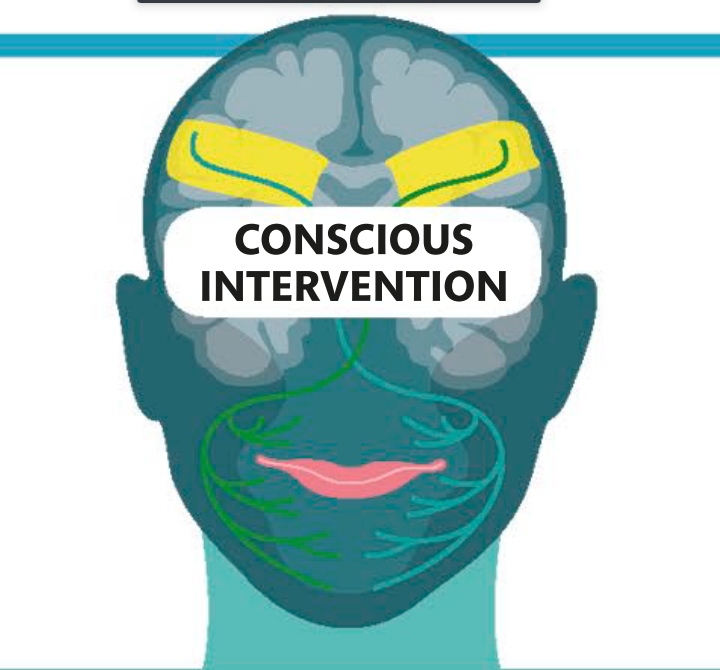
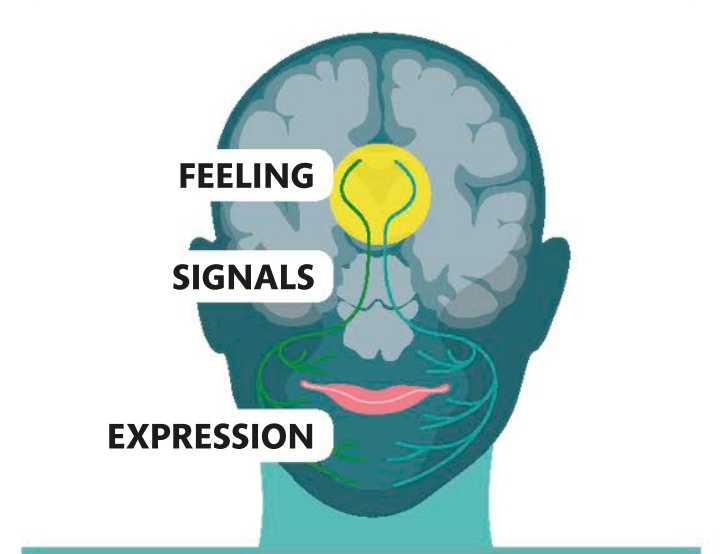
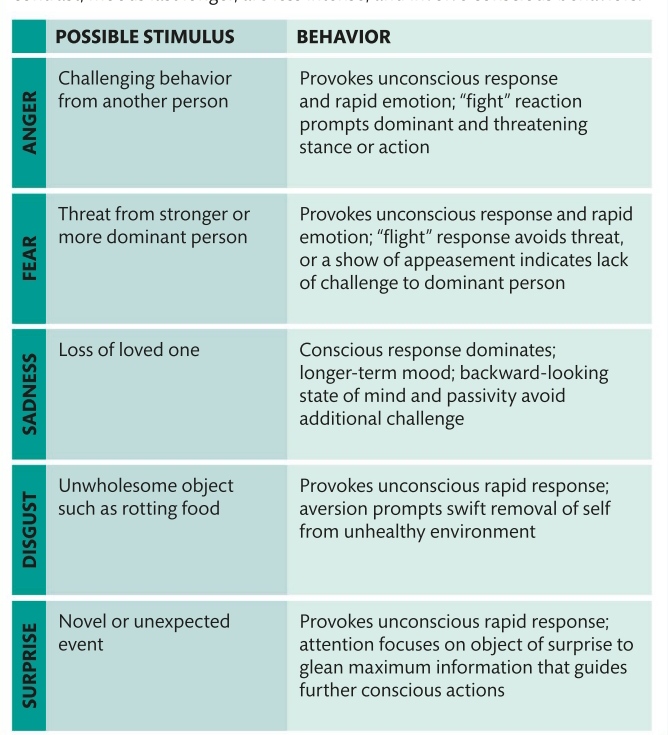

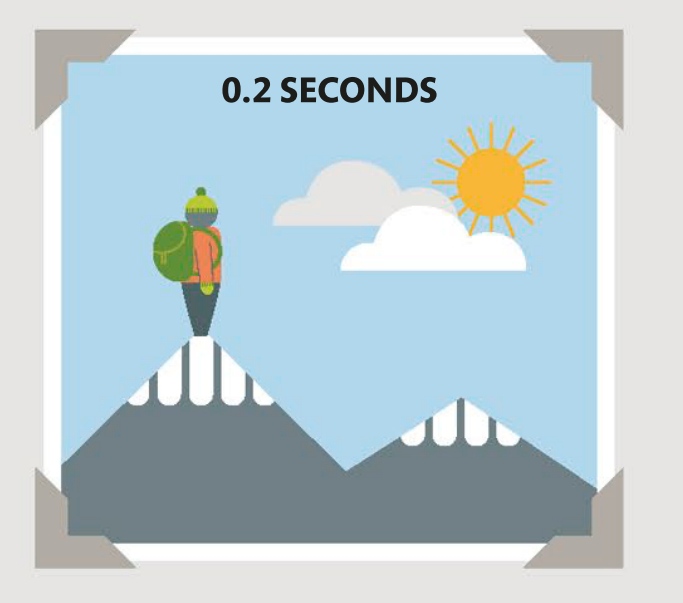
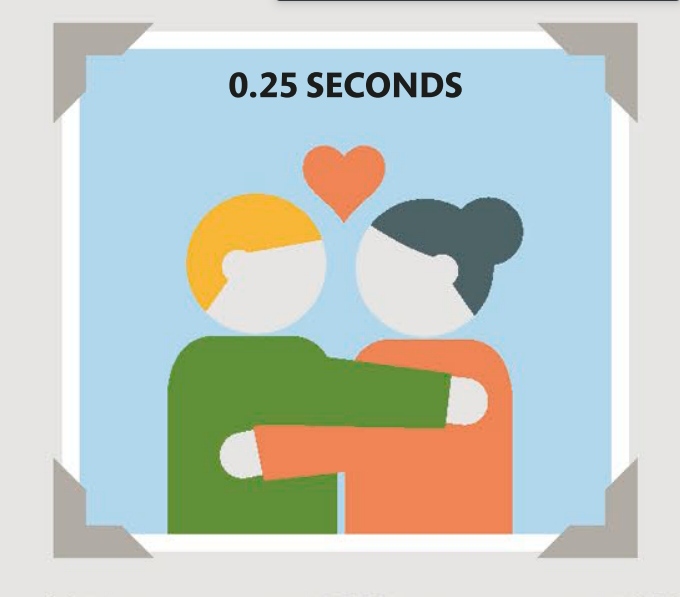

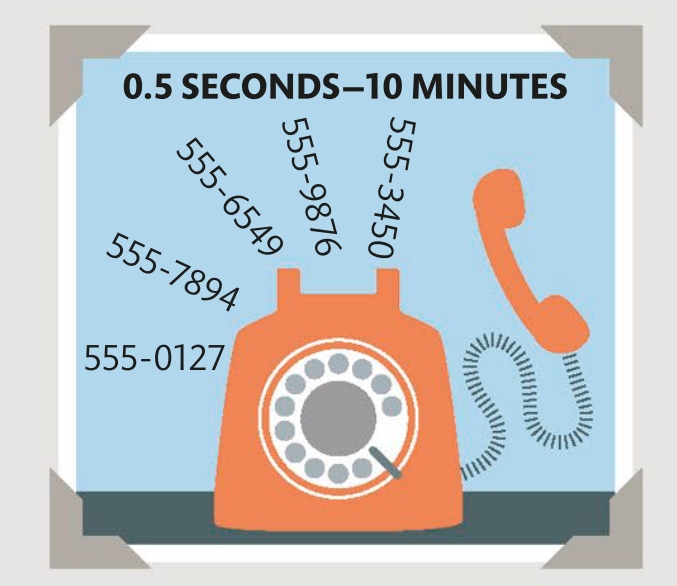

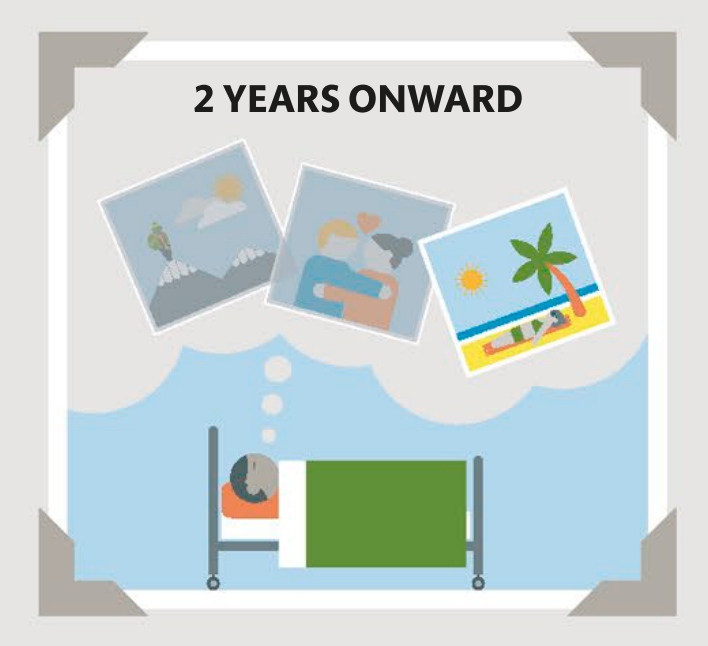



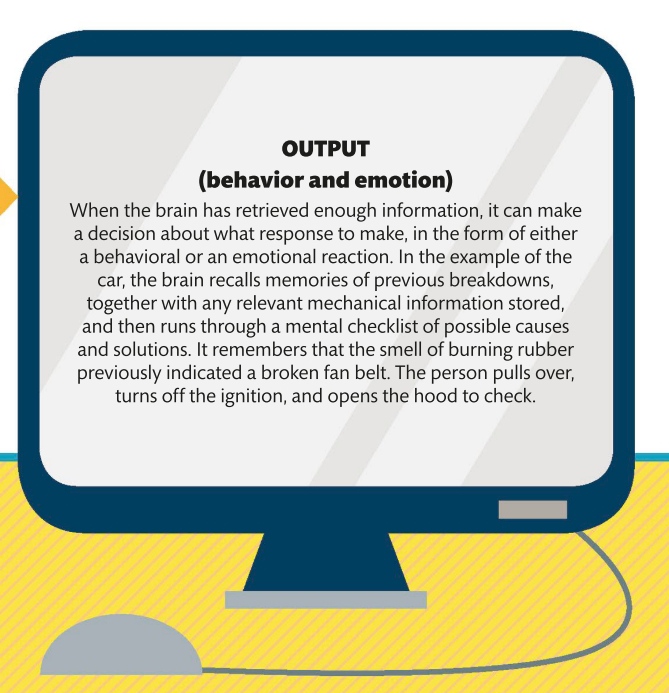

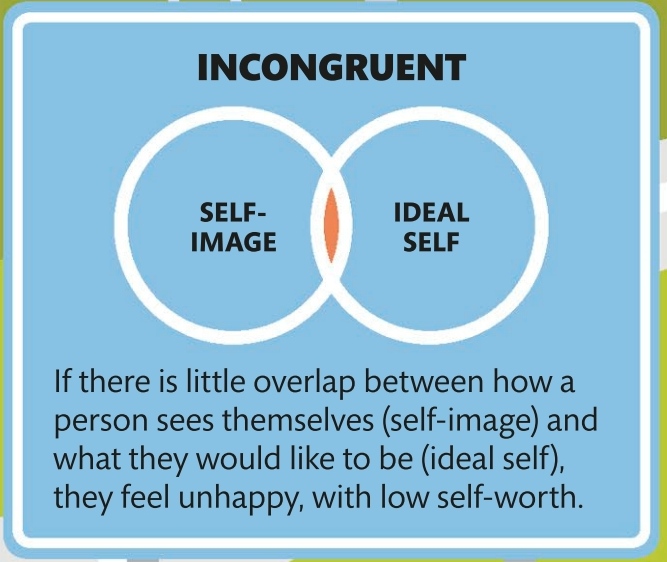
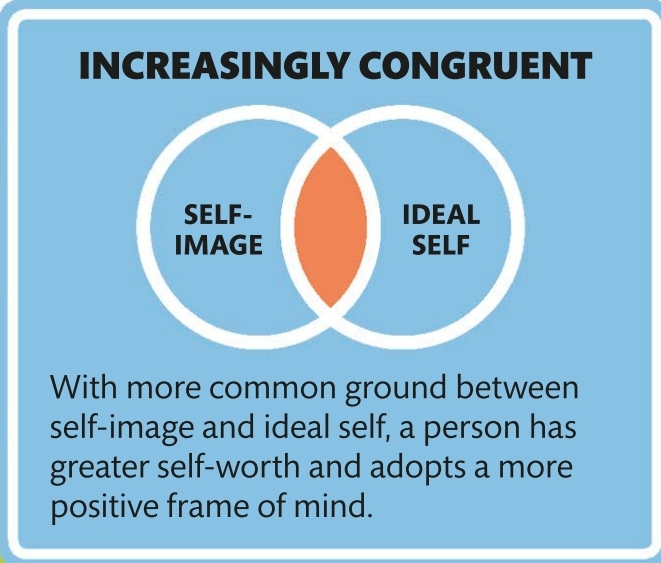
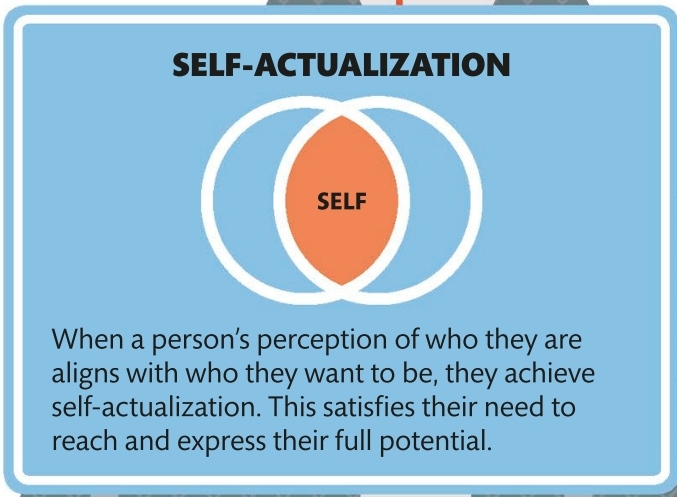


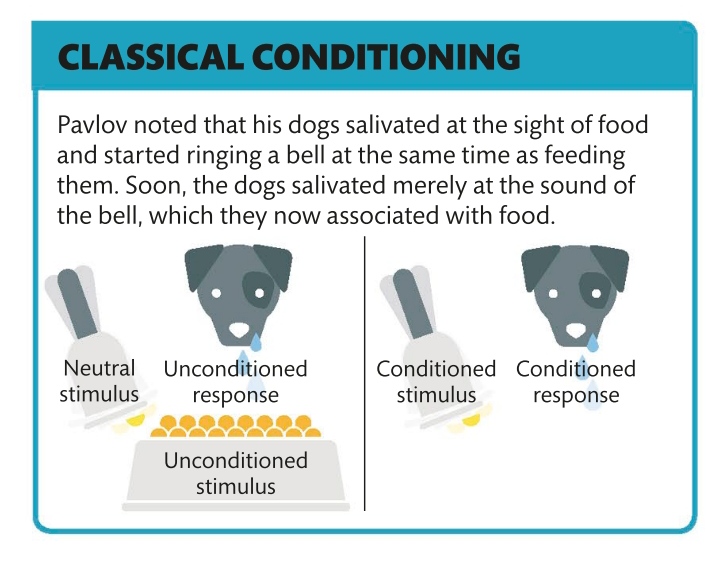

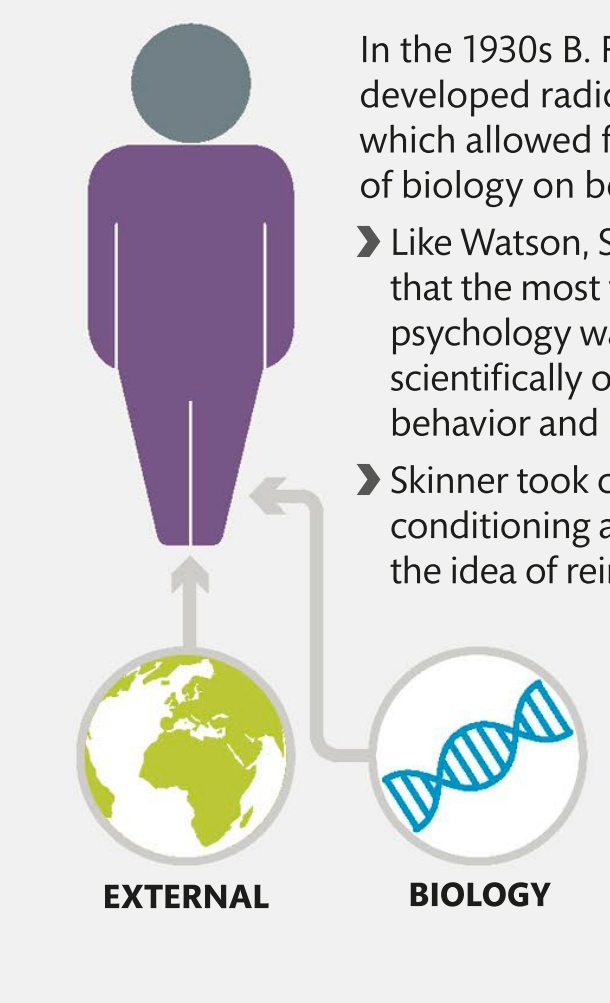
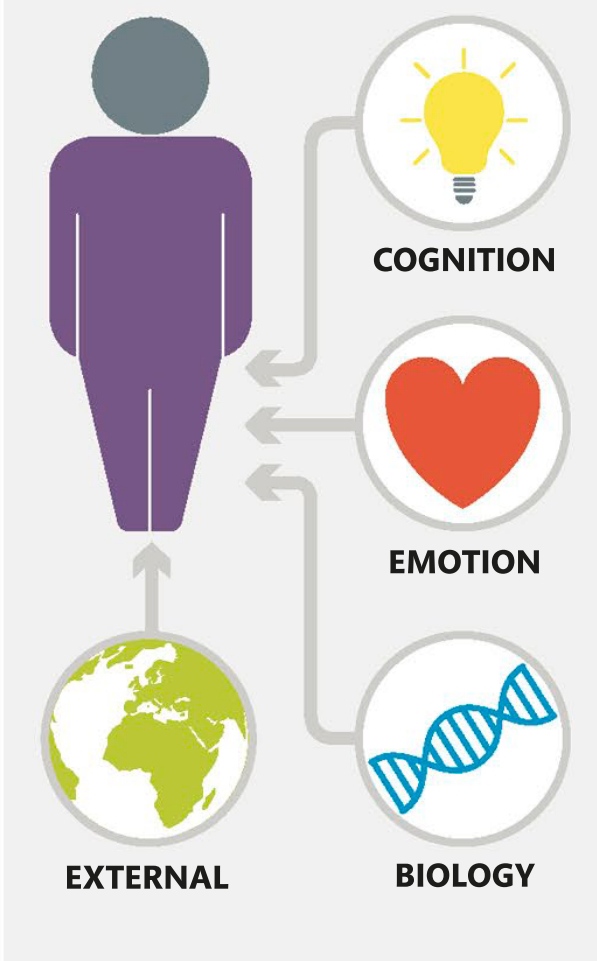

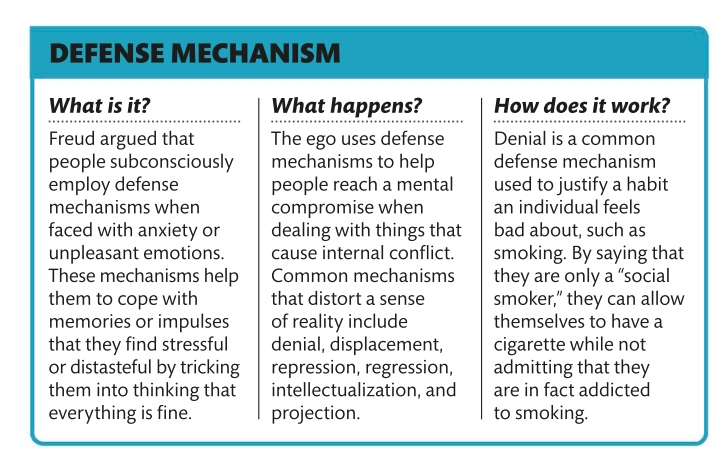
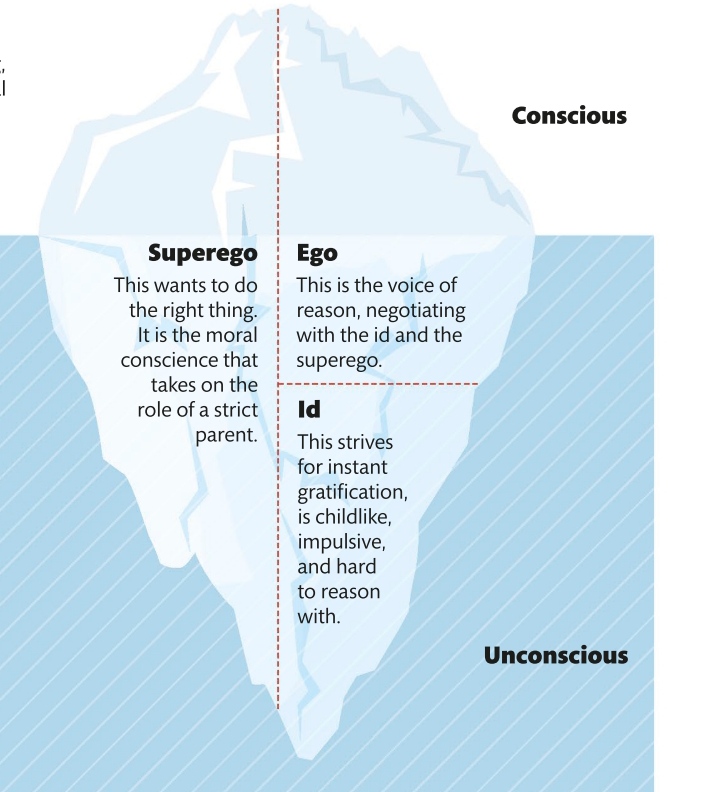


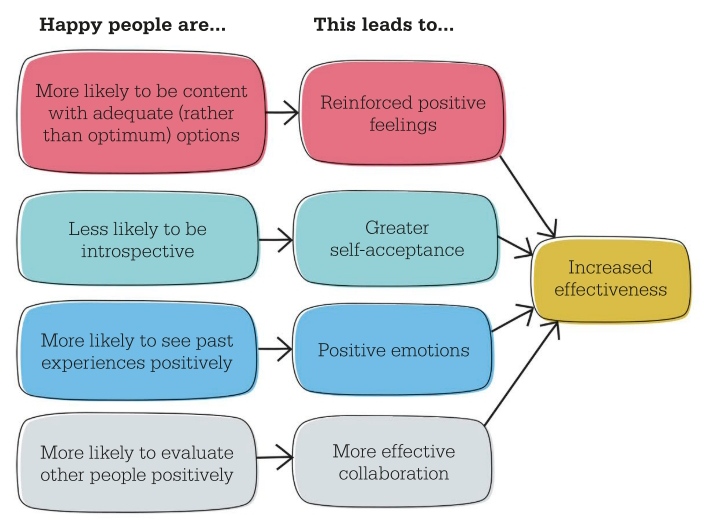

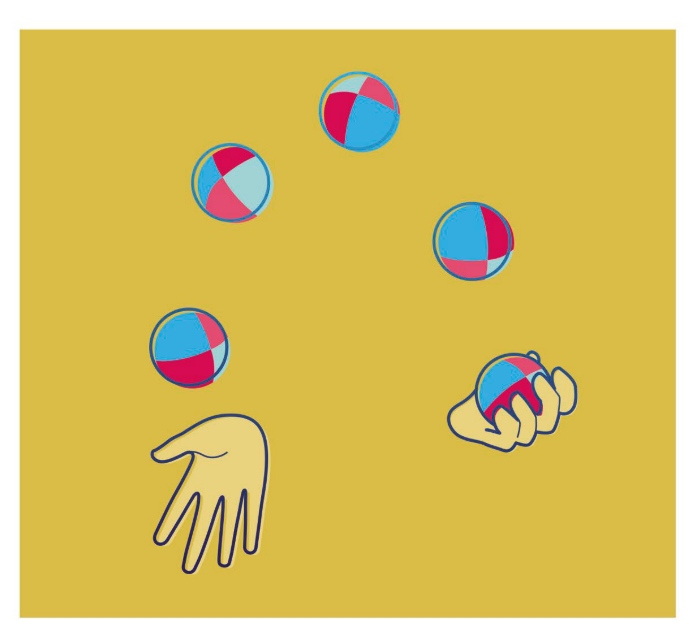
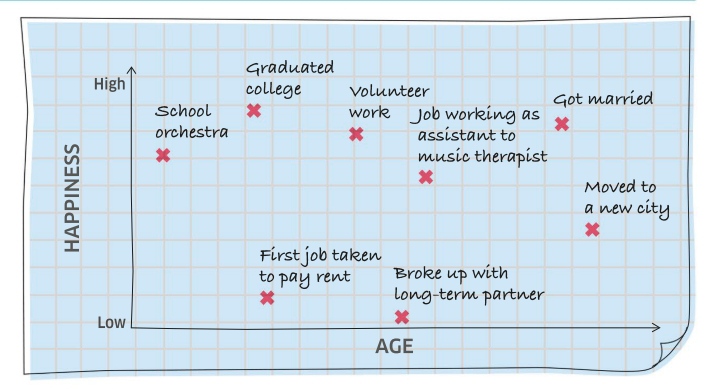
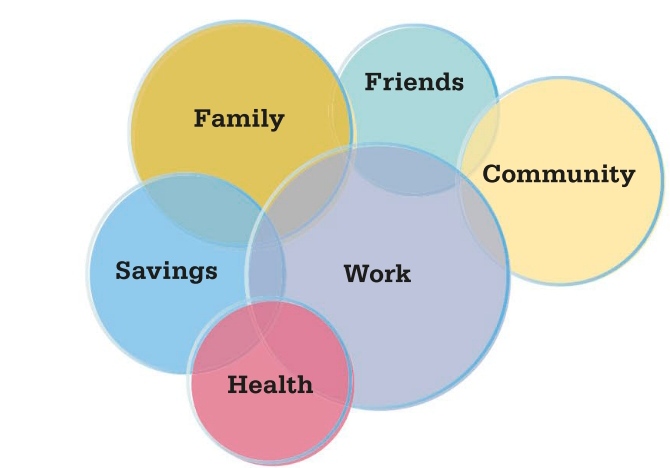


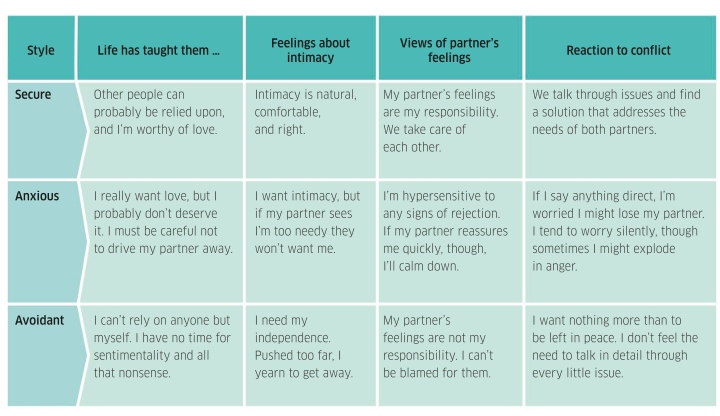
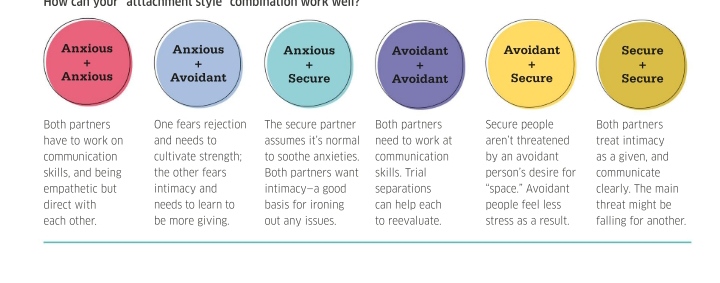


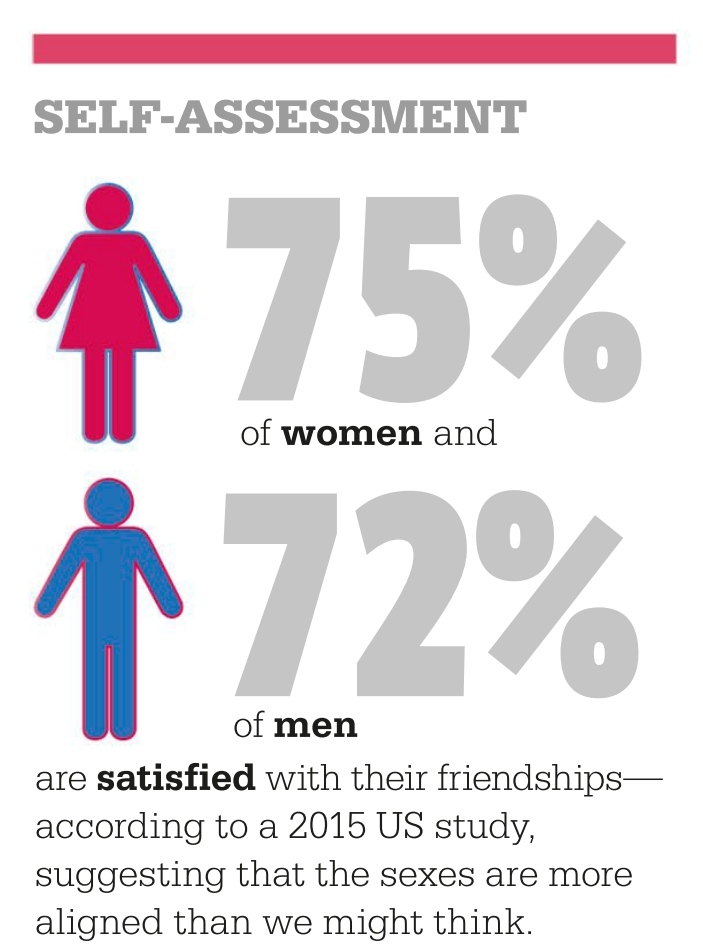
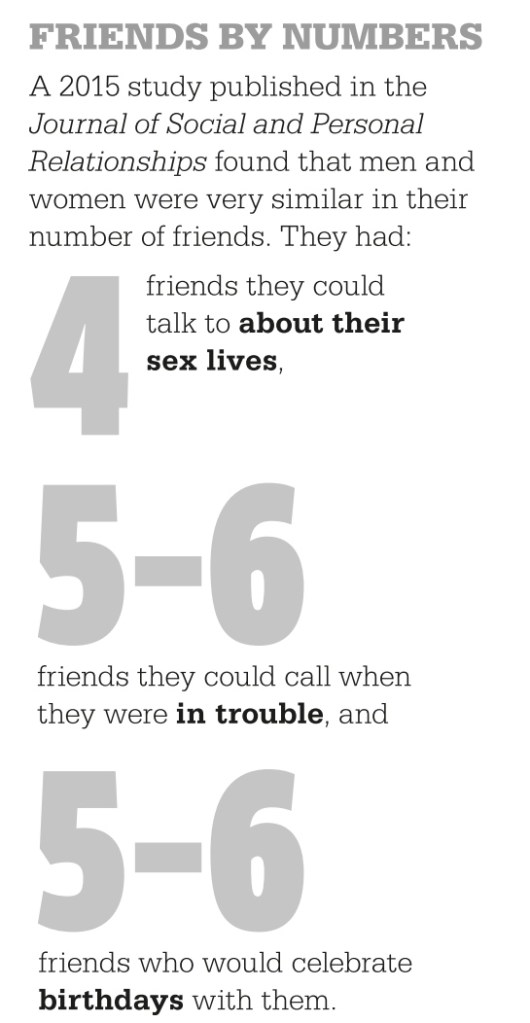
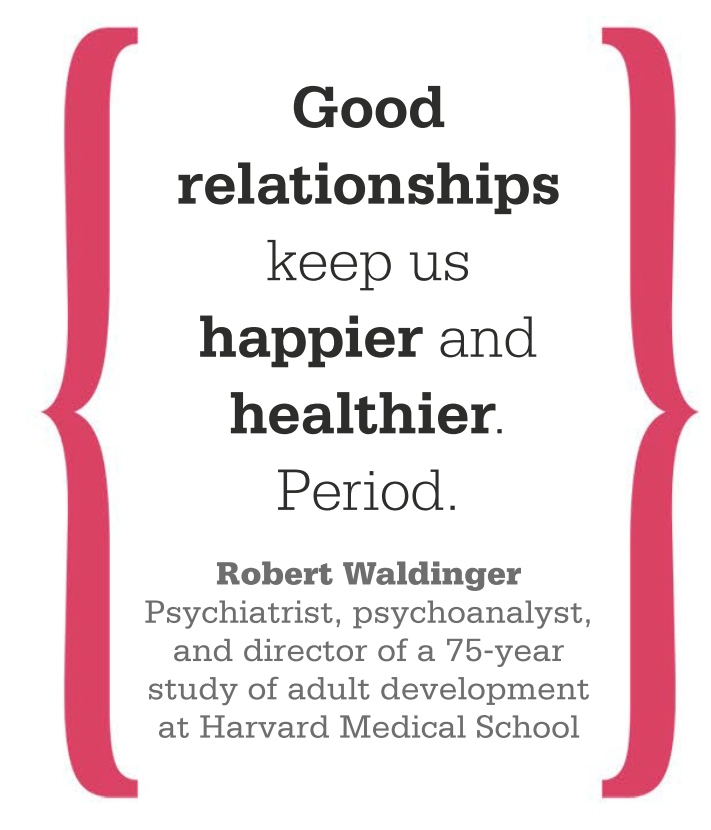


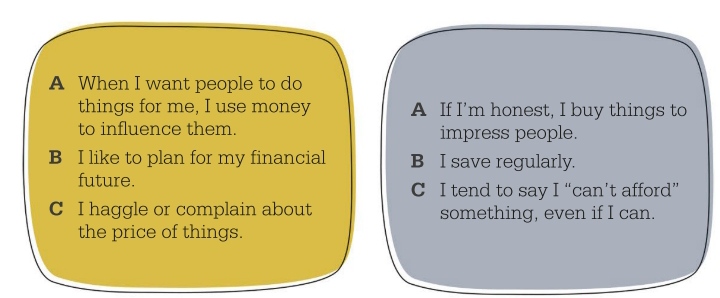
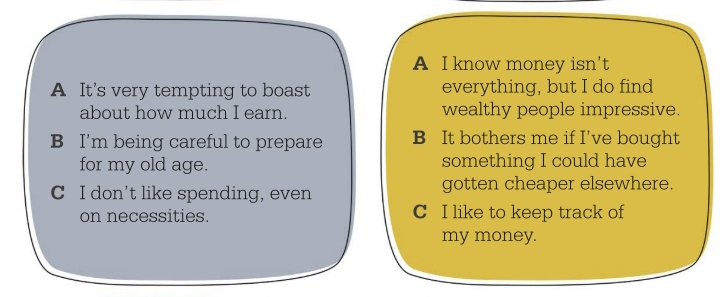
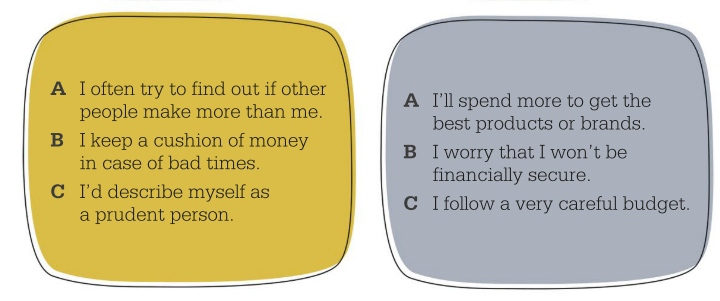


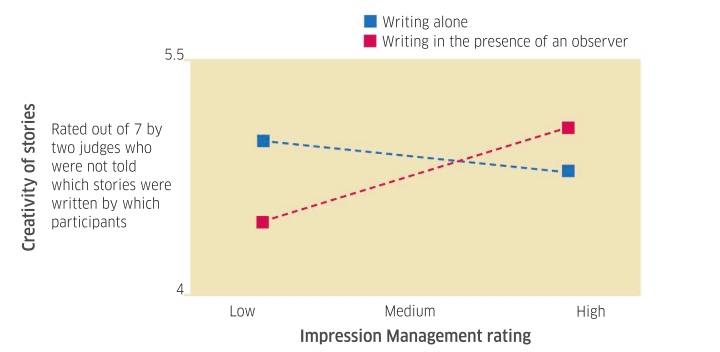
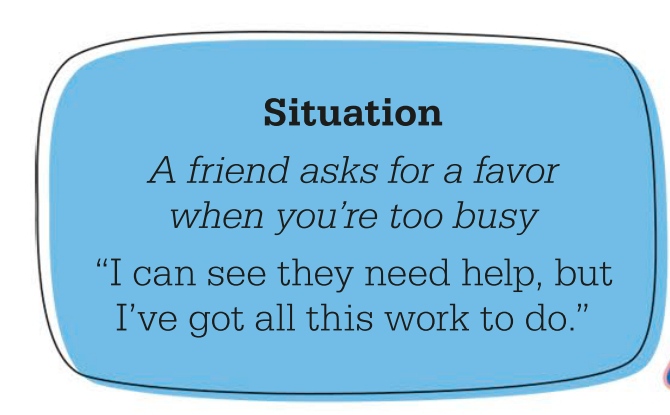


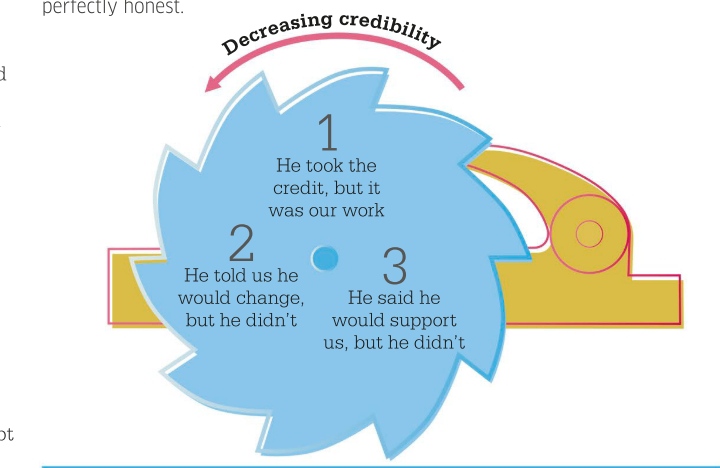
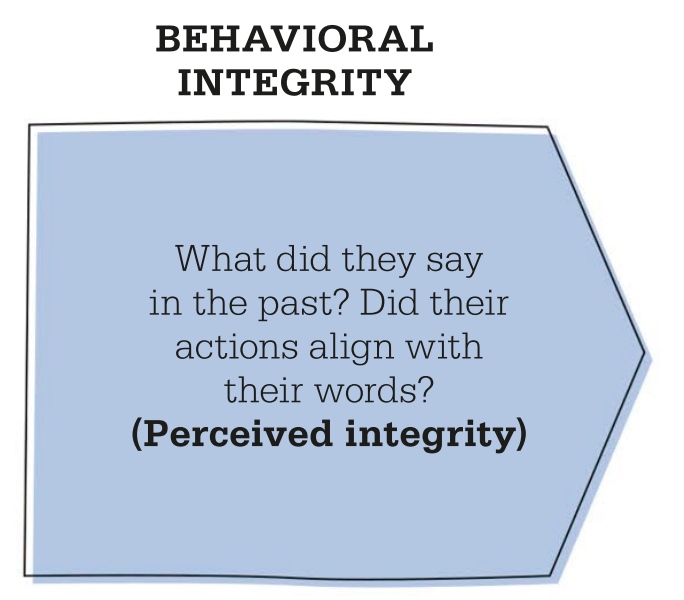
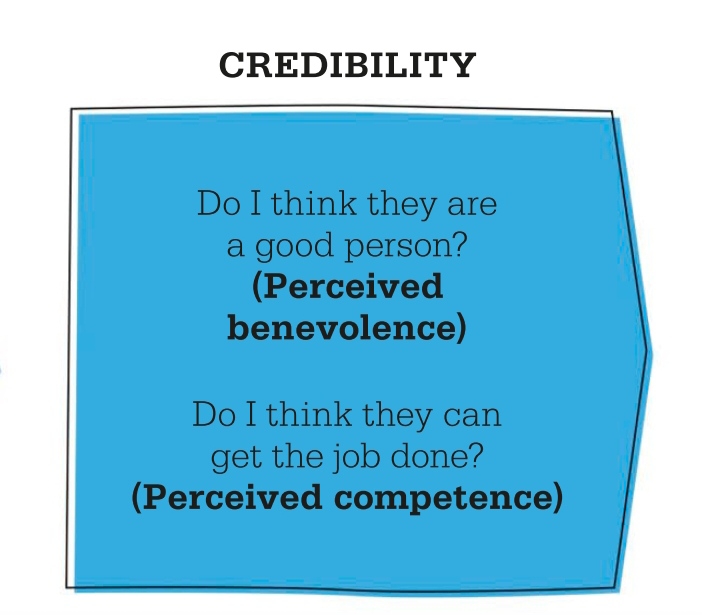
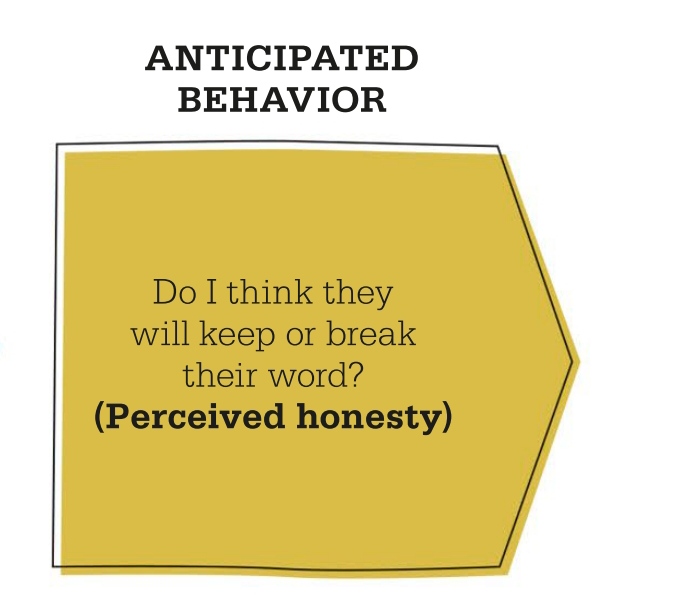


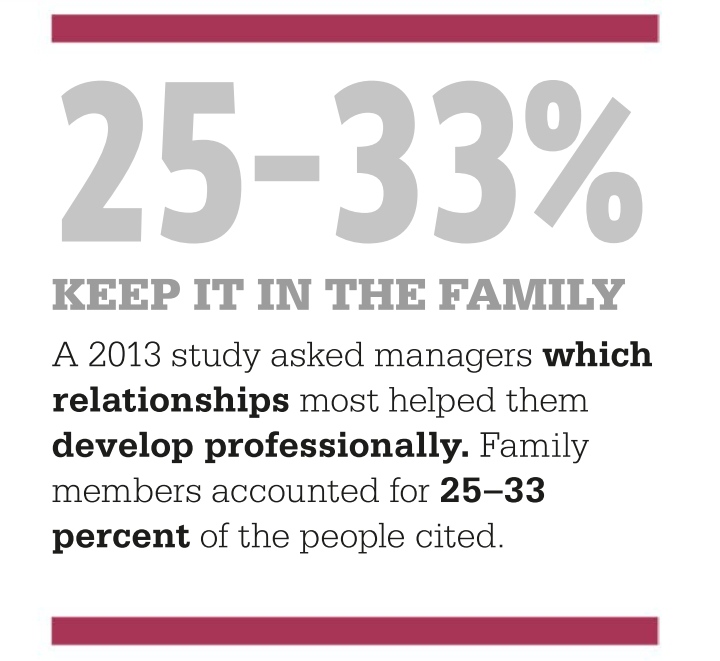
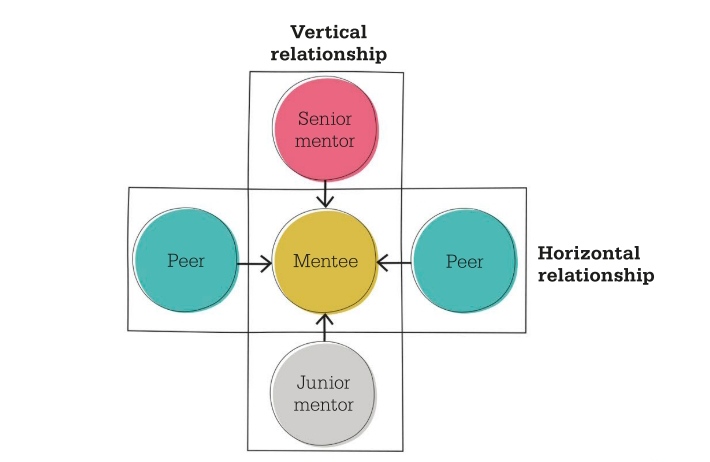


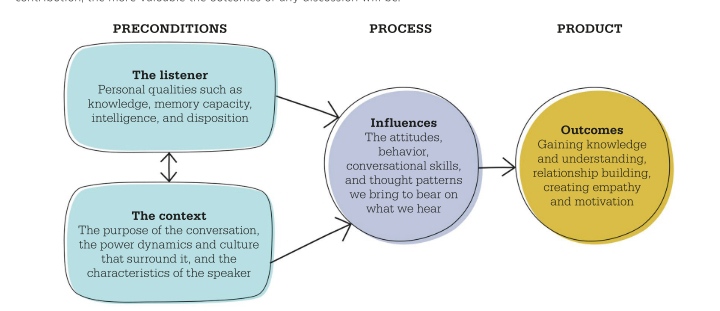
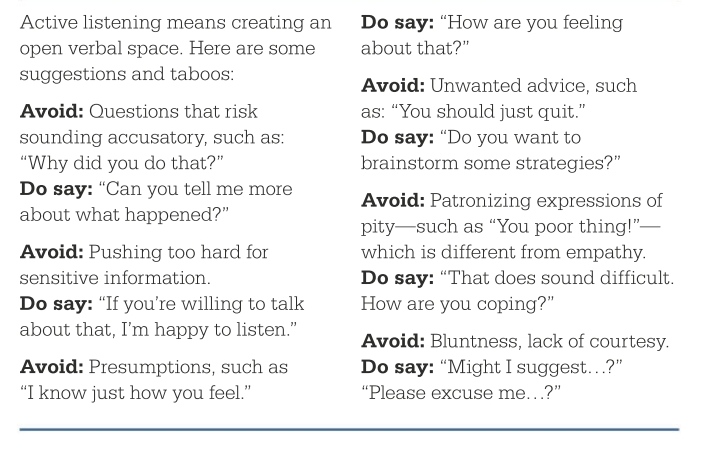


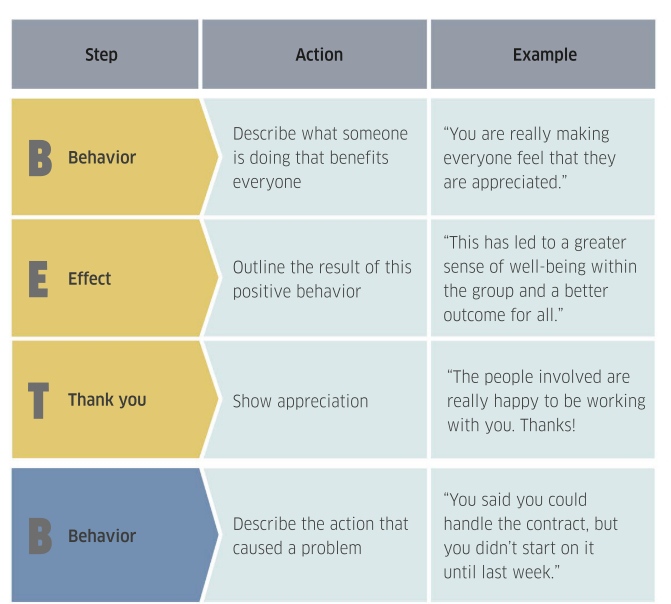
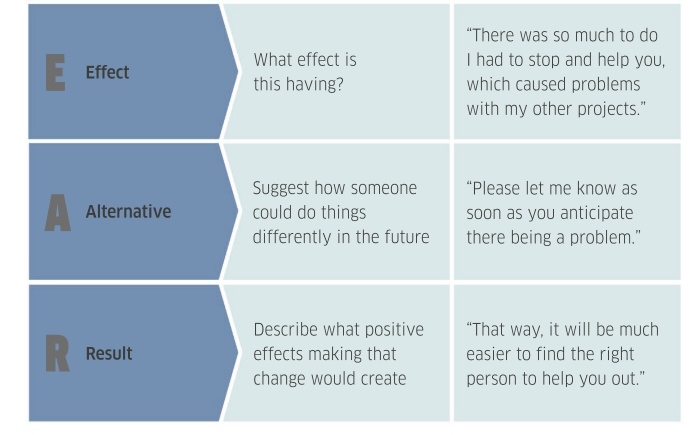

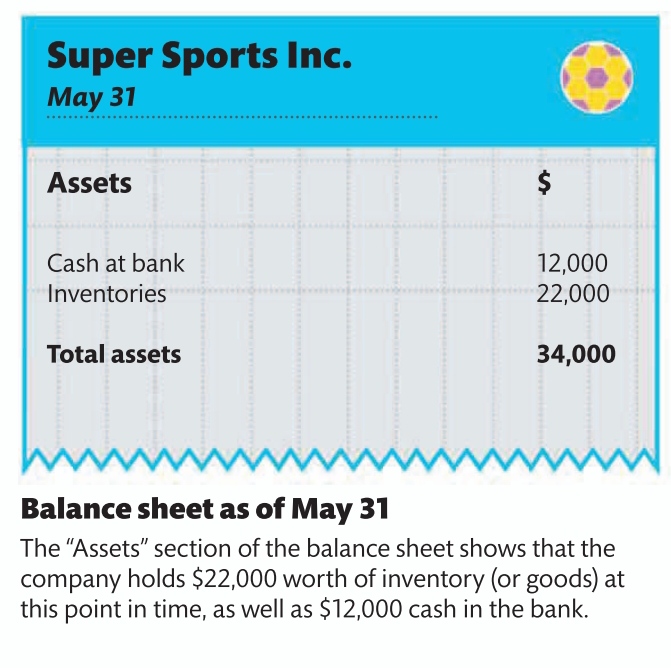
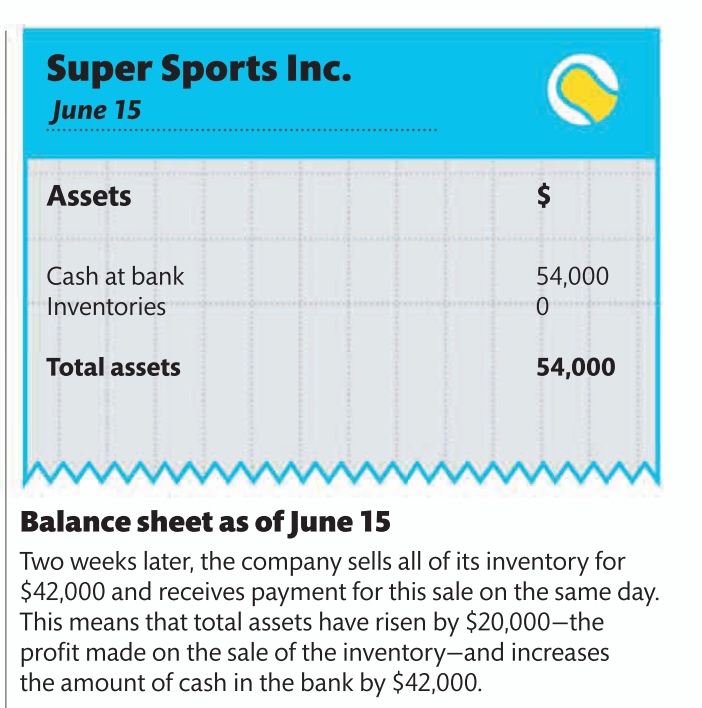
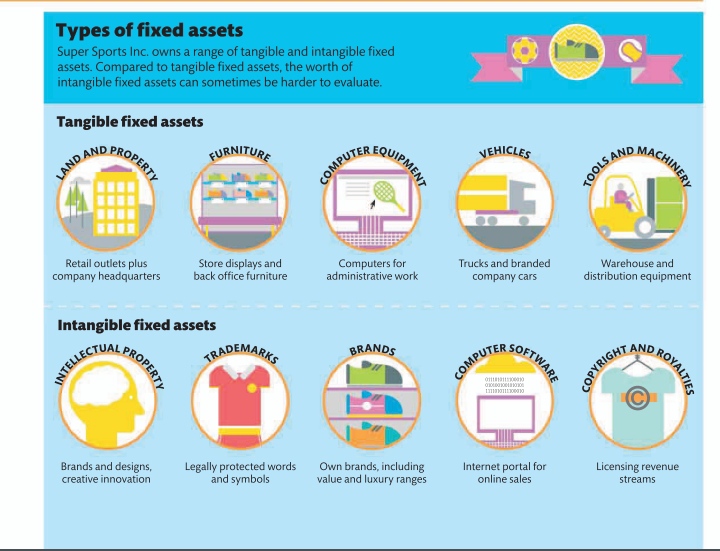

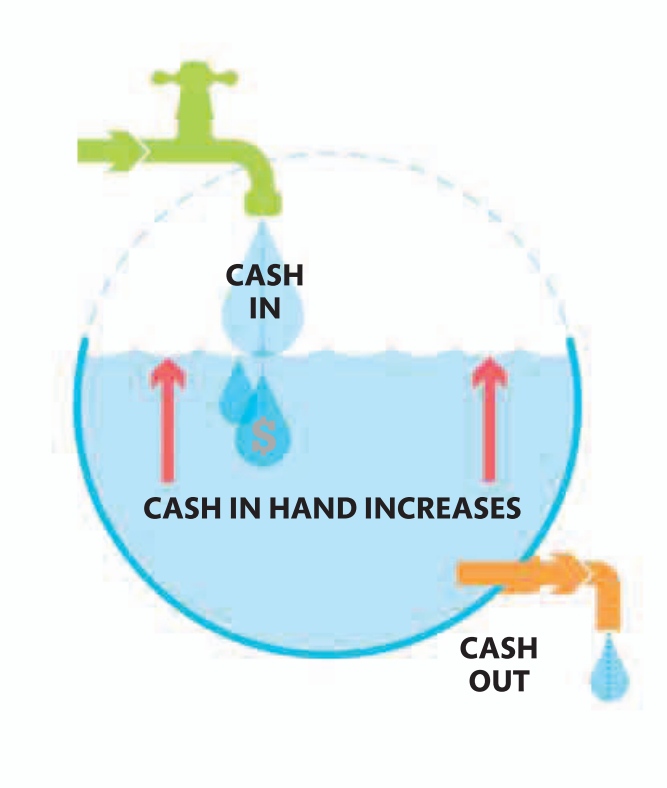
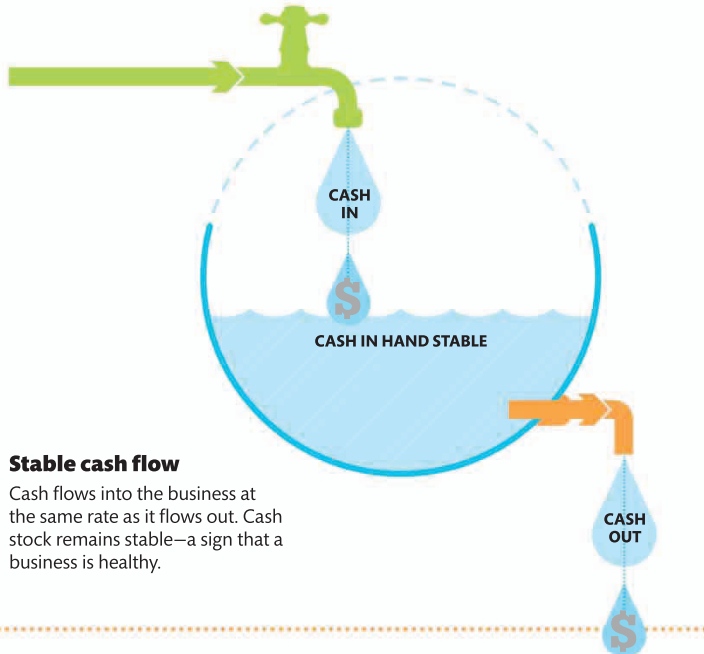
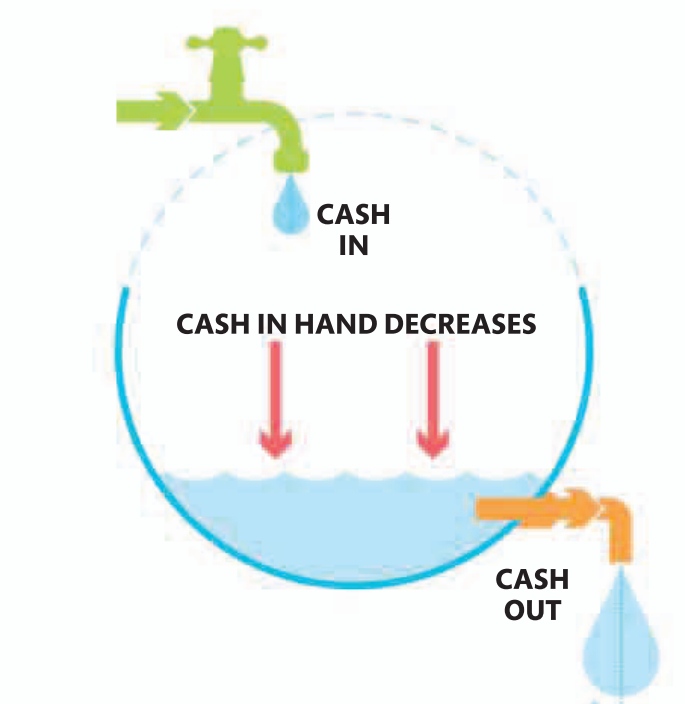
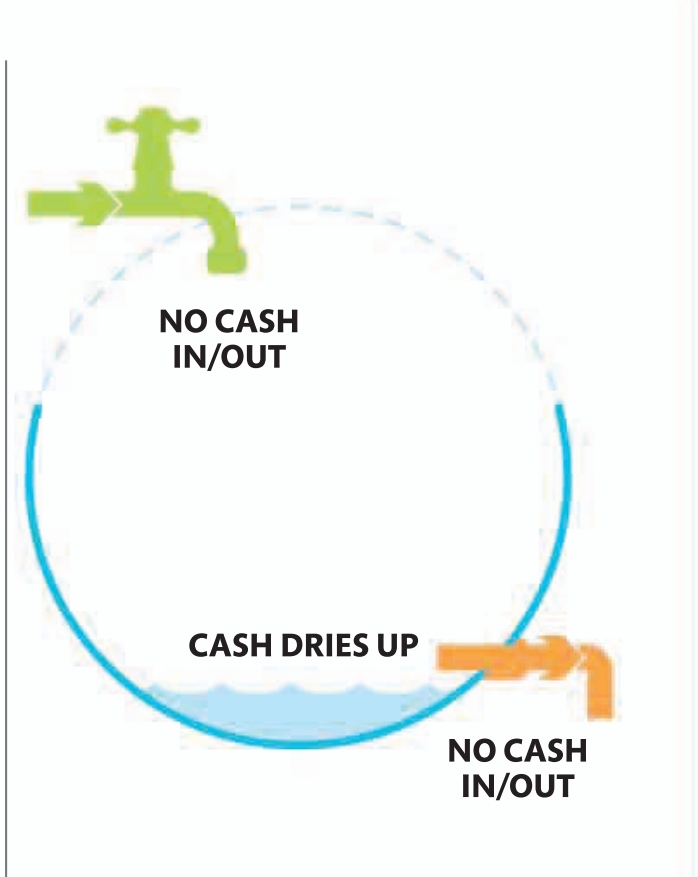

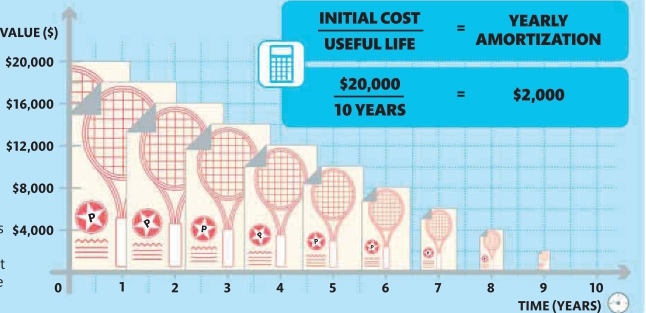
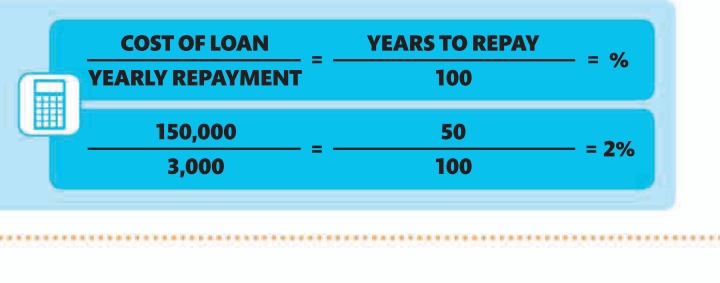
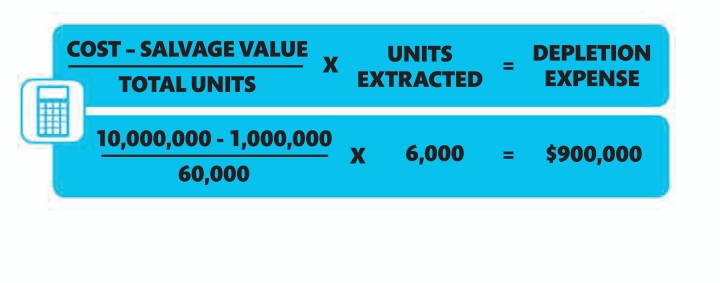
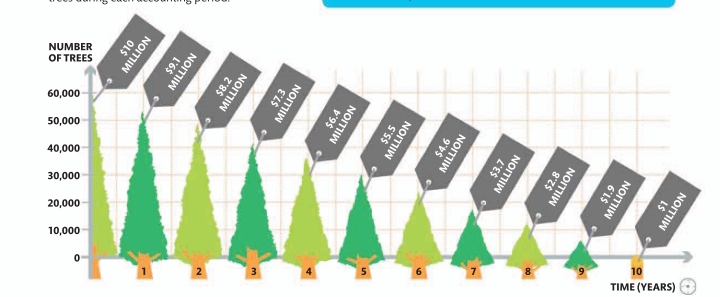


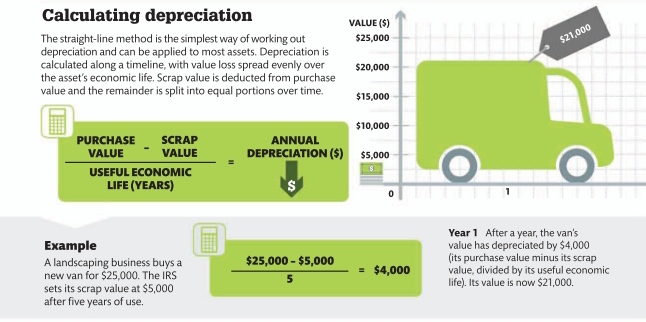
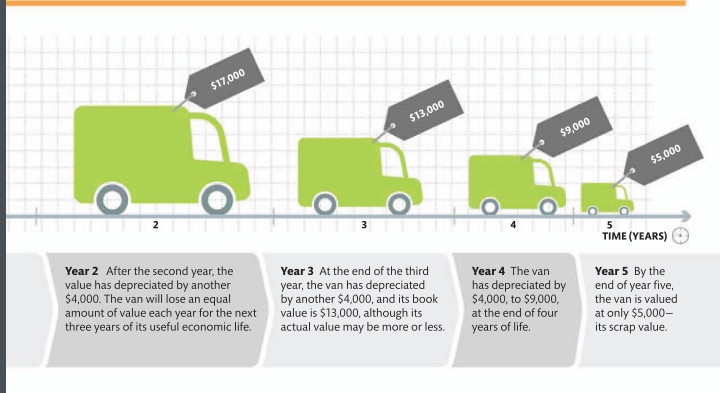
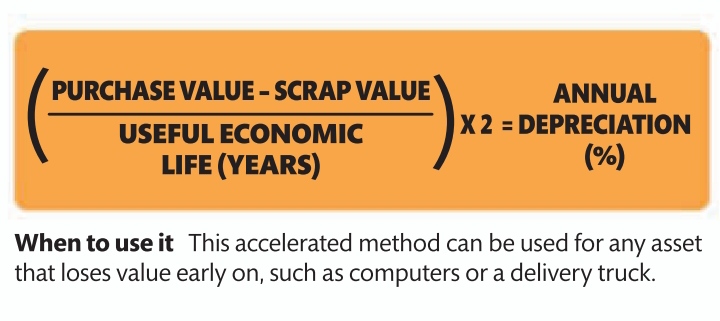
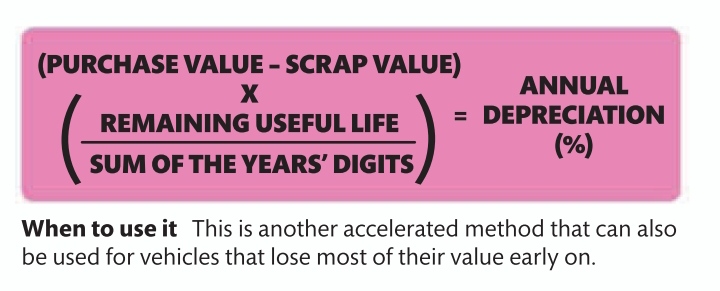
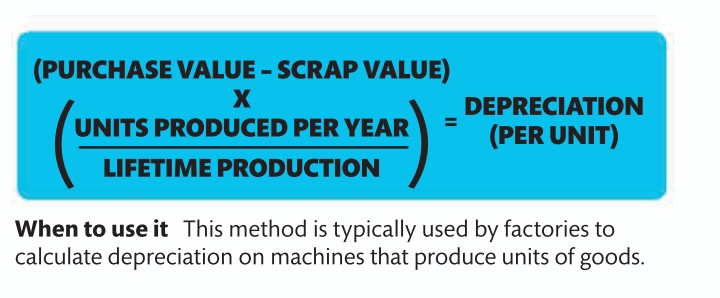
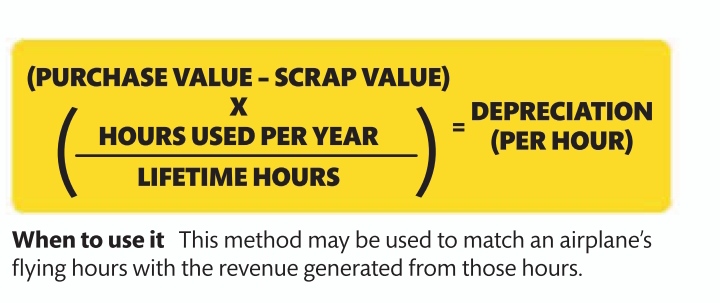

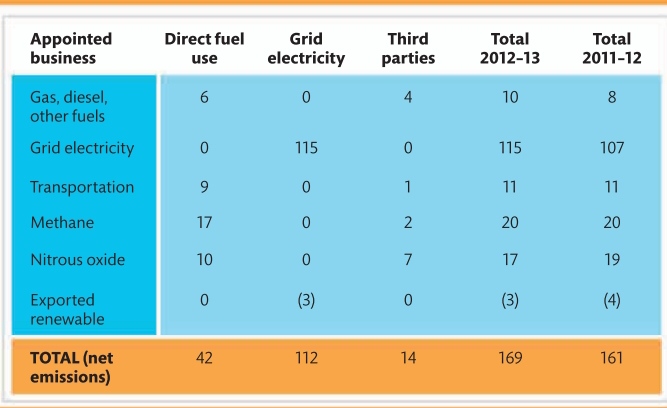

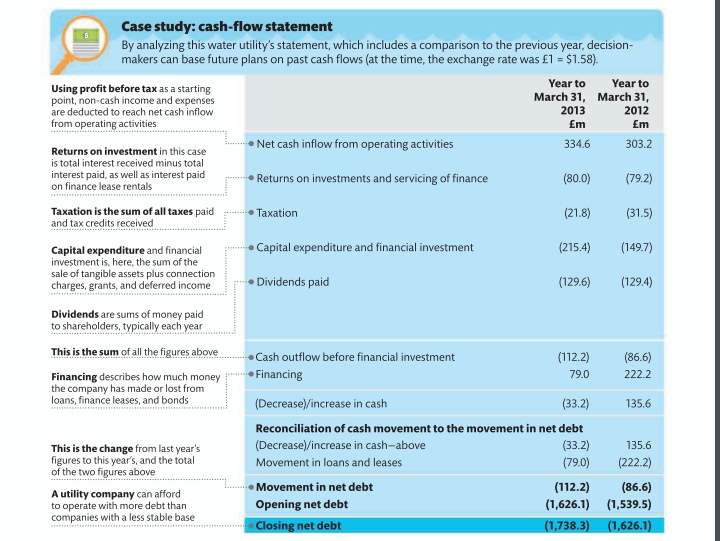
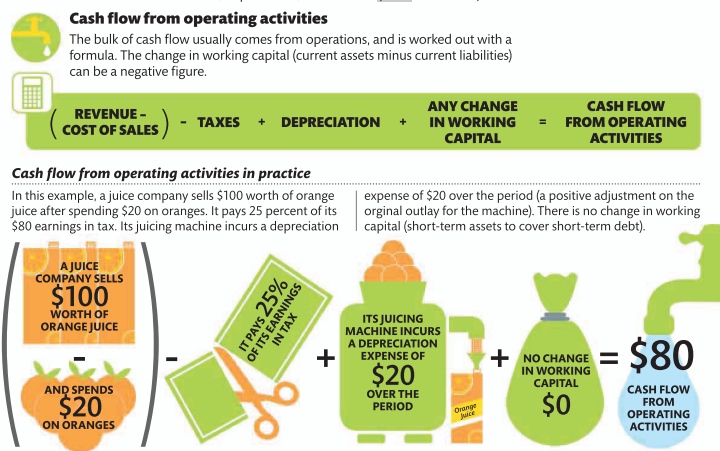

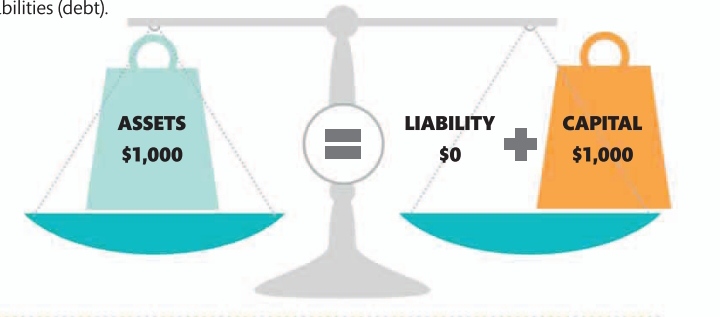
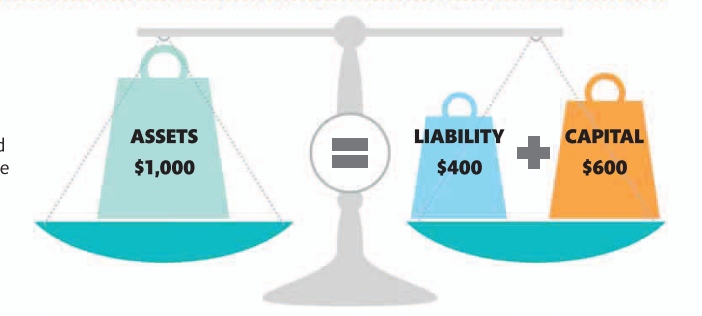
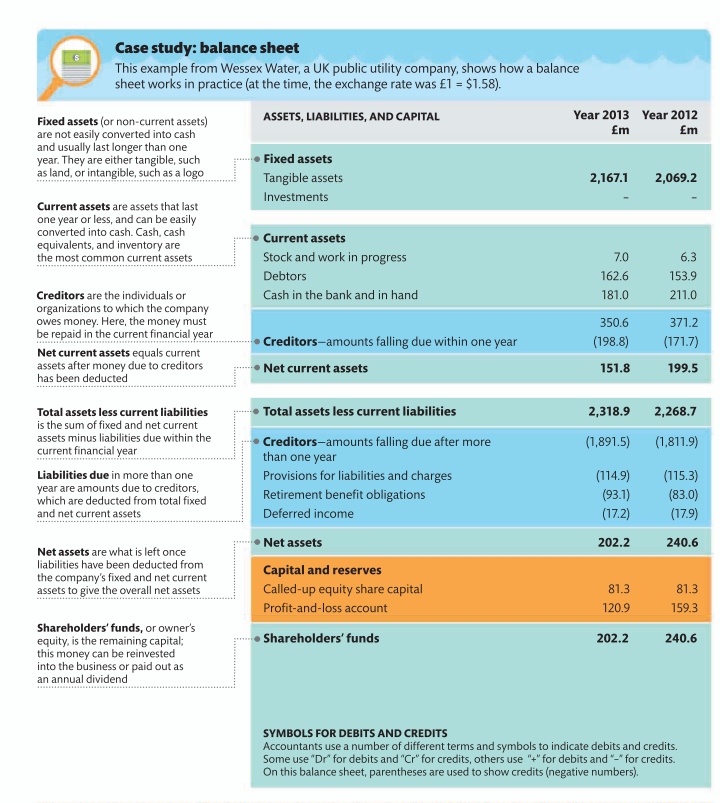
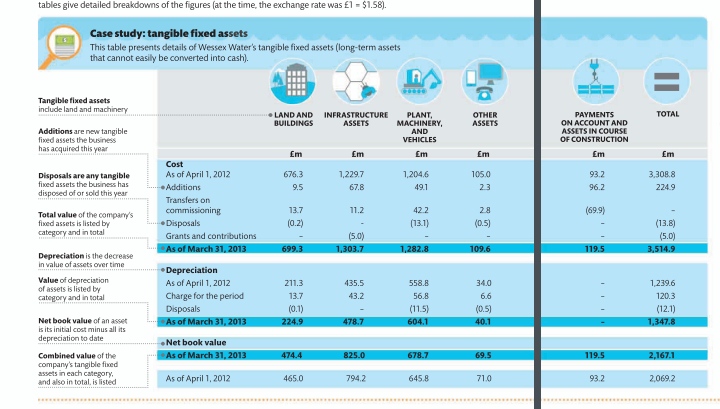
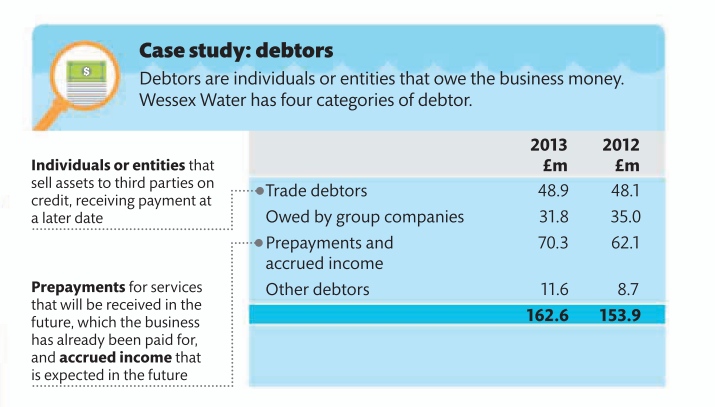
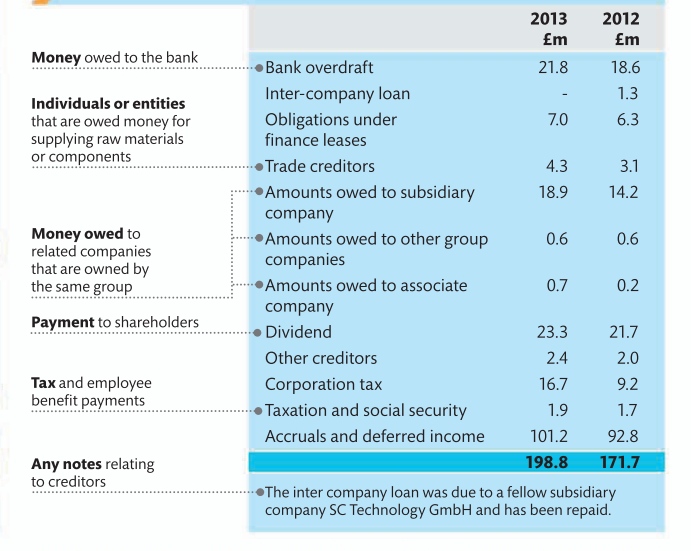

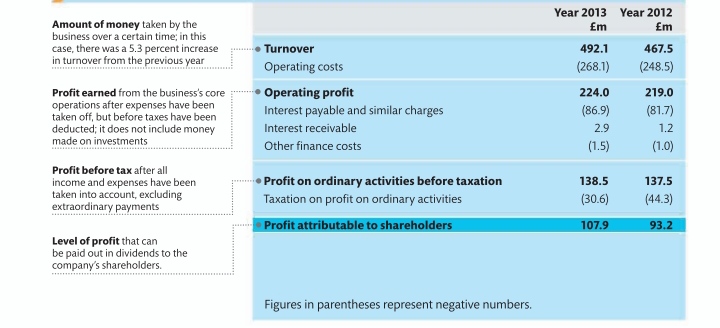
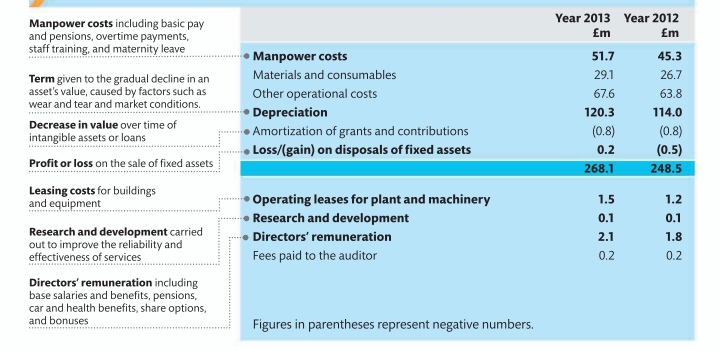

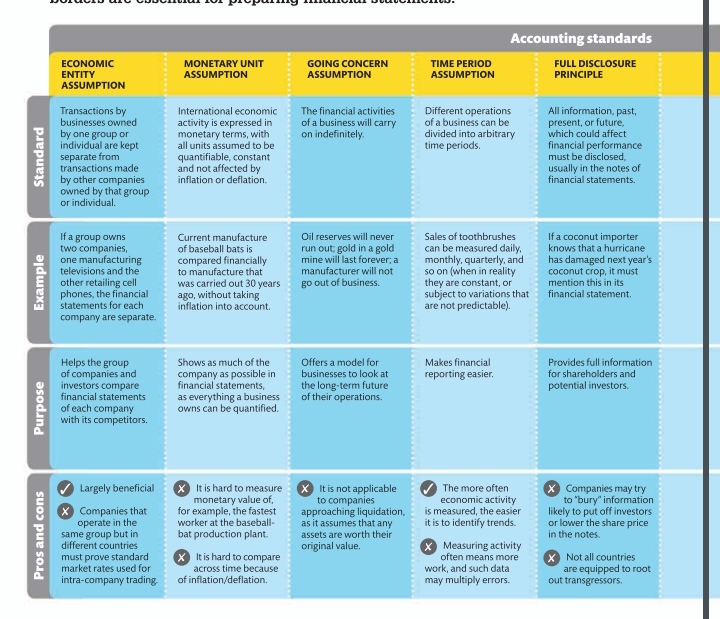
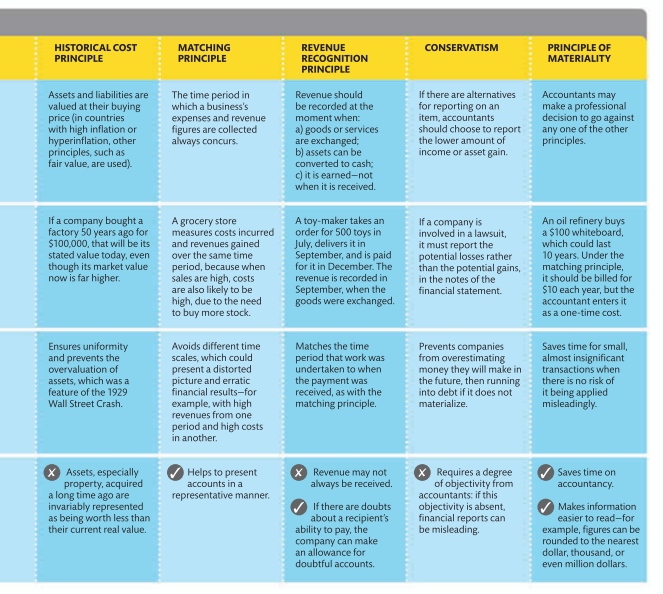

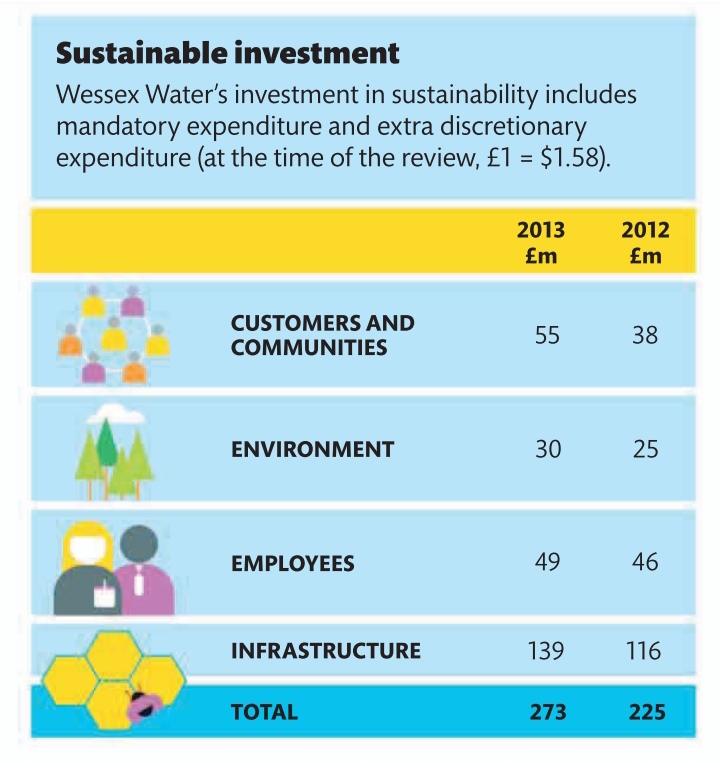
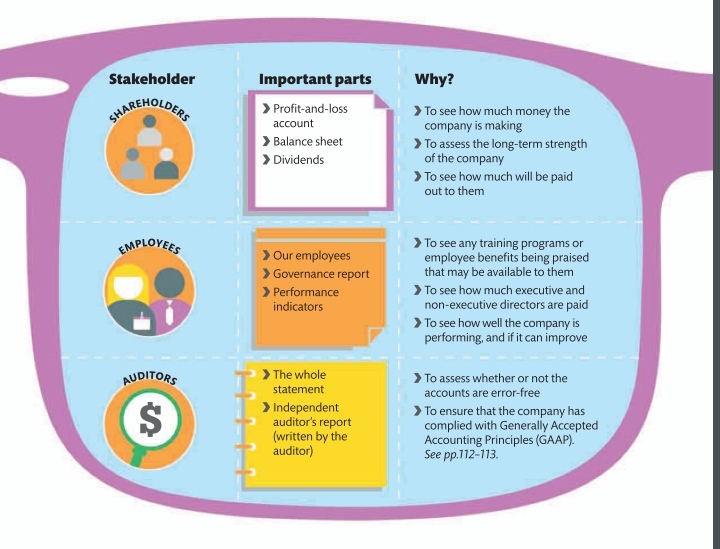
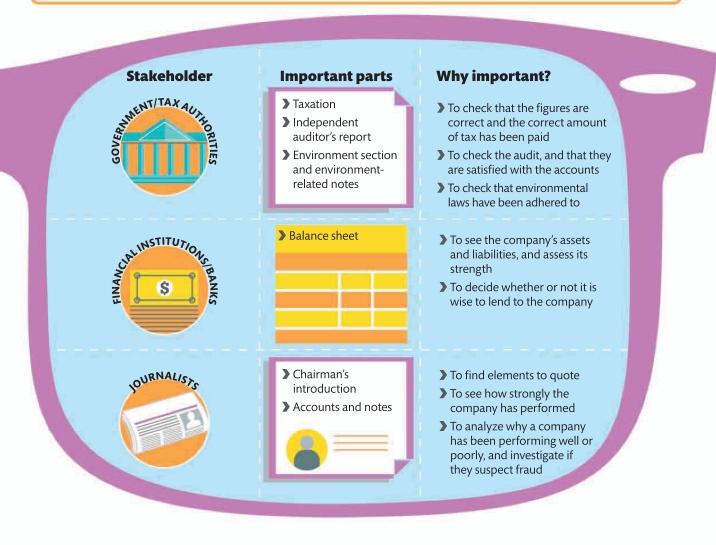

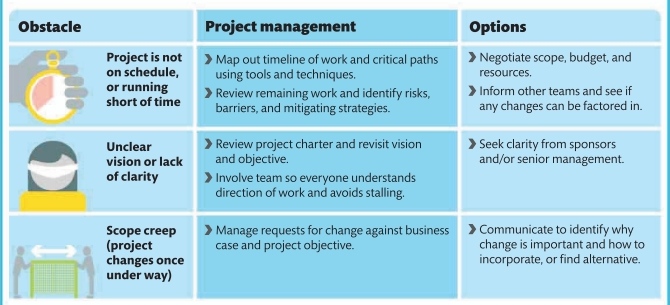

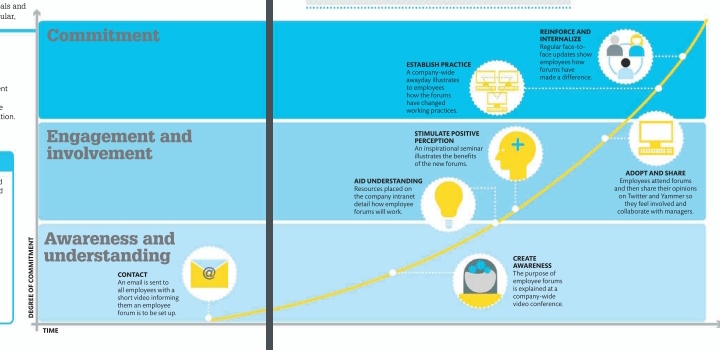

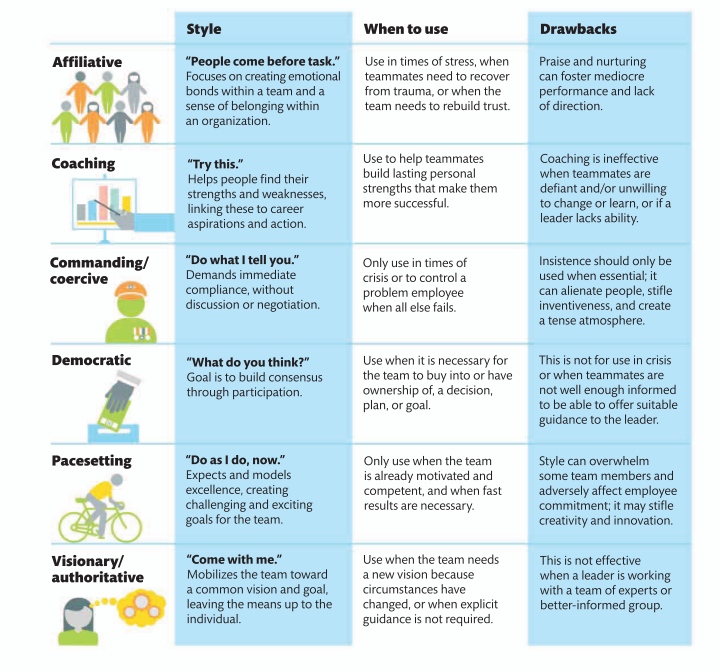

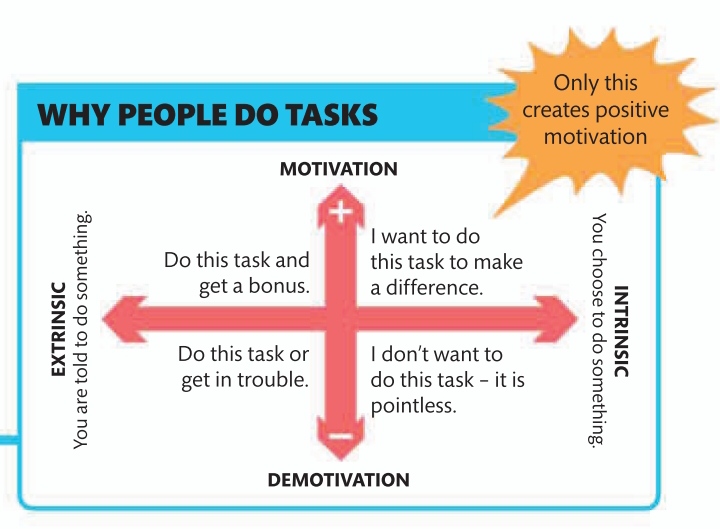

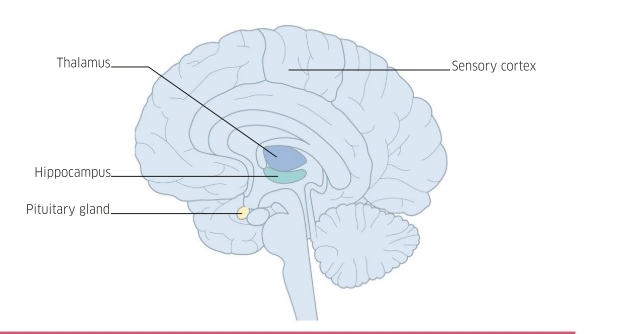


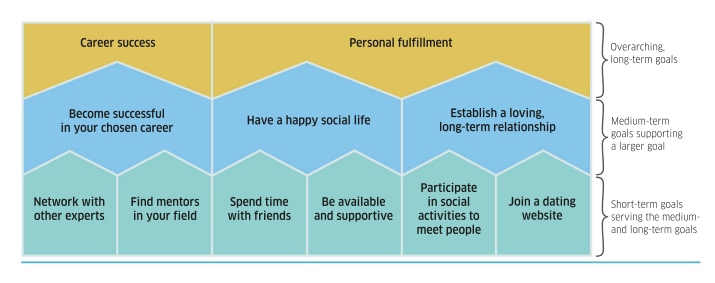


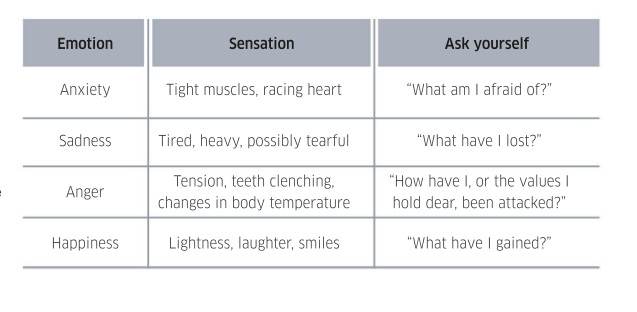
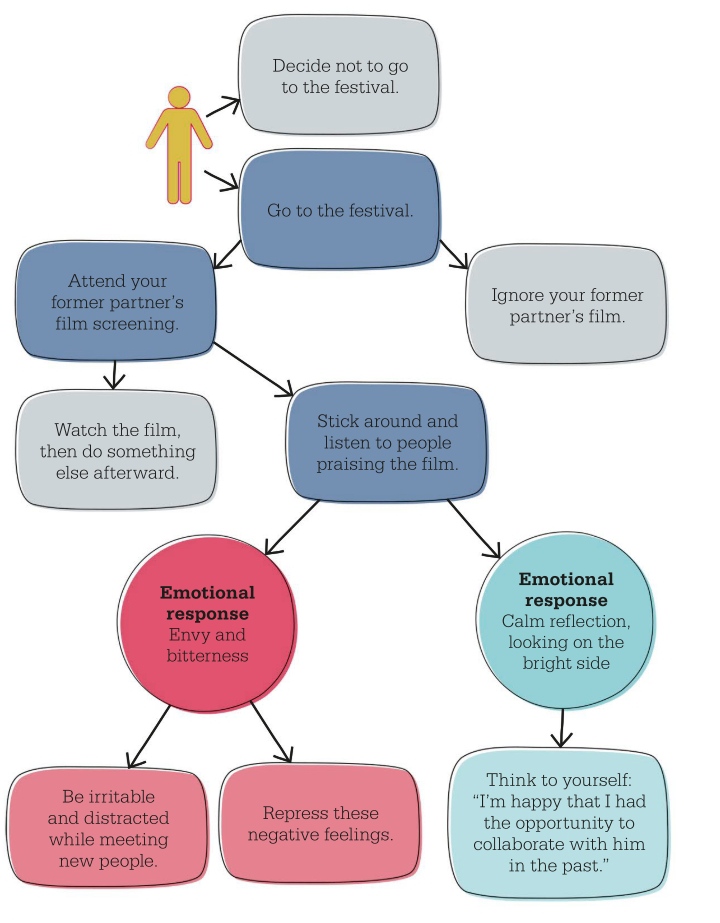





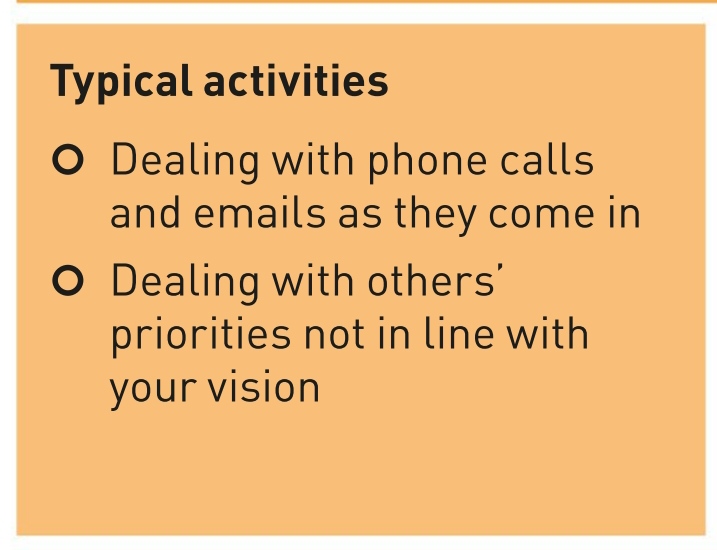
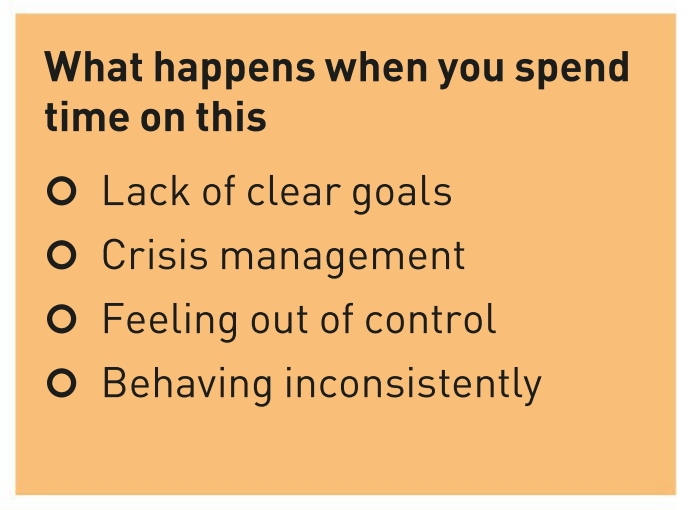
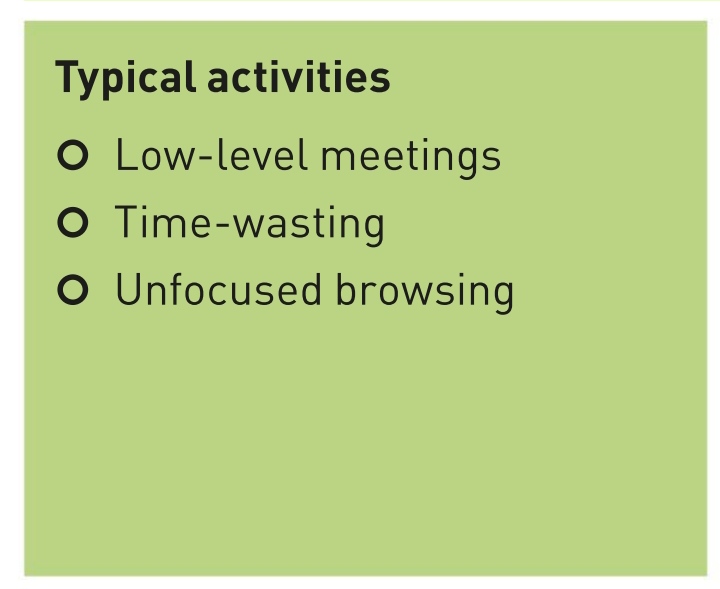
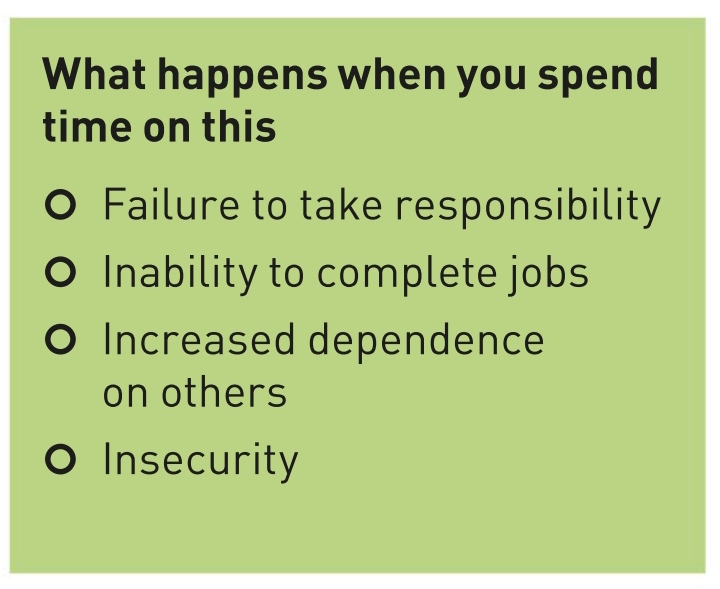
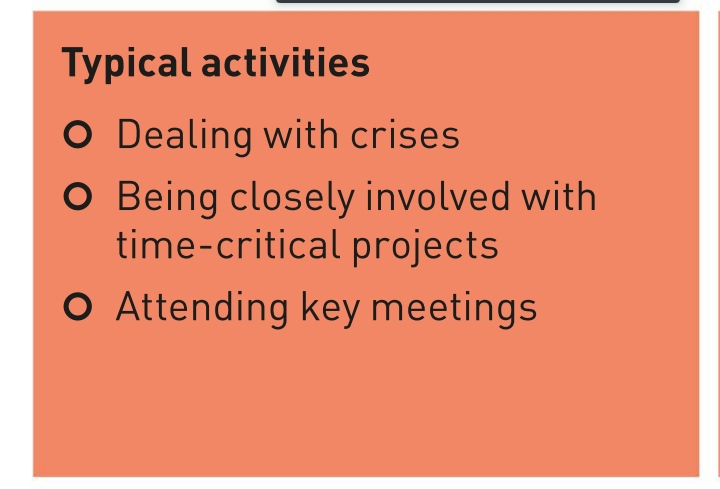
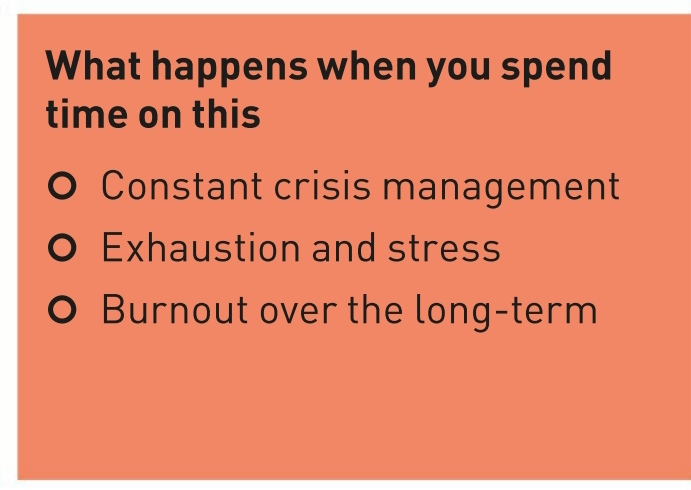
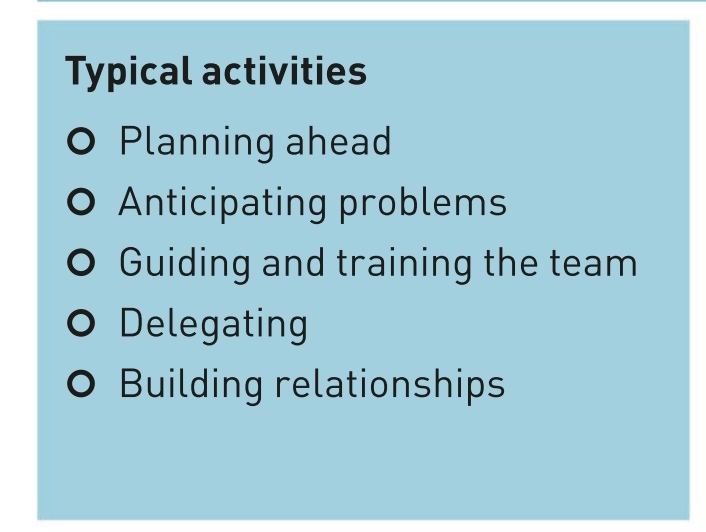
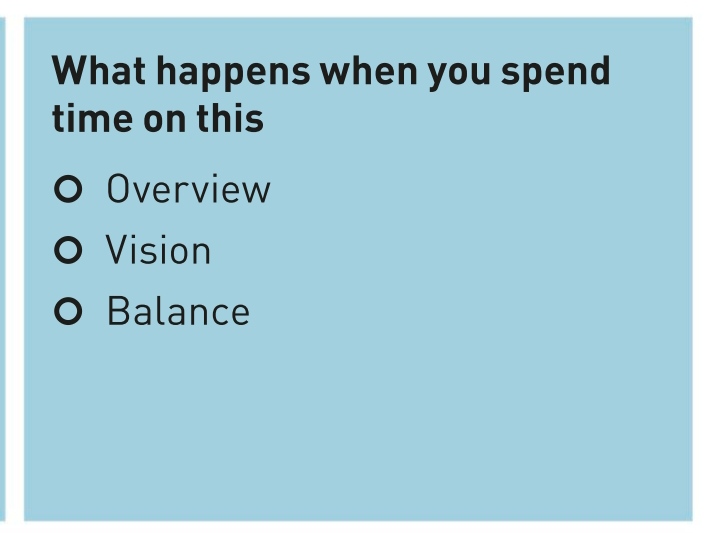
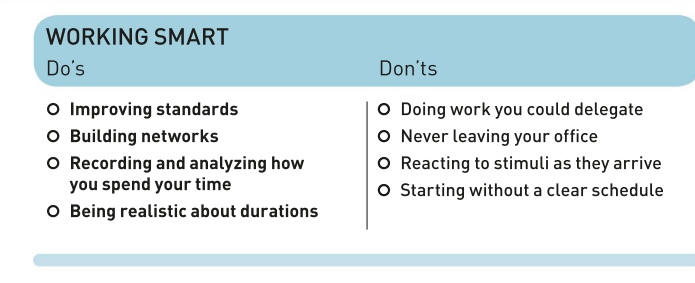
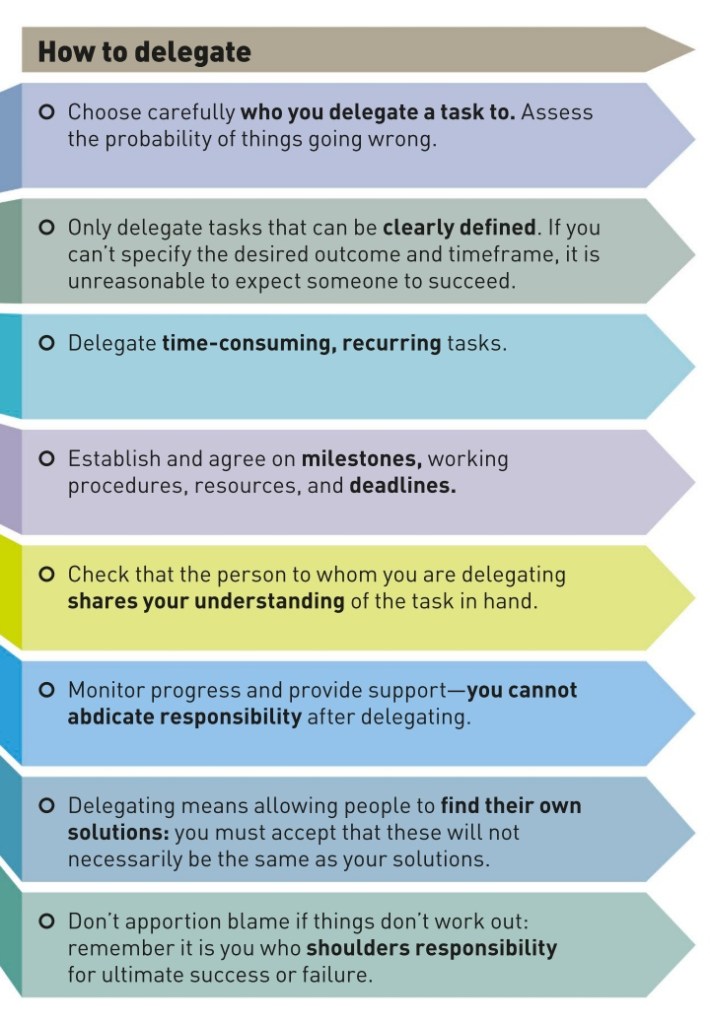


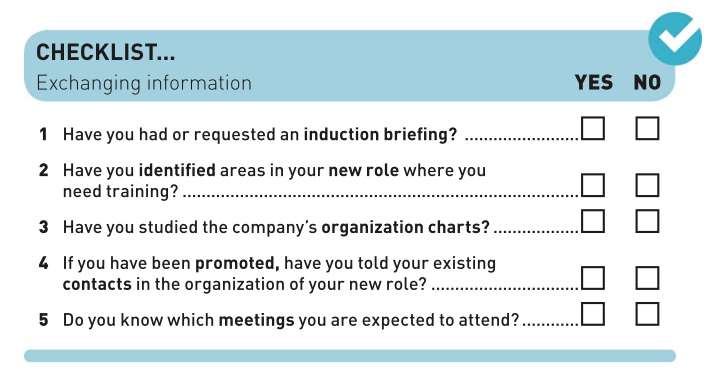


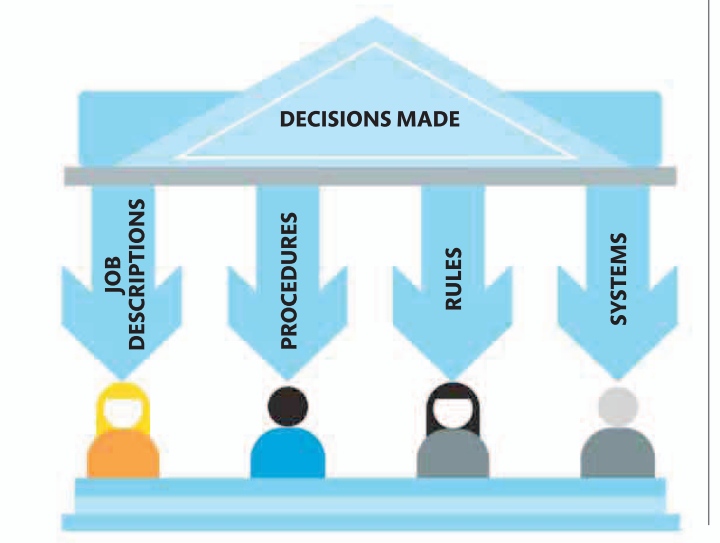
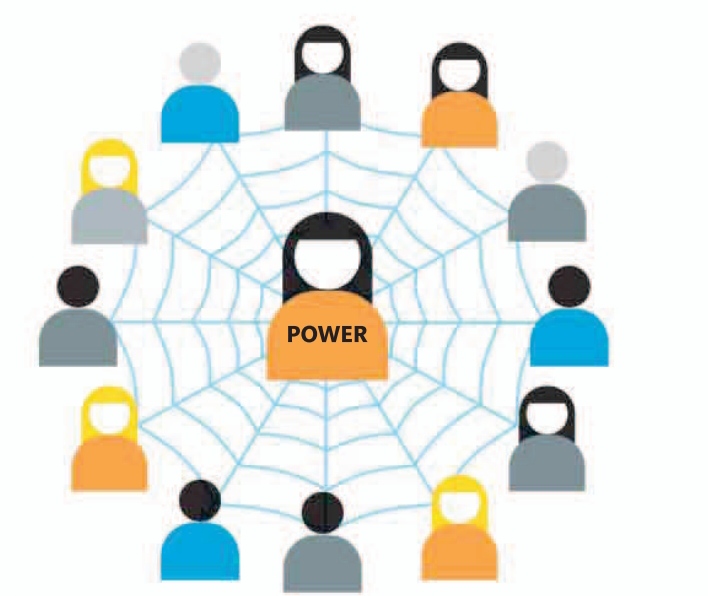
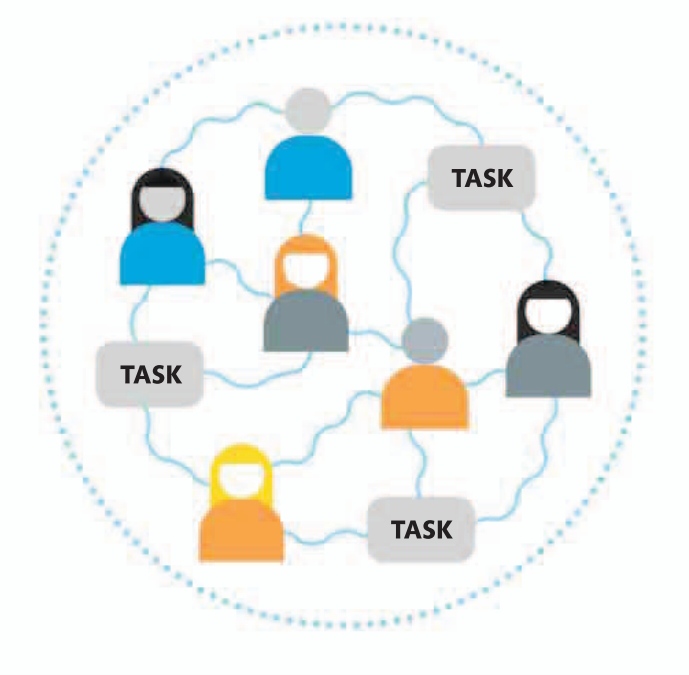



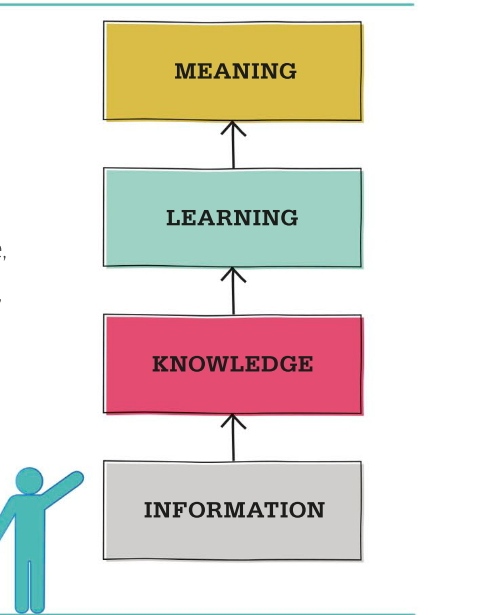
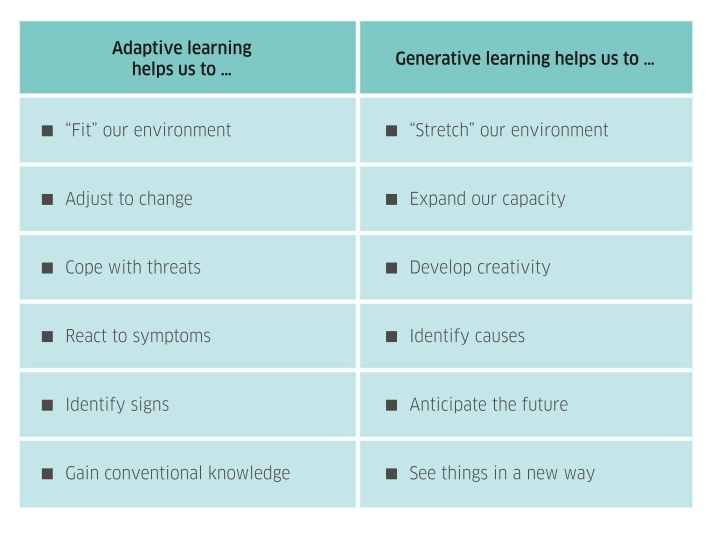


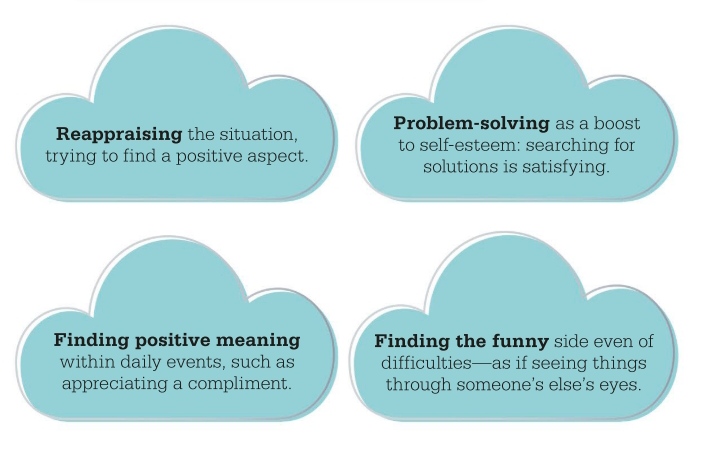


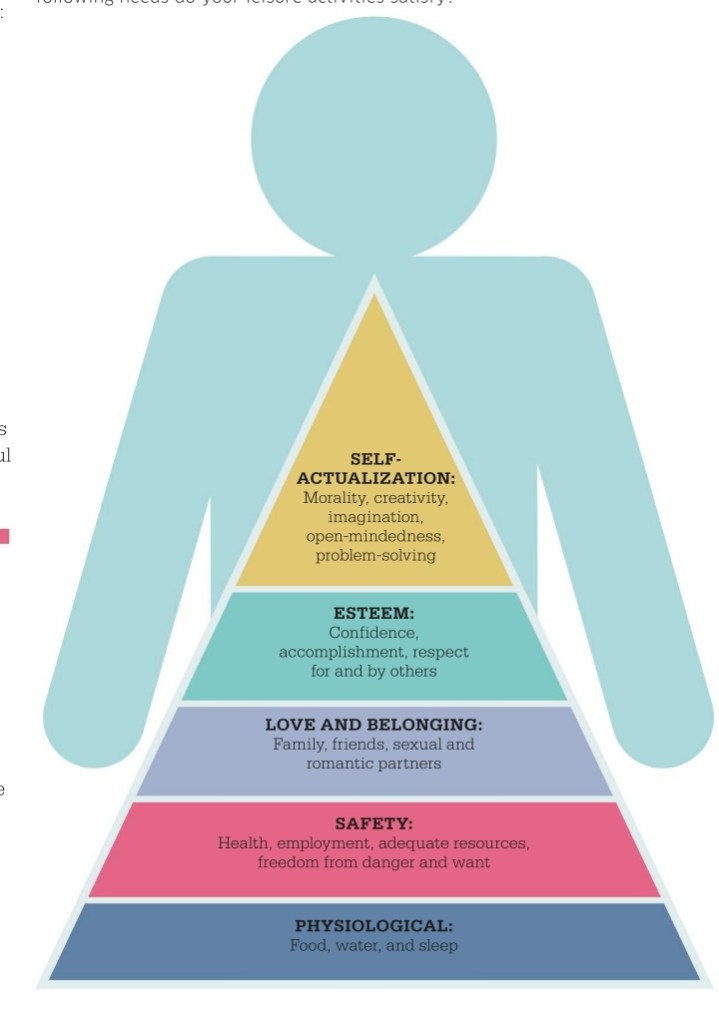


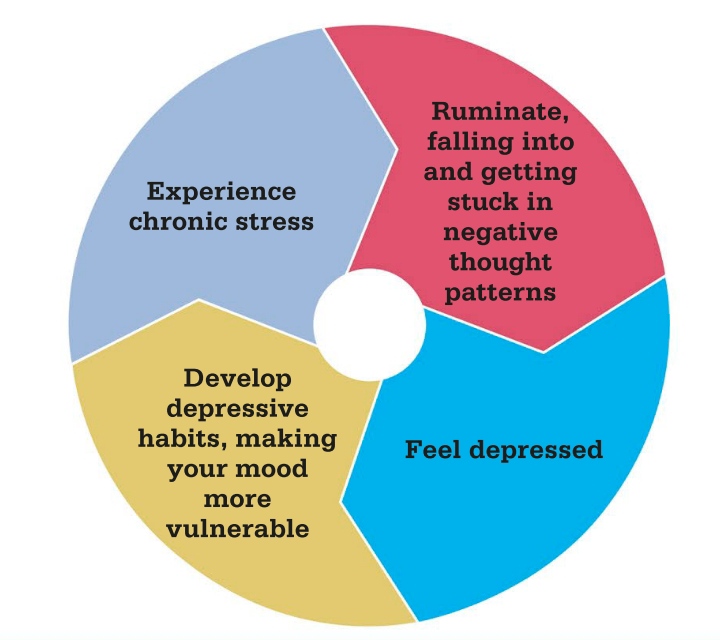
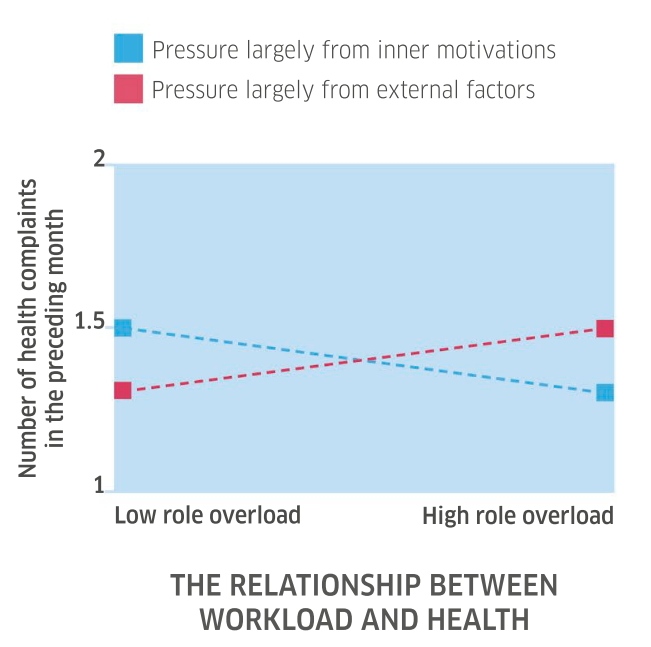


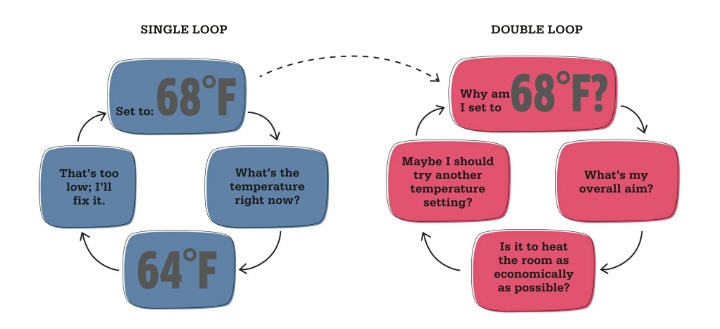


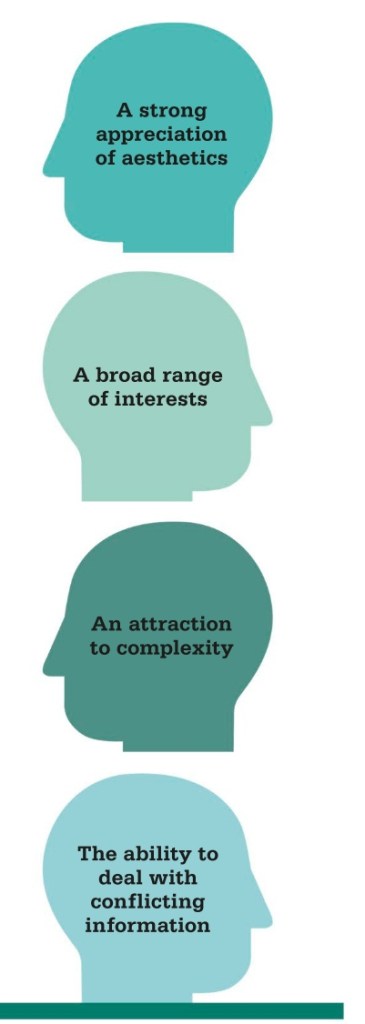


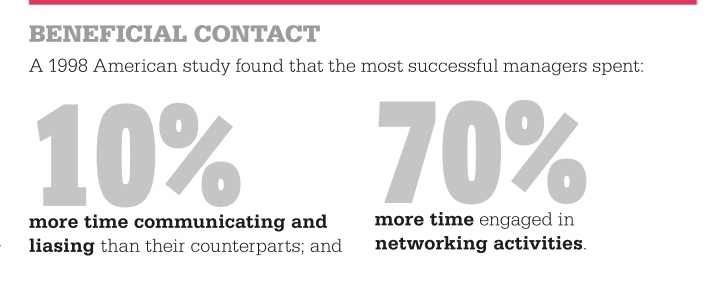
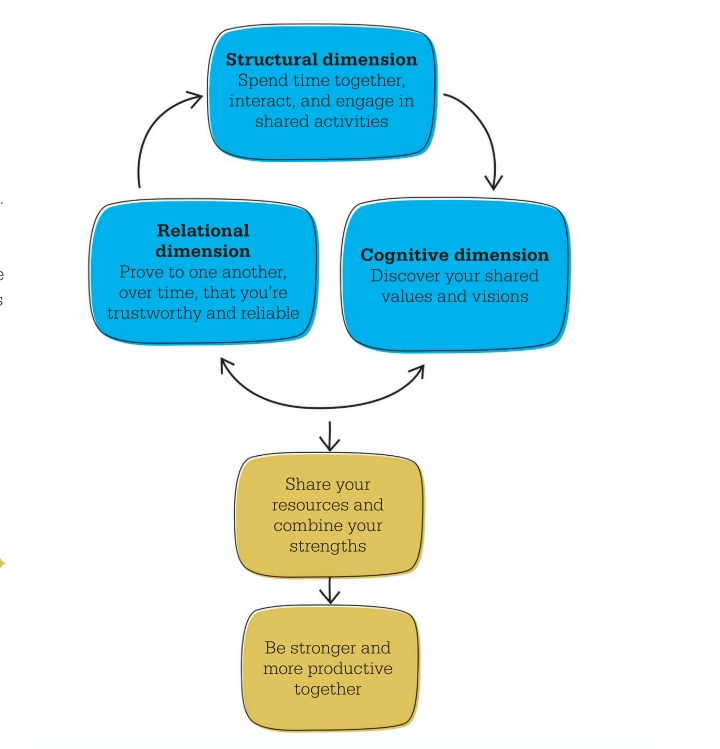

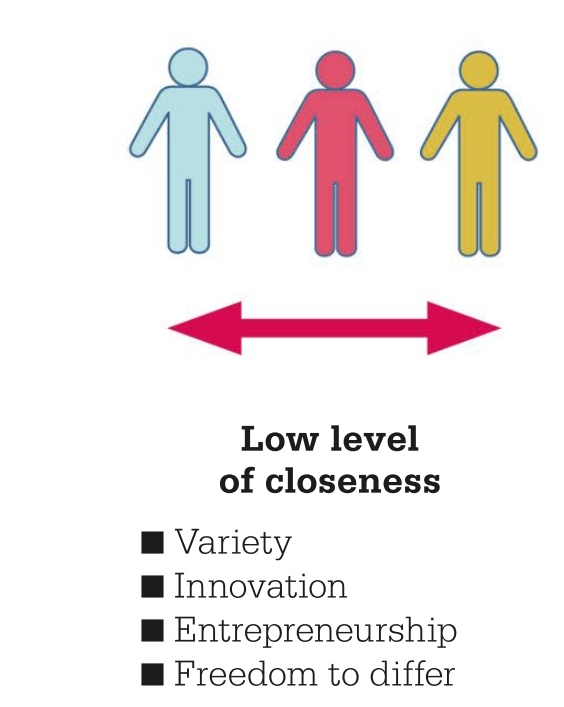
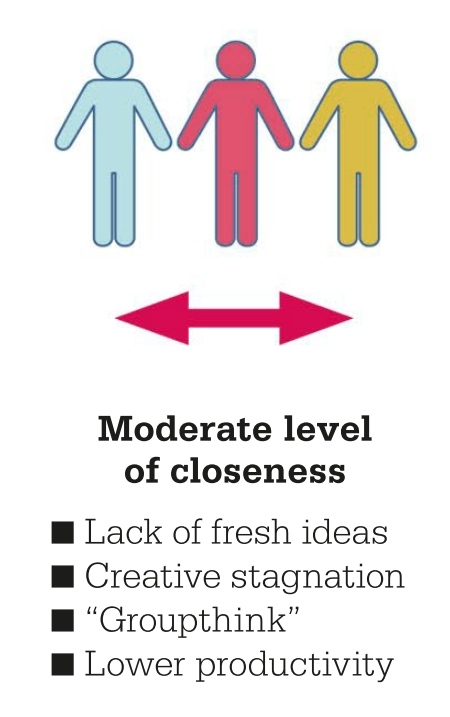
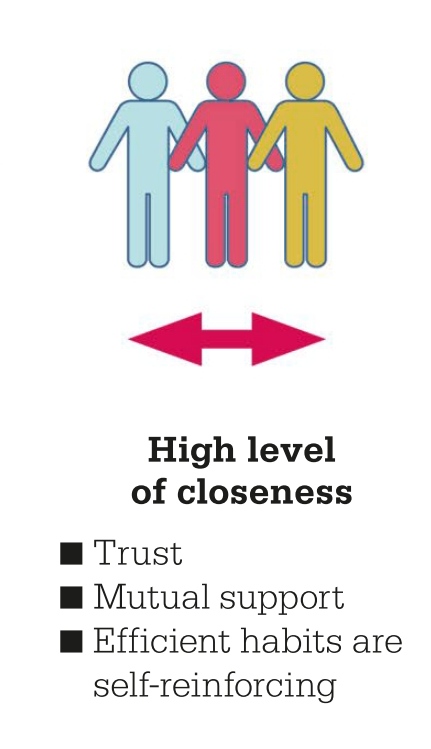



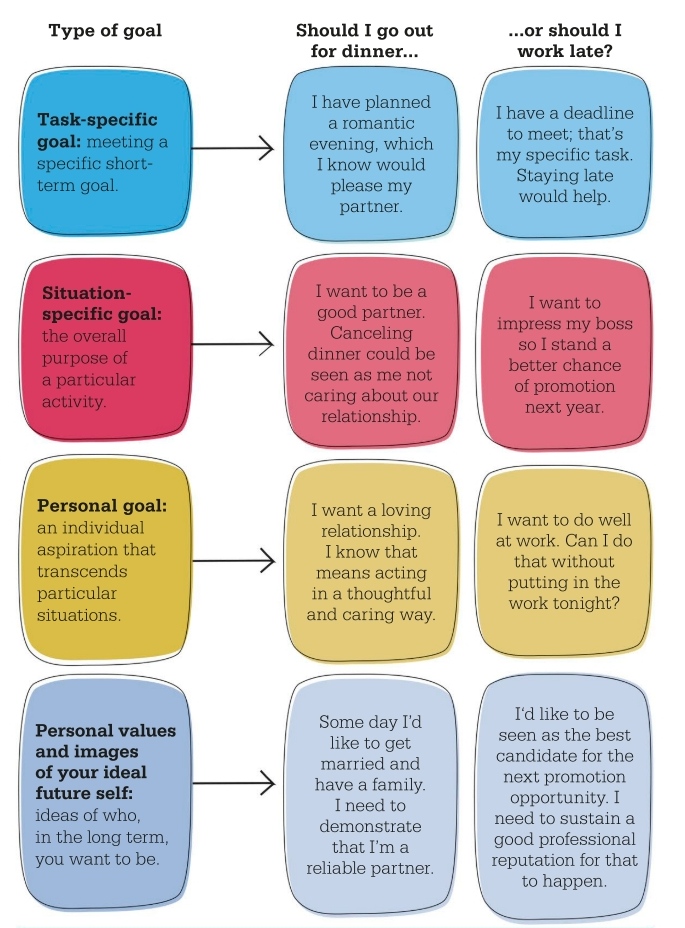


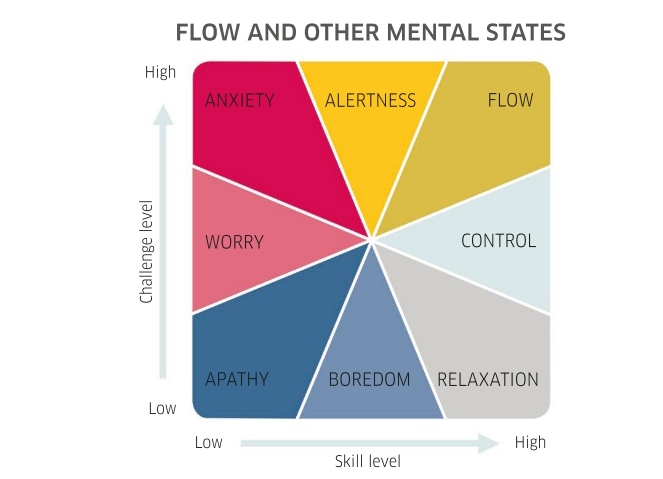




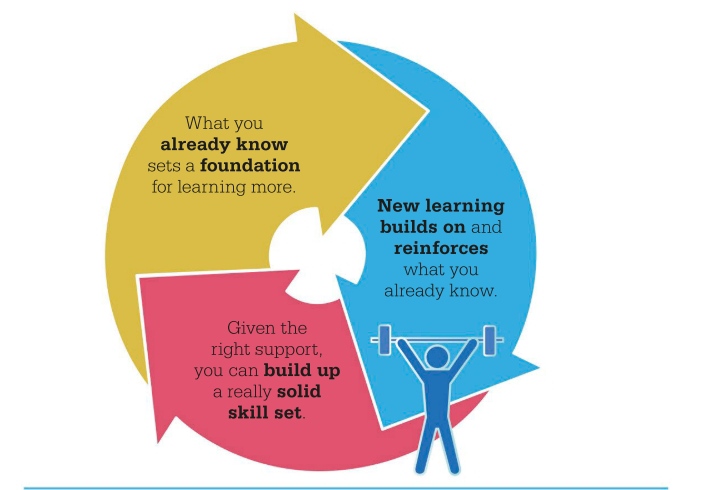
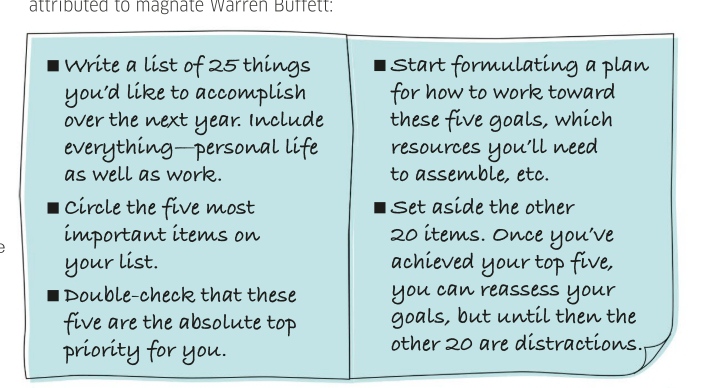
 Vnotes Education