
A company’s possessions, or assets, are divided into two categories: fixed (or long-term) assets and current (or short-term) assets. Current assets consist of cash in the bank and inventory.
How it works
Fixed assets are items that enable a business to operate. They tend to be long-term holdings and cannot be easily converted into cash. Fixed assets can be categorized as either tangible or intangible: tangible assets are material objects, while intangible assets have no physical form.Current assets are held for the short term and used mainly for trading. The most important category in terms of generating revenue is current assets. The key component of these is inventory. Inventory can be finished goods ready for sale, but it can also be the raw materials that will be used for producing the goods.
NEED TO KNOW
❯ Asset valuation A method of assessing the value of a company’s holdings. Asset valuations may take place prior to a merger or the sale of the business, or for insurance purposes
TYPES OF INVENTORY
Inventory can include three types of stock, depending on the kind of business being carried out: raw materials, unfinished goods, and finished goods
Raw materials
Materials and components scheduled for use in making a product. For example, a chocolate factory will have:
❯ Ingredients in the form of sugar, cocoa mass, cocoa butter, additives, flavorings, and perhaps milk or nuts.
❯ Foil, plastic, and paper for the wrappers and packaging
Work in progress
Materials and components that have begun their transformation into finished goods; these may be referred to as “unfinished goods.” For instance, a graphic designer will have:
❯ Layouts and designs that are being developed and are awaiting client approval
Finished goods
The stock of completed products, or goods ready for sale to customers. A bookstore, for example, will have:
>Hardback and paperback books of various genres and formats supplied by publishing houses
❯ Gift items such as greeting cards and notebooks
Assets and inventory in practice
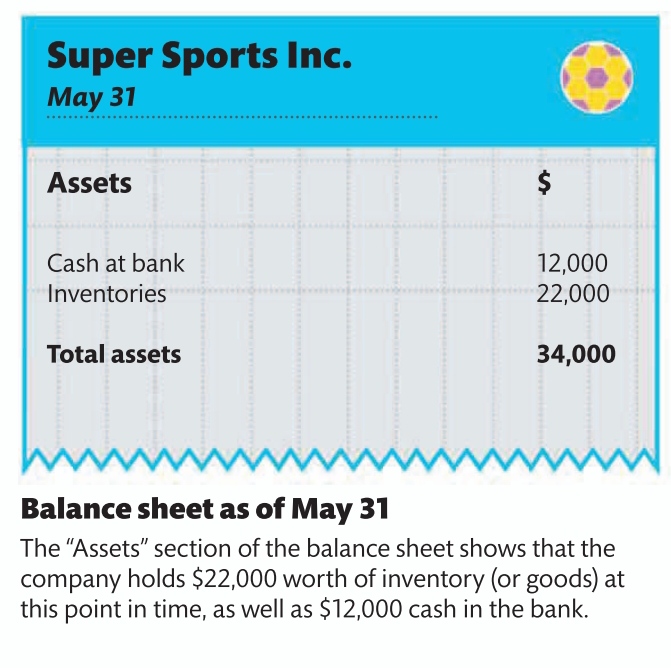
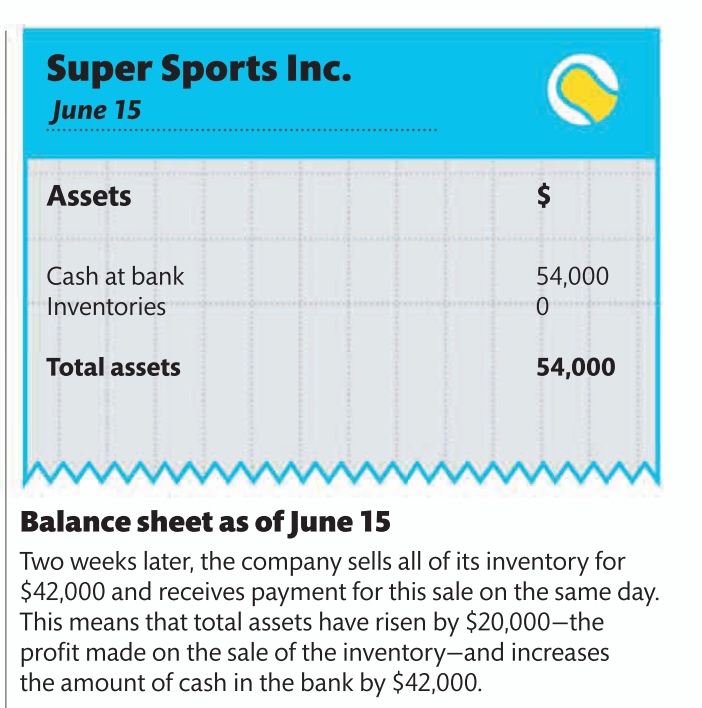
The partial balance sheets below show the current assets of a branch of Super Sports Inc.,
a sportswear and sports accessories company. These assets include cash in the bank and inventory held by the company. The inventory in this case consists of all the items in the shop that are ready for sale.
Types of fixed assets
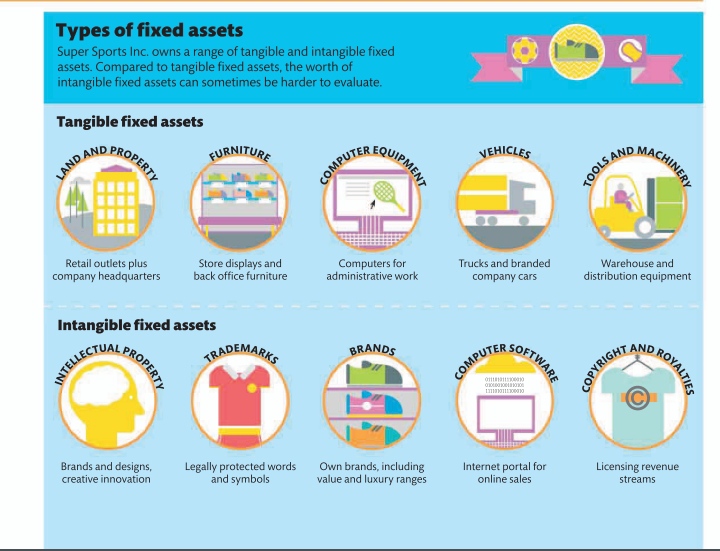
Super Sports Inc. owns a range of tangible and intangible fixed assets. Compared to tangible fixed assets, the worth of intangible fixed assets can sometimes be harder to evaluate.
 Vnotes Education