
By involving customers directly in the development of a brand, marketers hope to build a strong two-way relationship with customers and win long-term loyalty.
How it works
Engagement marketing harnesses several online and offline strategies to draw a customer’s interest and get them talking about products and services. This contrasts with the more traditional style of marketing in which a brand concept and product proposal are presented to the customer as fixed, to be either accepted or rejected. Engagement marketing, on the other hand, encourages customer input so that they feel closer to the brand. The goal is to lure potential customers to the website with an initial experience, and then work hard to keep them there.
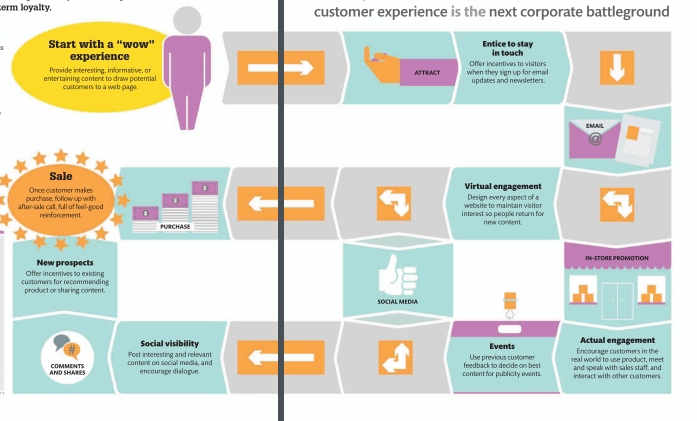
Start with a “wow” experience
Provide interesting, informative, or
entertaining content to draw potential customers to a web page.
Entice to stay in touch Offer incentives to visitors ATTRACT
when they sign up for email updates and newsletters.
Virtual engagement Design every aspect of a
website to maintain visitor
interest so people return for new content.
Events Use previous customer
feedback to decide on best content for publicity events.
Social visibility Post interesting and relevant content on social media, and encourage dialogue.
New prospects Offer incentives to existing
customers for recommending product or sharing content
Sale Once customer makes purchase, follow up with
after-sale call, full of feel-good reinforcement.
Actual engagement Encourage customers in the
real world to use product, meet and speak with sales staff, and interact with other customers.
NEED TO KNOW
❯ “Sticky” customers Consumers who are loyal to a company and return to make more purchases
❯ Decision simplicity Ease with which consumers can find trustworthy information about a product
❯ Churn rate Percentage of customers that cut ties with the company in any given time period
❯ WOM Word-of-mouth marketing, which relies on satisfied customers recommending products to others
 Vnotes Education