
This is a severe anxiety disorder that may develop anytime after a person experiences or witnesses a terrifying or life-threatening event, or series of events, over which they have little or no control.
What is it?
PTSD is seen in people who have been in military combat or a serious incident, or suffered prolonged abuse or the unexpected injury or death of a family member. The event itself activates the fight-orflight reflex in the brain and body, putting the person on hyperalert to deal with the consequences of the trauma and protect them from a repeat of the episode. An individual with PTSD feels that the threat remains, so their heightened response is maintained, causing an array of unpleasant symptoms including panic attacks, involuntary flashbacks, nightmares, avoidance and emotional numbing, anger, jumpiness, insomnia, and difficulty concentrating. These symptoms usually develop within a month of the event (but may not appear for months or years) and last for more than three months. PTSD can lead to other mental health problems, and excessive alcohol and drug use is common. Watchful waiting is advisable at
first to see if the symptoms subside within three months as treatment too early can exacerbate PTSD.
Brain changes
PTSD is a survival reaction.
The symptoms result from an aim to help survive further traumatic experiences, and include raised levels of stress hormones and other changes in the brain.
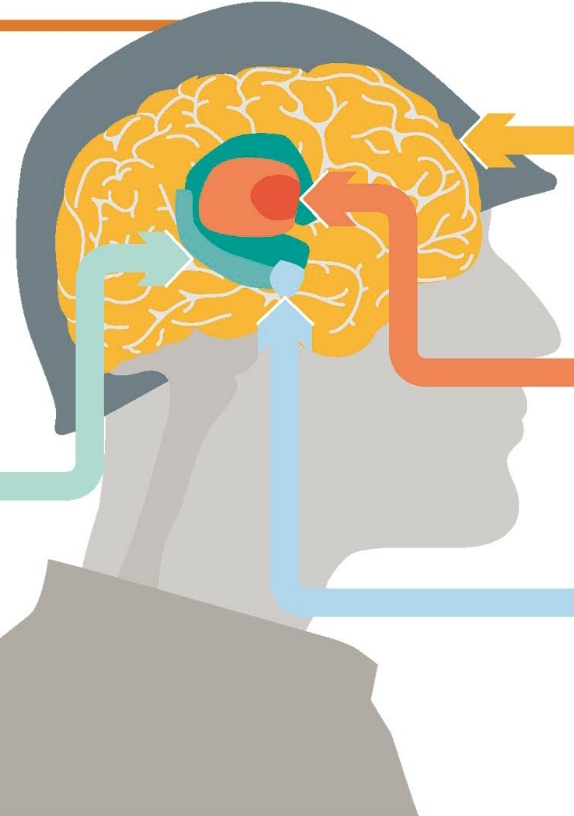
HIPPOCAMPUS PTSD increases stress hormones, which reduce activity in the hippocampus and make it less effective in memory consolidation. Both the body and mind remain hyperalert because the decision-making ability is reduced.
PREFRONTAL CORTEX Trauma affects the function of the prefrontal cortex, changing behaviors, personality, and complex cognitive functions such as planning and decision-making.
HYPOTHALAMUS In PTSD, the hypothalamus sends signals to the adrenal glands (on the kidneys) to release the hormone adrenaline into the bloodstream and increase the chances of survival.
AMYGDALA PTSD increases the function of the amygdala, activating the fight-orflight response and increasing sensory awareness.
TREATMENT
❯ Trauma-focused therapy such as cognitive behavioral therapy or eye movement desensitization and reprocessing (p.136) to help reduce the sense of current threat by working on memory of the event.
❯ Compassion-focused therapy to self-soothe from shame-based thoughts and images. Group therapy for vulnerable groups such as war veterans.
 Vnotes Education