
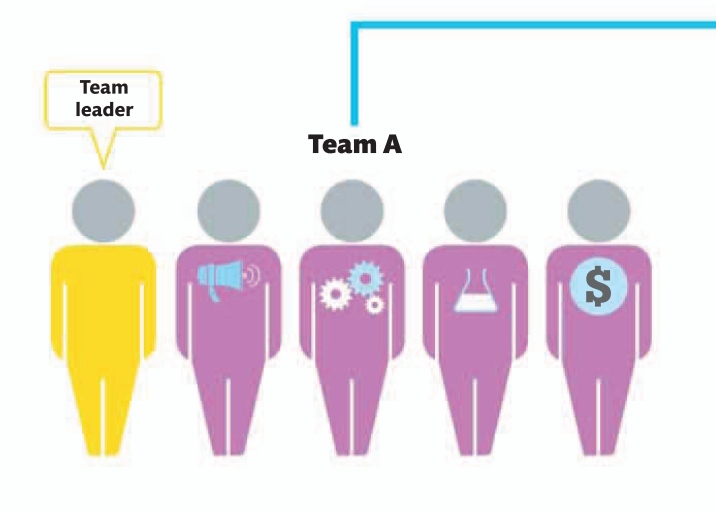
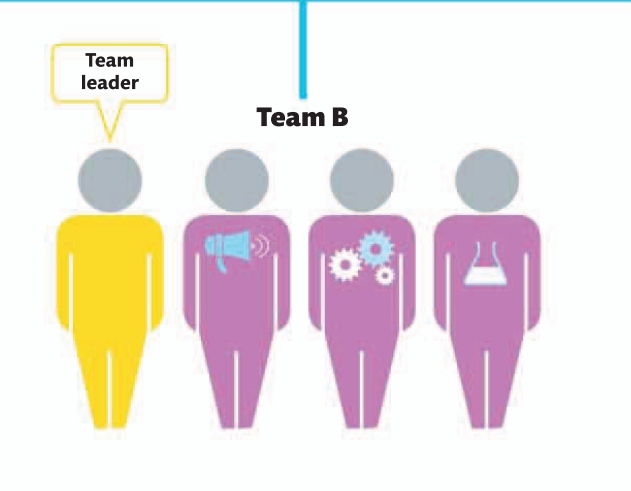
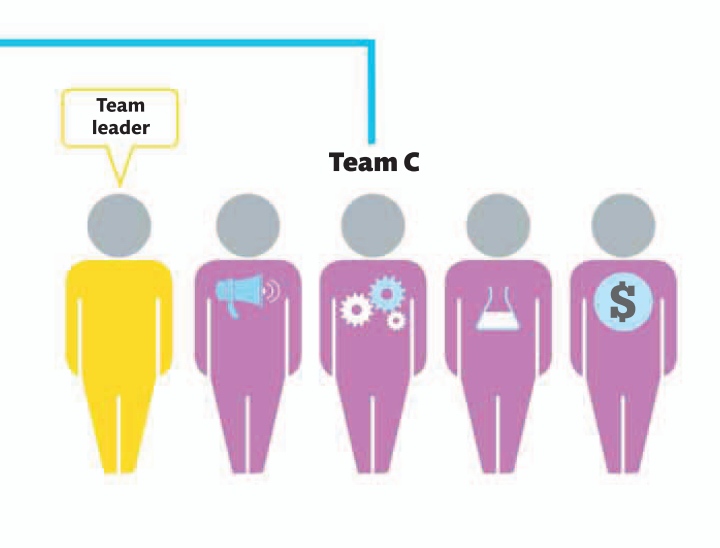
As its name implies, a team-based organization (TBO) is made up entirely of teams. Managers and staff from different departments join to form teams handling specific projects, in the short or long term.
How it works
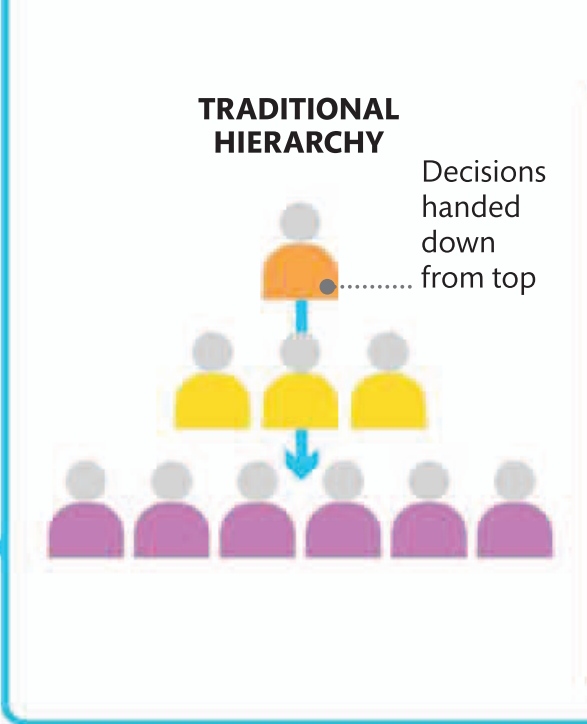
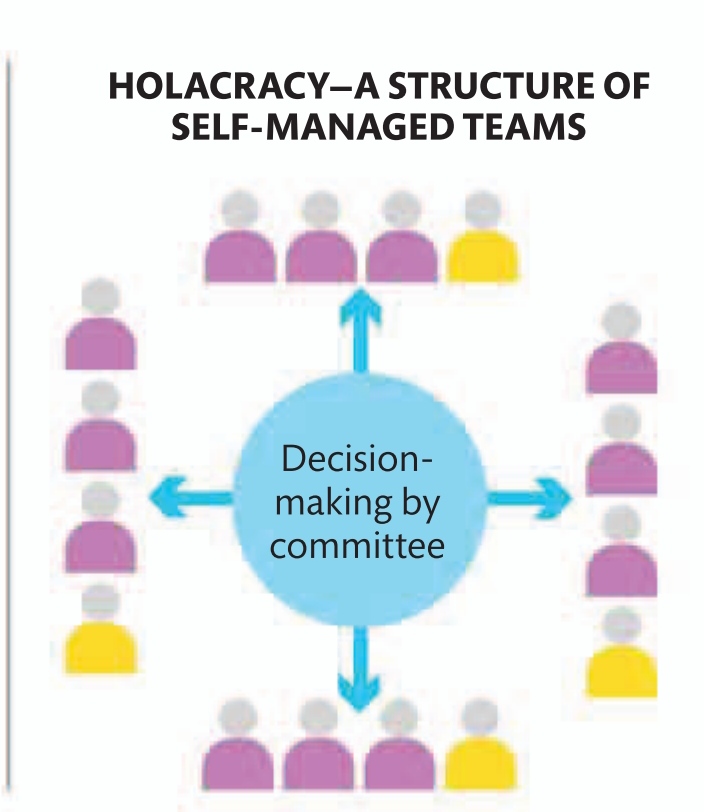
In a TBO, teams reach decisions through brainstorming and mutual agreement among team members, rather than a senior management member issuing orders from the top down the chain of command as in a traditional organizational structure. Communication is less formal in TBOs, often carried out on social media such as blogs and forums and using software for networking such as Groupware.One step beyond the team-based structure is a holacracy (see box, right), an unconventional type of organization in which there are no managers, and even the CEO relinquishes power, allowing employees to self-govern through regular committee meetings, which they organize themselves.
Team-based hierarchy
While TBOs still have a CEO, little other hierarchy exists. Team leaders are
part of the team rather than in a chain of command. At its best, a teambased model fosters a culture of trust, so individuals take pride in their work and responsibility for carrying out tasks well and on time and budget.
CEO
Team A
Team B
Team C
HOLACRACY—BREAKING BOUNDARIES
Staff are grouped into teams that set their own roles and goals and choose their own leaders. The idea is that if power and responsibility are shared, employees will give their very best. In 2014, the Las Vegas–based online clothing retailer Zappos adopted the model for its 1,500 staff. Holacracy is a trademarked term used by the company that invented this specific management system. It follows the same principle as a flat lattice, but takes the idea one step further by presenting a comprehensive management structure with clear processes for internal operations and governance.
TRADITIONAL HIERARCHY
HOLACRACY—A STRUCTURE OF SELF-MANAGED TEAMS
TEAM-BASED: PROS AND CONS
Pros
- ❯ Quick decision-making and rapid response to problems and challenges❯ Reduced overheads because there is no heavy management structure
Team leader
Team C - ❯ Open communication because there is no fear of management reaction
Cons
- ❯ If staff lack expertise, decisions may be flawed
- ❯ Limited sharing between teams may affect business performance
- ❯ Decisions by consensus harder to reach
 Vnotes Education
Leave a comment