
WILD HORSES

Chasing your dreams can be an emotional business, and passions can ignite many feelings, ranging from excitement about the possibilities to frustrations with obstacles that get in your way.
Our emotions give us energy and are a crucial source of information that needs to be attended to and understood. Research on emotional intelligence clearly demonstrates the link between awareness about one’s own and other people’s emotions and the ability to successfully achieve goals. Understanding and managing our emotions is the key to success and effectiveness.
Creating a balance
We generally prefer to avoid uncomfortable feelings, but in fact, that’s not the most productive or effective way of dealing with them. Life will frustrate and upset us at times, no matter how successful we are, and we need to learn how to cope with the inevitable ups and downs. If you are experiencing a painful emotion, it’s better to “sit with it,” as popular author and founder of the Tiny Buddha blog Lori Deschene puts it—that is, to accept that it hurts right now, while also knowing that this feeling will pass. Meanwhile, we can “create situations for positive feelings”: if there’s something that makes you happy, make opportunities to do it regularly. We need a place in our life for both.
Managing our emotions
Much as we’d like to consider ourselves objective, our brains are rather good at shaping reality to our expectations. Take, for instance, the emotion of loneliness. A 2000 study among 2,500 students at Ohio State University found that there were really no differences in social capital between students who called themselves lonely and students who didn’t: their socioeconomic status, looks, and academic achievements were pretty much the same, and they belonged to as many groups and lived with as many roommates. The difference was in how they would “construe their self in relation to others”: they were more likely to blame other people for problems in relationships, and more likely to see themselves as victims who were already doing their best. The study didn’t look into whether this affected how other people felt about them—though it’s quite possible that people would act less warmly toward someone who always blamed them for any conflict—but it’s a useful warning. How we label ourselves and our interactions can become reality, even if the external evidence doesn’t initially seem to support it.
THE EMOTION DECODER
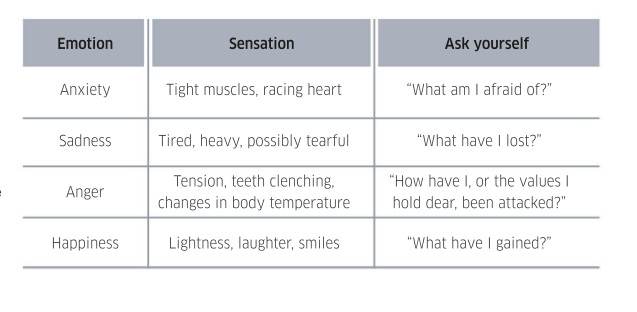
Ways to move forward
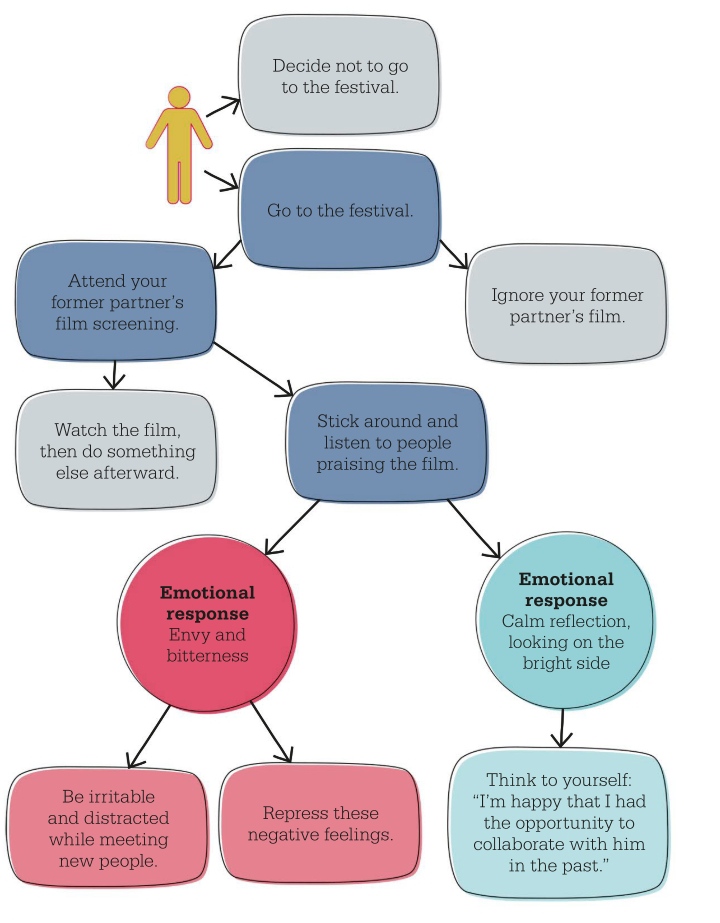
TAKING CHARGE
Can we be more proactive in how we deal with our emotions? According to James Gross, who specializes in emotional regulation at Stanford University, we can view our emotional responses as part of a process: if we make good decisions early on, we can achieve better outcomes. In any scenario, there are opportunities where we can change our actions, the focus of our attention, our framing of a situation, and our response to it. Suppose you’ve been invited to a short film festival, which would be good for making connections—but one of the films is by a former collaborator with whom you’ve fallen out. What are your options?
 Vnotes Education
Leave a comment