
As a business leader, you will be expected to set out the values of an organization and provide its stakeholders with an emotionally appealing and achievable vision of the future. Clear, thoughtful communication at every level is needed in order to develop this vision and translate it into medium-term strategies and day-to-day action.
Setting out the vision
Leaders focus on vision and overall aims and then help their team members as they try to interpret how to achieve the agreed objectives in a way consistent with the organization’s values. Business vision is a word picture of
your future as a team or organization. It describes what things will look like when we get to where we want to be. Your leadership role may be to create the vision and strategic objectives at the top of your organization, or it may be to develop your team plan in alignment with a bigger corporate strategy.
Developing the vision
Involve your team in developing the vision right from the start. Begin by writing it down. As you move forward, you will need to restate and re-create the vision by communicating with your team through open question and answer sessions, one-on-one reviews, and team meetings. Soon each person will learn how to make a meaningful individual contribution toward team goals. People are motivated by a clear
understanding of what they need to do to fulfill the vision, by when, how well, and why. These are key signposts on the journey to their professional development and to the achievement of the team’s vision. Your job is to help everyone in your team plan the route, and to review their progress.
In focus
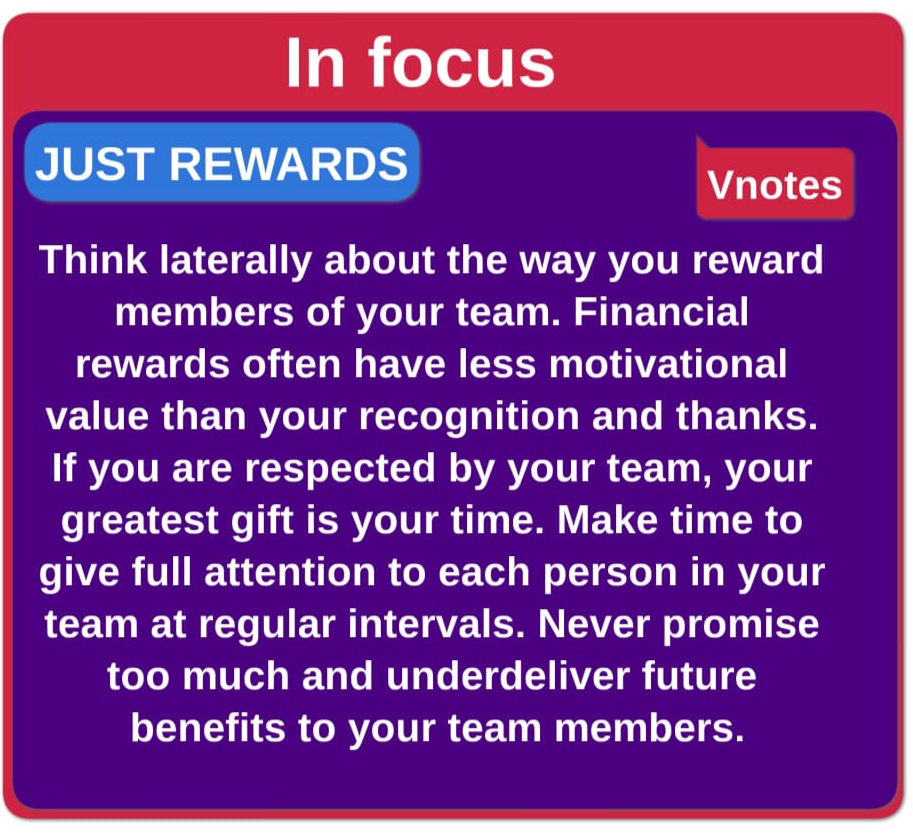

Each person will learn how to make a contribution toward team goals
Working with teams
Your key role as leader is to inspire emotional attachment to an attractive vision and to make success visible. People will then believe in cause and effect—that individual work counts and doing their best really does lead to a better life for all concerned.
- > Give everyone a role to play in implementing the team vision and ask them to report back to you on what has gone exceptionally well and what not so well.
- > Ask individuals to present highlights to the rest of the team so that everyone can learn about doing things in new ways. When you review these practical steps with the team, keep linking them back to the overall vision.
- > Remember to say “thank you” individually and in front of the team to help them keep their momentum and motivation.
- > Celebrate team successes to keep the team moving forward together. Recognize even small steps in the right direction.
- > Explore with individual team members their unique mix of values, life experiences, knowledge, and skills plus potential abilities. Understand what specifically motivates each person to engage with their work and willingly release the extra they have to give.
 Vnotes Education
Leave a comment