
When you are given a leadership position, you need to prepare yourself for intense learning and adaptation. From getting your feet under the desk to developing your competencies, there are many challenges in store.
Preparing to lead

When you become a leader, you need to quickly understand what is expected from you and from your team. Your employer will provide you with guidance, but don’t assume that you’ll get the complete picture. A lot of the groundwork is going to be up to you.
Giving yourself a head start
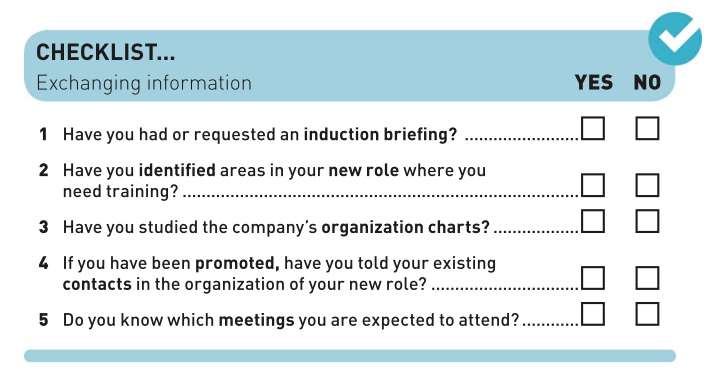
It pays to prepare for your leadership role even before your first day on the job. Do some basic groundwork and research: ask your employer where you fit into their organizational plans; ask when you will be expected to produce objectives for your team; and when and how your performance—and that of your team—will be assessed. If possible, ask to meet the outgoing leader and discuss the demands of the role and the team dynamics. Research your team: request performance figures and personnel files; ask the outgoing leader and your peers what information will be of most use.
Managing data
Throughout the first few weeks in your new role, you will be deluged with information. Unfortunately, you won’t necessarily know which of this data is of strategic importance, and which is just minor detail. Head off early errors by being systematic; file the information and make a list of everything you have received. Review this list weekly and try to place the relative significance of each piece of information in a broader context.
Managing people
You’ll also be introduced to many new people throughout the organization. Always carry a notebook and pencil with you; after each meeting, make a note of the name, position, and distinguishing features of the person you have met, along with anything memorable they said to you. When you meet them next, you’ll remember who they are and how they fit into the organization. What’s more, you’ll be able to pick up your conversation with them.
23% increase in
performance may result from best management practice
Ask your employer where you fit into their organizational plans
Being realistic
Your arrival as a team’s new leader will raise expectations of change for the better. However, you may discover that some expectations are less than realistic. For example, your team’s previous leader may have provided detailed guidance on how work should be carried out; if your leadership style is more about empowering your team to make their own decisions, they may initially feel poorly supported and even resentfulof the added responsibility. Early in your tenure, ask others what assumptions they have about you and your role.
- Outline what success looks like to you. Does their view match yours?
- What expectations do they have of how long things will take?
- Have they been made any unrealistic promises about what you will deliver?
You can then begin to address any discrepancies between their expectations and your reality.
Ask crucial questions
- What are the aims of your organization or team?
- Are there potential problems?
- Who are your key stakeholders?
- What are the processes, culture, and structure of the organization?
- How are internal systems audited?
- Are your findings complete and accurate?
- Are you ready for anything?
86% of businesses in a
global survey consider leadership to be the no.1 talent issue
 Vnotes Education
Leave a comment