
A balance sheet is a financial statement that shows what a business is worth at a specific point in time. Its primary purpose is to show assets, liabilities, and equity (capital), rather than financial results.
How it works
The balance sheet essentially shows what the company owns, what it owes, and how much is invested in it. It is based on the accounting formula, sometimes called the balance-sheet equation, which is the basis of double-entry bookkeeping. This shows the relationship between assets, liabilities, and owners’ capital— what the company owns (assets) is purchased either through debt (liability) or investment (capital). The equation always balances, as everything a company owns has to have been bought with its owner’s funds or through borrowing.
The balance-sheet equation
As the name suggests, the balance sheet must always balance. This is because everything the business owns (its assets) must be offset against the equivalent capital (or equity) and liabilities (debt).
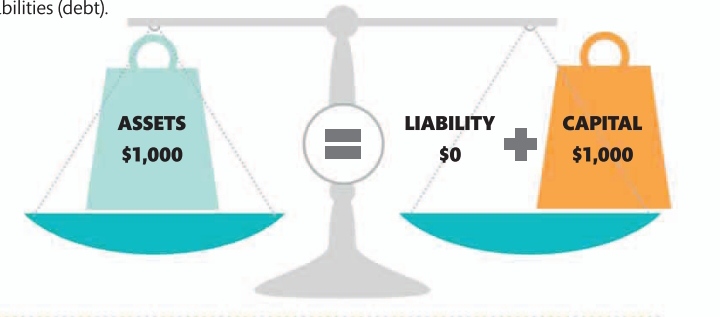
Company has no liabilities
For example, a young business may have assets of $1,000. It currently has no liabilities so its capital is equal to its assets—that is, it is the amount of equity the owners or shareholders have invested in the business. Using the accounting formula, the equation would look like this:
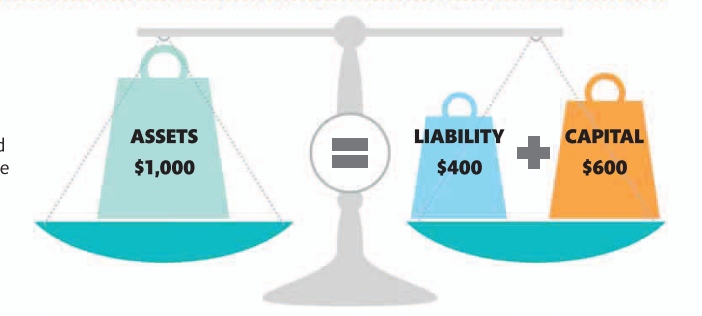
Company incurs $400 in liabilities
After spending $400 on, for example, an illuminated sign for the storefront, the owner incurs $400 in liabilities and so the formula changes. However, since the sign is worth $400, and the owner has $600 remaining, the equation remains balanced—as it always does.
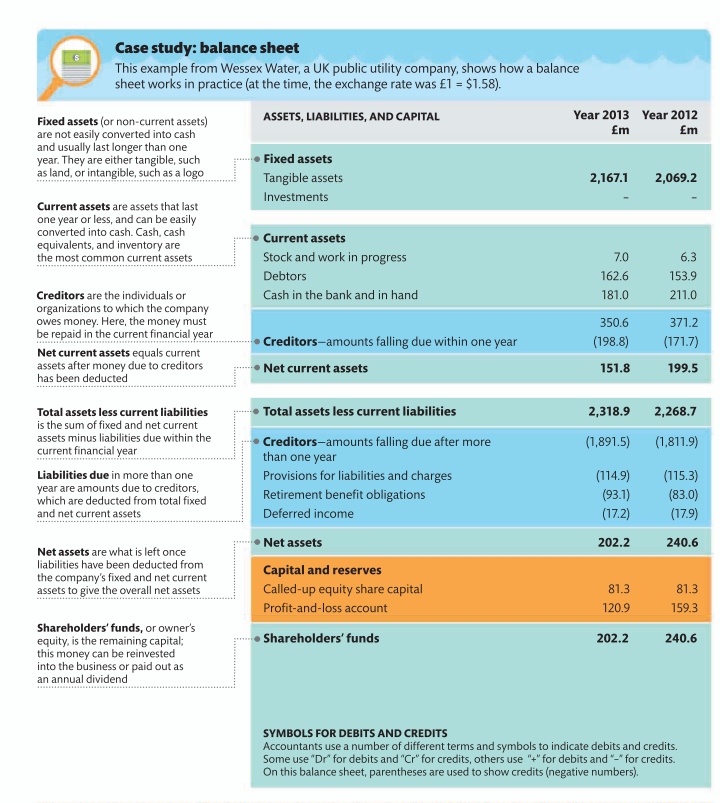
Case study: balance sheet
This example from Wessex Water, a UK public utility company, shows how a balance sheet works in practice (at the time, the exchange rate was £1 = $1.58).
Understanding the notes
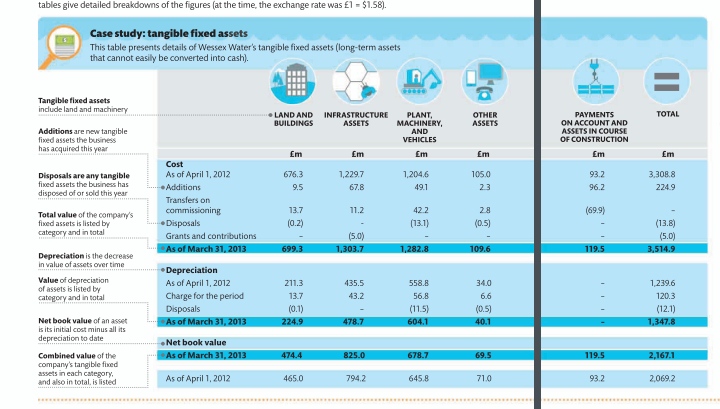
The balance sheet is a useful indication of the health of a business, and it is important that investors know how to analyze it. It can be read in two ways—“at a glance,” as on the previous page, where general information is summarized, or in depth, with more detailed information about each element. Provided after the summary, the detailed section of the balance sheet explains the specific financial workings of the business in a number of notes. It shows exactly where money has been gained or lost, in figures, and it often includes a written commentary about potential developments that may affect the company, such as court cases, staffing, or availability of resources.
Balance-sheet notes
Investors may want to know more about the figures in the summary section, so additional notes and tables give detailed breakdowns of the figures (at the time, the exchange rate was £1 = $1.58).
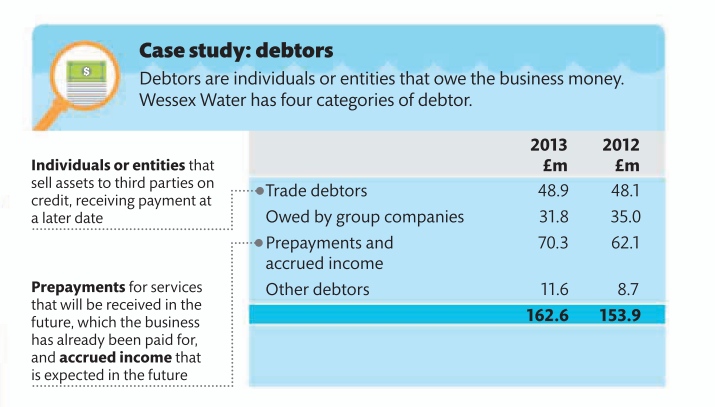
Case study: debtors
Debtors are individuals or entities that owe the business money. Wessex Water has four categories of debtor.
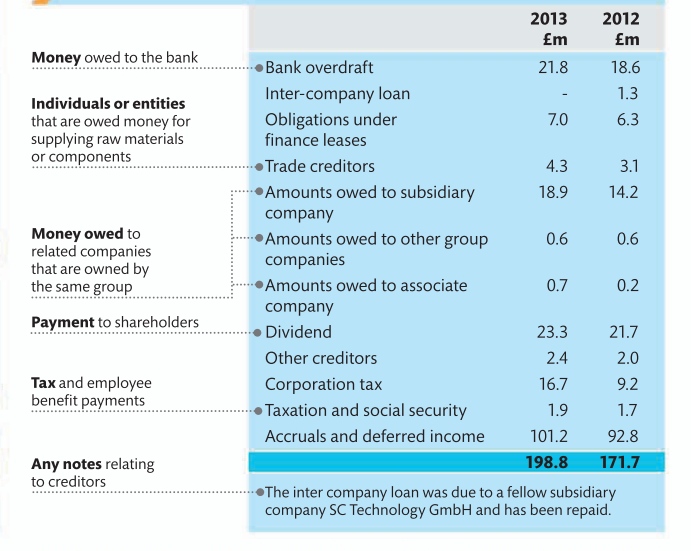
Case study: creditors
Creditors are individuals or entities that the business owes money to. They are in credit of Wessex Water.
 Vnotes Education
Leave a comment