
A profit-and-loss statement is a financial statement that shows all revenues, costs, and expenses during an accounting period. It is also known as an income statement, or an income and expense statement.
How it works
The purpose of the profit-and-loss statement is to show the profitability of a business during a given period. Along with the cash-flow statement and the balance sheet, it is the most important financial statement a business produces, as it shows investors how profitable the company is. The statement usually works by showing revenues and gains, less expenses and losses from business activities, as well as the sale and purchase of assets. Businesses that are sole proprietorships or partnerships are generally not required to submit profit-and-loss statements.
TYPICAL EXPENSES
- Payroll Salaries and wages paid to staff, temporary contractors, and indirect labor
- Utilities Water, electricity, and gas; postage and shipping; transportation
- Insurance Insurance on fixed assets and personal liability insurance for employees
- Phone/internet bills Cost of telephone, broadband internet, and mobile devices used by employees
- Advertising Sales and marketing of the company and its products
- Office supplies Stationery such as pens, paper, and filing systems, office printers, furniture, lighting
- Legal fees and professional services Accounting and legal fees, payable to accountants, auditors, and legal advisers
- Interest on loans Interest paid on money borrowed, which counts as a business expense
- Tax Varying among jurisdictions, this may include payroll tax and corporation tax
- Entertainment Legitimate costs of business entertaining, subject to certain criteria being met
Case study: profit-and-loss statement
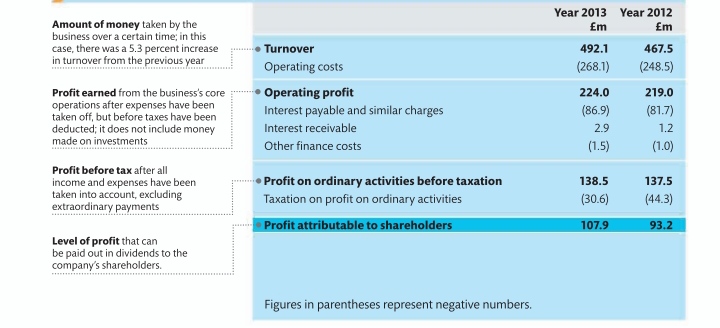
This statement taken from the 2013 annual review of Wessex Water, a UK utility company, shows it was making a healthy profit (at the time, the exchange rate was £1 = $1.58)
Case study: operating costs
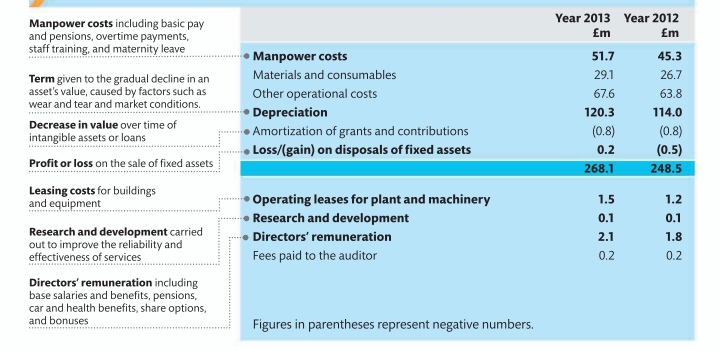
This table breaks down the company’s operating costs in more detail. It is important to read any notes regarding depreciation and ordinary and extraordinary costs and gains.
 Vnotes Education
Leave a comment