

A reputation for being trustworthy is an essential asset. A person with low credibility misses opportunities, while a good track record wins loyalty. Each action and decision we make has an impact on our credibility.
Credible people are those whom others believe in. Without credibility, you’ll find that your judgments or even the “facts” you present are mistrusted, and that you fail to inspire confidence. The essential thing is to make sure that what you say and what you do line up. It’s easier to lose credibility than to restore it, so be mindful of how authentic you’re being, and how you appear to others. And if things do go wrong, be prepared to do the serious work necessary to address the situation directly.
Align what you say and do
Numerous studies confirm that credibility comes down to a very simple fact: if somebody’s statements don’t align with their behavior, if they profess ideals they don’t uphold, or if they make promises they don’t keep, then we don’t trust them.A 1994 US study funded by the National Institute of Mental Health and the Stern School of Business found that volunteers presented with ambiguous messages were much more likely to trust sources seen as credible—and that on relatively low-stakes decisions, credibility was the only factor people considered, no matter how strong or weak the arguments they heard. When it comes to day-to-day living, credibility may be the only currency that counts.
Amending mistakes
Hopefully your aim is to live with integrity, but everybody makes mistakes. Sometimes it’s impossible to keep a promise, or our self-control weakens and we bend our own rules. If others observe you doing this, you have a problem. If you go wrong, what can you do? Studies suggest that if you’re seen as untruthful, that extends to your “excuses,” so apologies and promises need to be carefully formulated. A 2002 study published in Organization Science found that the question, “What will it take for you to cooperate again?” proved much less effective than, “What can I do to get you to cooperate again?”—shifting the burden of action onto the wrongdoer. The same study found that offers of making amends tended to obtain forgiveness, but they didn’t need to be large: small ones worked equally well in showing goodwill, as long as they made a real attempt at reparation.
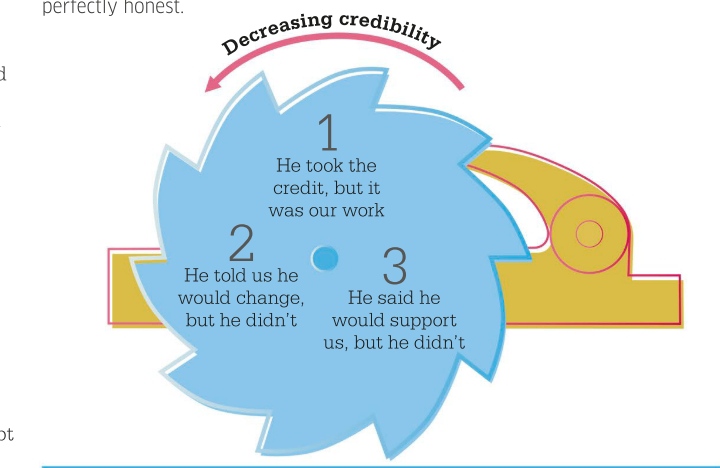
THE RATCHET EFFECT
We know from experience, and multiple studies confirm, that it’s far easier to lose trust than it is to gain it. Psychologist Tony Simons calls this the “ratchet effect.” In the same way that the angled teeth of a ratchet allow it to turn in only one direction, so each time we are perceived as unreliable, our credibility is damaged in a way that’s hard to reverse—even if most of our actions are perfectly honest.
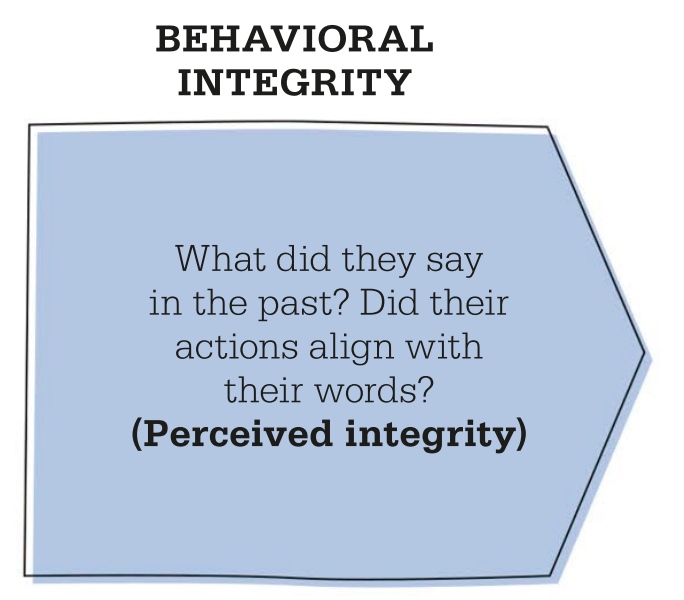
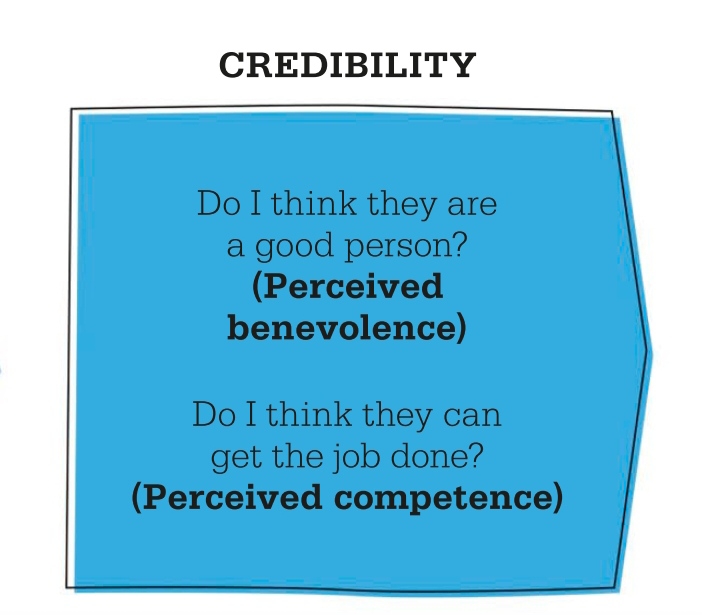
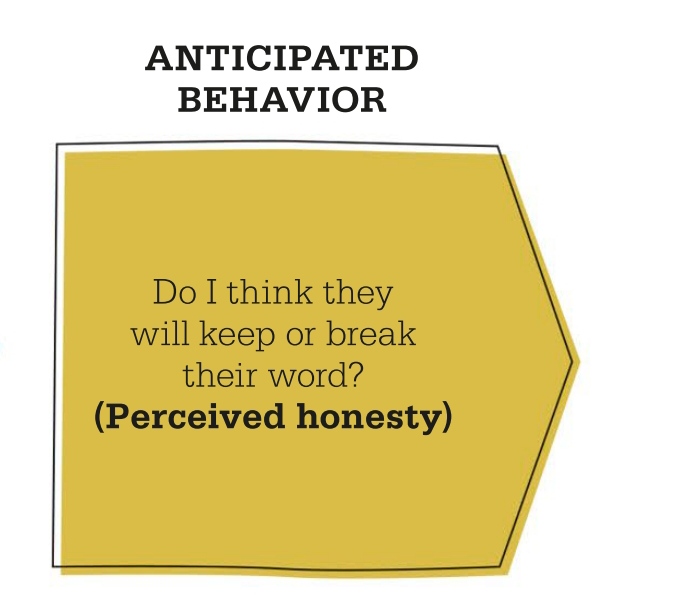
THE TIMELINE OF TRUST
How do we decide whether we can trust someone? American psychologist Tony Simons argues that the question involves first making a judgment of someone’s “behavioral integrity,” based on their past actions. From there, we decide on their “credibility” and anticipate their future behavior—as shown in the example below. To strengthen your own credibility and inspire confidence, try to make sure that your deeds align with your words: do what you say you will. That way, you will be perceived as an honest and credible person.
 Vnotes Education
Leave a comment