
Based on the premise that physical factors, such as genes, determine behavior, this approach can explain how twins brought up separately exhibit parallel behavior.
What is it?
Biological psychology assumes that people’s thoughts, feelings, and behavior all derive from their biology, which includes genetics as well as the chemical and electrical impulses that wire the brain to the nervous system. This assumption implies that the blueprint laid down in the womb—people’s physiological structure and DNA—dictates their personality and behavior as they go through life. Some of these ideas are based on the results of
twin studies, which have shown that twins separated at birth and brought up in different households display remarkably similar behavior in adult life. Biopsychologists argue that this phenomenon can be explained only if the twins’ genetics influence them so strongly that not even the role of their parents, friends, life experiences, or environment have much impact. An example of biological psychology in action is the
research into how teenagers behave. Scans of teenage brains using imaging technology have revealed that adolescent brains process information in a different way than adult brains. These differences help to offer a biological explanation for why teenagers can be impulsive, sometimes lack good judgment, and can become overly anxious in social situations.
Evaluation
Many of the ideas in biological psychology emphasize nature over nurture. As a result, critics consider the approach to be oversimplistic, giving undue weight to the influence of biology and built-in physical attributes. Little credit is given to the influence of events or people on an individual as they grow up. On the other hand, few argue with the rigorous scientific backbone of the approach, which places importance on the systematic testing and validation of ideas. And biopsychologists have enabled important medical advances—using research from neurosurgery and brain imaging scans, they have made positive contributions to treatment for patients with both physical and mental problems, including Parkinson’s disease, schizophrenia, depression, and drug abuse.
EVOLUTIONARY PSYCHOLOGY
Psychologists in this field explore why people’s behavior and personality develop differently. They investigate how individuals adapt their language, memory, consciousness, and other complex biological systems to best cope with the environment they find themselves in. Key ideas include:
❯ Natural selection This has its origins in Charles Darwin’s hypothesis that species adapt over time or evolve mechanisms that facilitate survival.
❯ Psychological adaptations This looks at mechanisms people use for language acquisition, for differentiating kin from non-kin, for detecting cheats, and for choosing a mate based on certain sexual or intelligence criteria.
❯ Individual differences This seeks to explain the differences between people—for example, why some people are more materially successful than others.
❯ Information processing This evolutionary view suggests that brain function and behavior have been molded by information taken in from the external environment, and so are the product of repeatedly occurring pressures or situations.
Different approaches
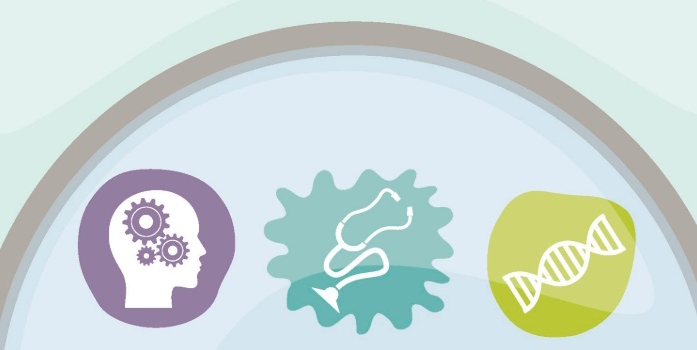
Physiological This approach is based on the assumption that biology shapes behavior. It seeks to discover where certain types of behavior originate in the brain, how hormones and the nervous system operate, and why changes in these systems can alter behavior.
Medical This branch explains and treats mental disorders in terms of physical illness. Disorders are considered to have a biological basis, such as a chemical imbalance in the body or damage to the brain, rather than causes linked to environmental factors.
Genetics This field attempts to explain behavior in terms of patterns that are laid down in each person’s DNA. Studies of twins (especially twins separated at birth and raised in different homes) have been used to show that traits such as IQ are inherited.
“In the last analysis the entire field of psychology may reduce to
Sigmund Freud, Austrian neurologist
biological electrochemistry.”
 Vnotes Education
Leave a comment