
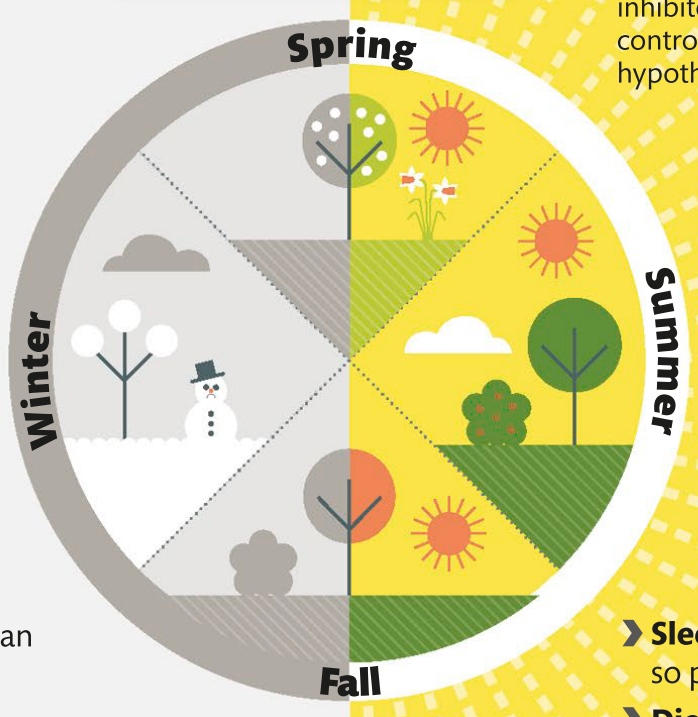
SAD is a form of seasonal depression linked to changing levels of light that typically starts in fall as the days shorten. It is also known as “winter depression” or “hibernation state.”
What is it?
The nature and severity of SAD vary from person to person, and for some it can have a significant impact on their day-to-day life. Typically the symptoms come and go with the seasons, and always begin at the same time of year, often in the fall. Symptoms include low mood, a loss of interest in everyday activities, irritability, despair, guilt, and feelings of worthlessness. People with SAD lack energy, feel sleepy during the day, sleep for longer than normal at night, and find it hard to get up in the morning. As many as one in three people are affected. SAD’s seasonal nature can make
diagnosis difficult. Psychological assessment looks at a person’s mood, lifestyle, diet, seasonal behavior, thought changes, and family history.
Seasonal cause and effect
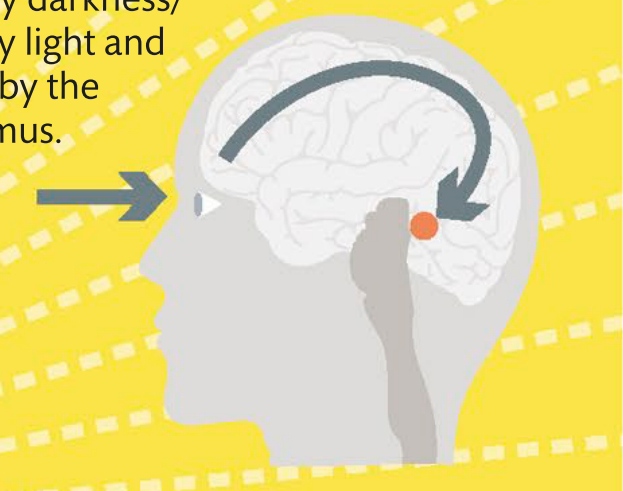
Sunlight level affects a part of the brain called the hypothalamus by altering the production of two chemicals: melatonin (which controls sleep) and serotonin (which changes mood).
Winter pattern
❯ Melatonin increases so person is tired and wants to sleep.
❯ Serotonin production drops, causing person to feel low.
❯ Desire to stay in bed and sleep can lead to reduced social contact.
❯ Craving carbohydrates can cause overeating and weight gain.
❯ Constant daytime fatigue affects work and family life.
Secretion of melatonin by the pineal gland is triggered by darkness/ inhibited by light and controlled by the hypothalamus.
Summer pattern
❯ Melatonin drops so person has more energy.
❯ Serotonin production increases, improving mood and outlook.
❯ Sleep is good, but not excessive, so person has more energy.
❯ Diet improves as cravings subside.
❯ Improved energy results in increased activity and more social contact.
 Vnotes Education
Leave a comment