
Starting a new venture can be a long process. Business (also called venture) accelerators and incubators are specialized organizations devoted to developing and supporting start-ups.
How it works
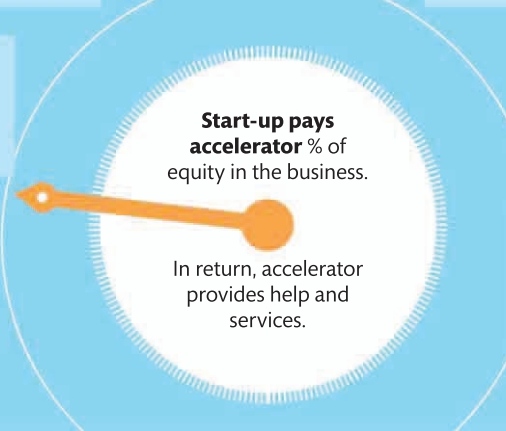
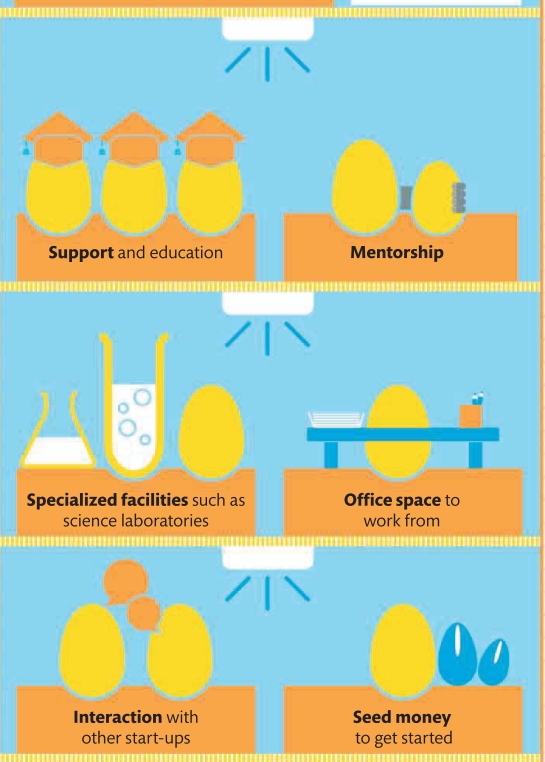
Business accelerators and incubators provide expertise and connections in the formative stages of a business in return for a percentage of ownership. They are two separate types of services. Business accelerators are short-term programs that offer wide-ranging support including mentorship, business advice, and connections to potential sources of financing. Business incubators, on the other hand, provide a supportive environment in which fledgling start-ups can develop, with technical assistance, working space, and networking opportunities.
Business accelerators
Suited to start-ups that have limited financing, accelerators offer short–term (one to three months) boot camps. Clients include web and software developers.
- Seed capital
- Networking
- Accounting and financial services advice
- Help with bank loans, funds and guarantees programs
- Introduction to potential partners
- Link to potential investors
- Access to mentors and advisory boards
- Marketing advice
- Management of intellectual property
Business incubators
Often sponsored by nonprofit organizations, incubators tend to be longer term (one to five years) and cater for a variety of clients, many science-based.
Start-up introduced to incubator
Start-up pays incubator % of equity in the business. It may also pay rent to share part of the incubator’s work space. In return, it receives a range of benefits.
NEED TO KNOW
❯ Incubator networks Collaboration of incubation centers, research facilities, and science parks
❯ Virtual business incubator Online hothouse for start-ups
33 months
the average time US start-ups spent in an incubator, during 1999–2002

 Vnotes Education
Leave a comment