
An episodic condition that affects both behavior and motor skills, catatonia is characterized by abnormal psychomotor functioning and extreme unresponsiveness when awake.
What is it?
Catatonia is a state of immobility that can persist for days or weeks. Those with the condition may have an extremely negative outlook and may not respond to external events, become agitated, have difficulty speaking due to extreme anxiety, and refuse to eat or drink. Symptoms also include feelings of sadness, irritability, and worthlessness, which can occur nearly every day. An individual may lose interest in activities, lose or gain weight suddenly, have trouble getting to sleep or out of bed, and feel restless. Decision making is impaired and suicidal thoughts are common. This condition can have a psychological or
neurological cause, and may be associated with depression or psychotic disorders. It is estimated that 10−15 percent of people with catatonia also have symptoms of schizophrenia , while about 20−30 percent of individuals with bipolar disorder may experience catatonia during their illness—mostly during their manic phase.
Diagnosing catatonia
A mental health professional observes an individual and looks for a number of symptoms. At least 3 out of the 12 symptoms described (right) must be present to confirm a diagnosis of catatonia.
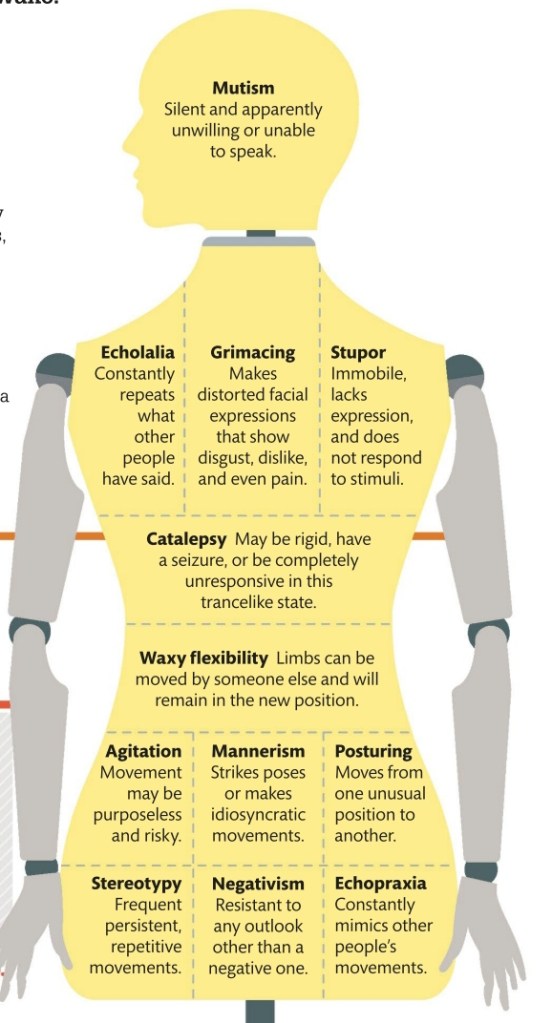
Mutism Silent and apparently unwilling or unable to speak.
Echolalia Constantly repeats what other
people have said.
Grimacing Makes
distorted facial expressions that show
disgust, dislike, and even pain
Stupor Immobile, lacks expression, and does not respond to stimuli.
Catalepsy May be rigid, have a seizure, or be completely unresponsive in this trancelike state.
Waxy flexibility Limbs can be moved by someone else and will remain in the new position.
Agitation Movement may be
purposeless and risky.
Mannerism Strikes poses or makes
idiosyncratic movements.
Posturing Moves from one unusual position to another.
Stereotypy Frequent persistent, repetitive
movements.
Negativism Resistant to any outlook other than a negative one.
Echopraxia Constantly mimics other
people’s movements.
TREATMENT
❯ Medication prescribed depends on the symptoms, but includes antidepressants, muscle relaxers, antipsychotics, and/or tranquilizers such as benzodiazepines, but these carry a risk of dependency . Outside help is needed to ensure compliance with medication and to teach living skills.
❯ Electroconvulsive therapy may be used when medication is ineffective. This involves transmitting an electric current through the person’s brain .
 Vnotes Education
Leave a comment