
This is an acutely disturbed state of mind characterized by lethargy, restlessness, delusions, and incoherence, which can result from a variety of causes including illness, poor diet, or intoxication.
What is it?
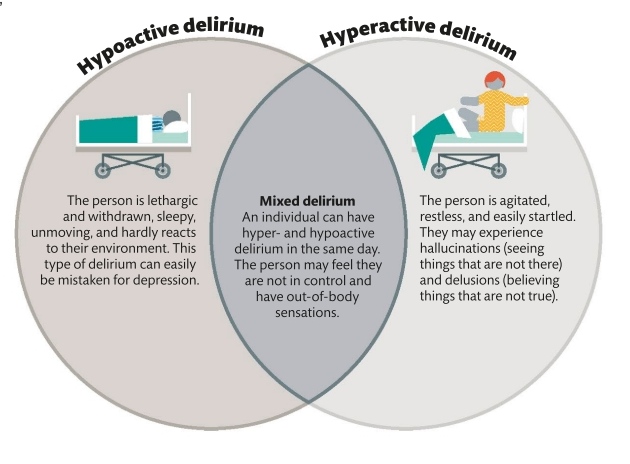
Delirium can have a serious impact on day-to-day life but is usually short-term. An individual has difficulty concentrating and may be confused as to where they are. They may move more slowly or quickly than usual and experience mood swings. Other symptoms include not thinking or speaking clearly, difficulty sleeping or feeling drowsy, reduced short-term memory, and loss of muscle control. Delirium may occur at any age,
but it is more common in the elderly and can be confused with dementia . It is generally a shortterm physical or emotional problem, but it can be irreversible. It is also possible to have dementia and delirium at the same time. Causes vary, but likely reasons are a medical condition, such as a chest or urinary tract infection, or a metabolic imbalance, such as low sodium. Delirium can also follow severe illness, surgery, pain, dehydration, constipation, poor nutrition, or a change in medication.
How is it diagnosed?
A doctor checks the symptoms and assesses movement, cognitive processes, and speech. Some practitioners use observational methods to diagnose or rule out delirium, by watching the person’s behavior over an entire day. Physical tests may be carried out to check for underlying illness.
TREATMENT
❯ Reality orientation therapy, involving the use of repeated visual and verbal orientation cues delivered in a respectful manner, to help the person understand their surroundings and situation.
❯ Lifestyle management including routine and scheduled activity with exercise to minimize confusion and help the individual regain some day-to-day control.
❯ Antibiotics prescribed if illness is identified as the cause, together with rehydration if necessary.
Up to 50%
of elderly patients in the hospital suffer from delirium
 Vnotes Education
Leave a comment