
Previously known as hypochondria, this condition involves a person worrying excessively about becoming seriously ill, even if thorough medical examinations reveal nothing.
What is it?
Hypochondria is considered to be two separate conditions: illness anxiety disorder if there are no symptoms or they are mild, or somatic symptom disorder (pp.108− 109) if there are major physical symptoms causing emotional stress. People with illness anxiety disorder become excessively preoccupied with their health. Some have exaggerated feelings about an existing condition (about 20 percent do have heart, respiratory, gastrointestinal, or neurological problems). Others experience unexplained symptoms. They convince themselves that these symptoms indicate a serious illness that has been missed by medical teams. Illness anxiety is a
long-term condition that fluctuates in severity and may worsen with age or stress. It can be triggered by a major life event.Someone who is anxious or depressed is more prone to the disorder. Assessment and treatment focus on stopping avoidance and reassurance behaviors (below), reevaluating health beliefs, and increasing the person’s tolerance of uncertainties.
Endless checks
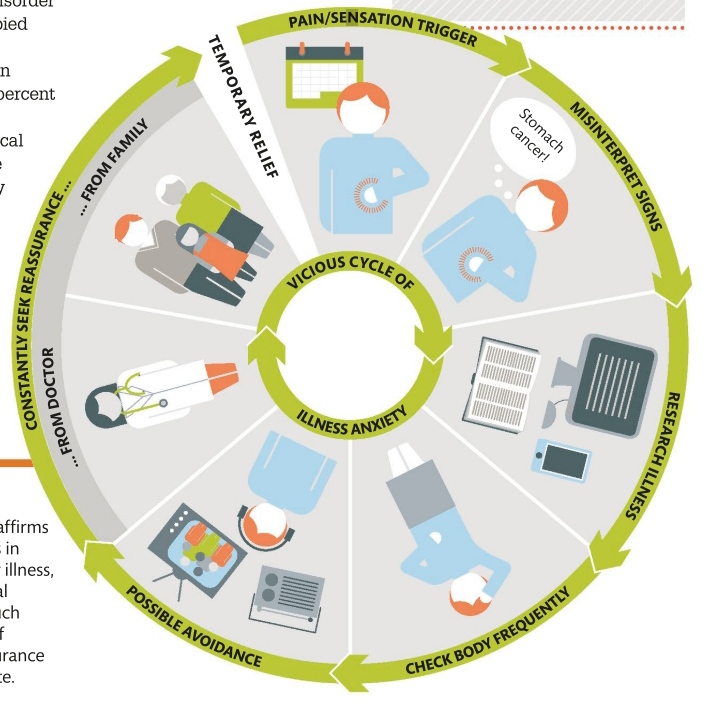
Disbelief in medical opinion reaffirms the person’s anxiety and results in extra focus on the body part or illness, which causes panic and physical symptoms. Safety behaviors, such as avoiding situations for fear of exposure to disease, and reassurance from others provide brief respite.
TREATMENT
❯ Behavioral therapies such as attention training to keep from overattending to body sensations and help reevaluate beliefs.
❯ Antidepressants prescribed along with therapy.
 Vnotes Education
Leave a comment