
This is a debilitating anxiety-related condition characterized by intrusive and unwelcome obsessive thoughts that are often followed by repetitive compulsions, impulses, or urges.
What is it?
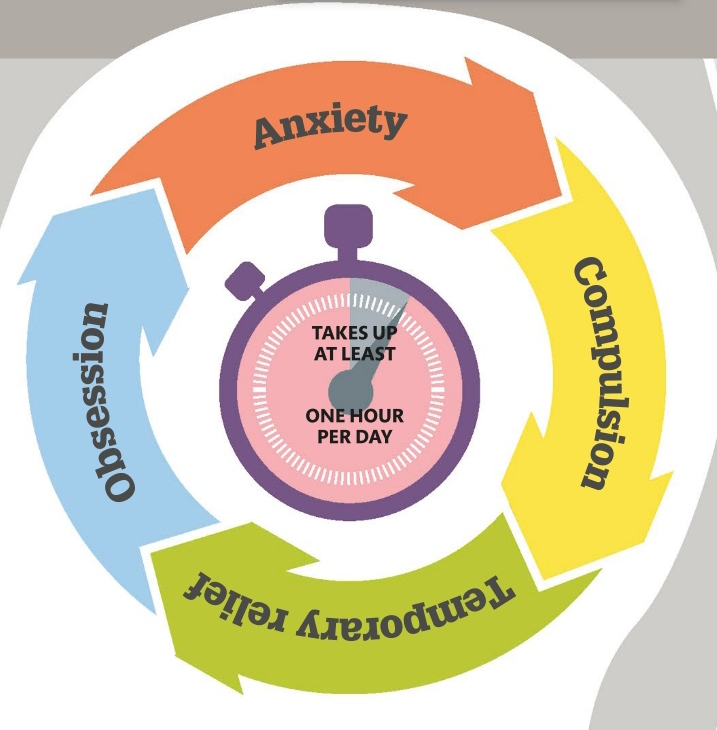
OCD is often marked by thoughts that reflect an excessive sense of responsibility for keeping others safe and an overestimation of the perceived threat an intrusive thought signifies. OCD is cyclical (below) and often starts with an obsessive thought, which the person focuses on, in turn raising anxiety levels. Checking everything is in order and following rituals can provide relief, but the distressing thought returns.The obsessive thoughts and compulsions are timeconsuming, and individuals may struggle to function day to day or have a disrupted social or family life. The disorder may be triggered by an event in the person’s history that they felt highly responsible for. Family history, differences in the brain, and personality traits also play a part. An examination of thoughts, feelings, and behavior patterns determines OCD, but its similarity to other anxiety disorders can make diagnosis difficult. With pure OCD, a person has
intrusive and disturbing thoughts about harming people, but rather than performing observable compulsions, their compulsions take place in the mind.
OBSESSIONS (THOUGHTS)
Fear of causing harm Excessive attention paid to thoughts about actions that could cause harm.
Intrusive thoughts Obsessive, repetitive, and even disturbing thoughts about causing harm.
Fear of contamination Thinking that something is dirty or germ-ridden and will cause illness or death to the person or someone else.
Fear related to order or symmetry Concern that harm could result unless tasks are done in a specific order.
COMPULSIONS (BEHAVIORS)
Rituals
Following rituals such as counting or tapping to prevent harm and provide relief from the cycle of fear.
Constant checking Examining household appliances, lights, taps, locks, windows (to counter fear of causing harm by fire), driving routes (fear of having run a person over), or people (fear of upsetting someone).
Correcting thoughts Trying to neutralize thoughts to prevent disasters.
Reassurance
Repeatedly asking others to confirm everything is OK.

TREATMENT
❯ Cognitive behavioral therapy involving exposure to triggers and learning how to control responses.
❯ Anti-anxiety medication and/or antidepressants to help relieve symptoms of depression and anxiety.
❯ Specialist residential treatment in addition to therapy and medication for extremely severe cases of OCD.
“An average person can have four thousand thoughts a day, and not all of them are useful or rational.”
David Adam, British author
 Vnotes Education
Leave a comment