
This anxiety disorder can develop in children whose natural concern about being separated from their parent, primary caregiver, or home persists beyond the age of two years.
What is it?
Separation anxiety is a normal adaptive reaction that helps to keep babies and toddlers safe while they attain competence to cope with their environment. However, it can be a problem if it persists for more than four weeks and interferes with age-appropriate behavior. The child becomes distressed
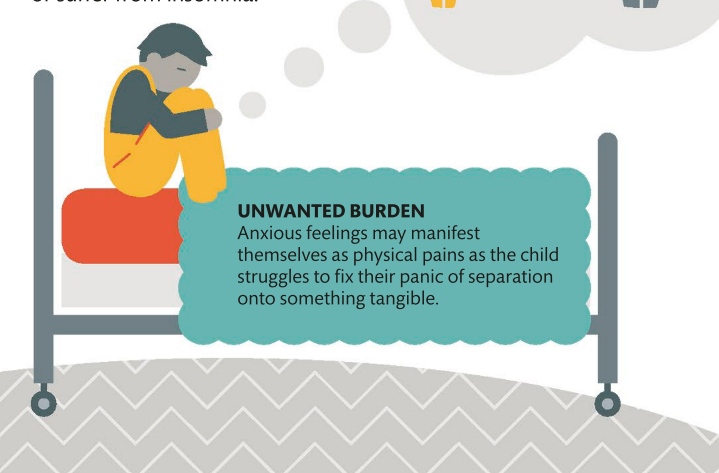
when they need to leave a primary caregiver and fears that harm will come to that person. Situations such as school and social occasions can also be a trigger. Affected children may experience panic attacks, disturbed sleep, clinginess, and inconsolable crying. They may complain of physical problems such as stomachache, headache, or just feeling unwell for no apparent reason. Older children may anticipate feelings of panic and struggle to travel independently. Separation is the most common
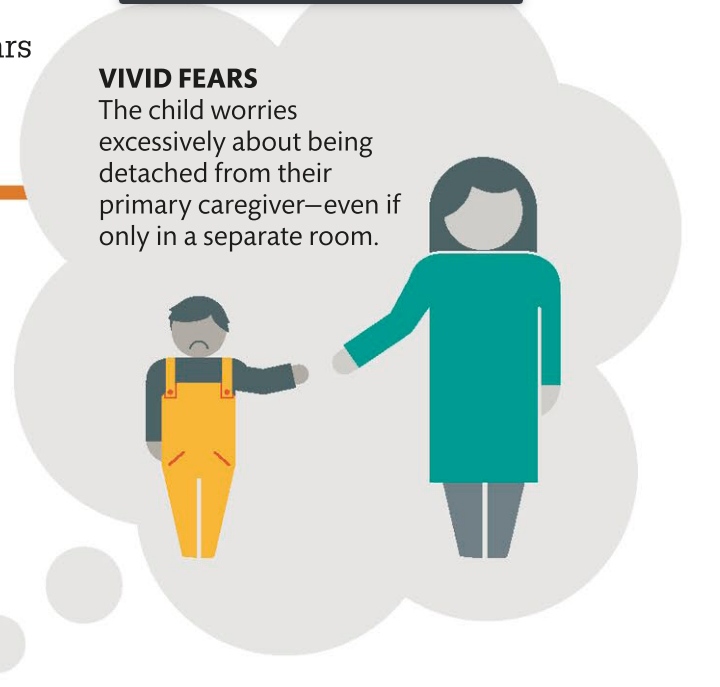
VIVID FEARS The child worries excessively about being detached from their primary caregiver—even if only in a separate room.
anxiety disorder in children under 12 years old. It can also affect older children, and it may be diagnosed in adulthood. The disorder can develop after a major stressor such as the loss of a loved one or pet, moving, changing schools, or parents’ divorce. Overprotective or intrusive parenting can contribute. Separation anxiety is very
treatable with behavioral therapies that include building planned separations into times of the day when the person is feeling least vulnerable.
Being alone
Vivid fear
UNWANTED BURDEN
TREATMENT
❯ Cognitive behavioral therapy for anxiety management; assertiveness training for older children and adults.
❯ Parent training and support to promote and reinforce short periods of separation that are then extended gradually.
❯ Anti-anxiety medication and antidepressants for older individuals, in combination with environmental and psychological interventions.
 Vnotes Education
Leave a comment