
Knowing where customers shop, where a product is sold, and how efficiently goods can be delivered to the consumer—called “place” in marketing terms—is essential to sales success.
How it works
Whether a company sells goods or services, customers must be able to find and buy those products as easily as possible. Businesses have to decide on the best sales outlet and sales channel to get their products to customers in a way that benefits both parties.
A sales outlet is the place where a product is sold, suchas stores, catalogs, or e-commerce sites. Sales channels are the merchants, agents, and distributors who take a product from the seller and bring it to the consumer.
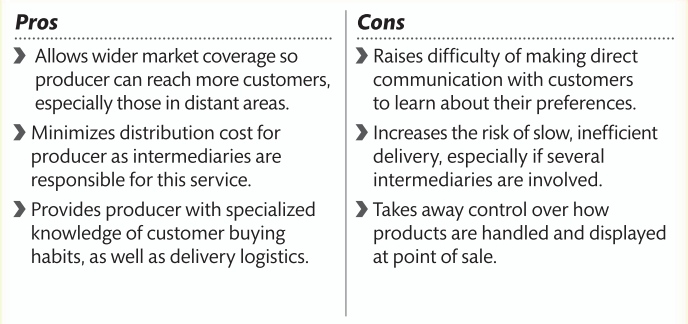
PROS AND CONS OF USING INTERMEDIARIES
Main distribution channels
A product reaches the marketplace through one of four main types of distribution channels. The most suitable distribution channel is usually dictated by where customers prefer to buy the product.
Producer A producer chooses the distribution channel, or a combination of channels, that will maximize the number of customers it can reach while keeping costs as low as possible.

Selling direct to consumers Product is sold directly by the producer, online, or through a mail-order catalog, and delivered to customer without intermediary.
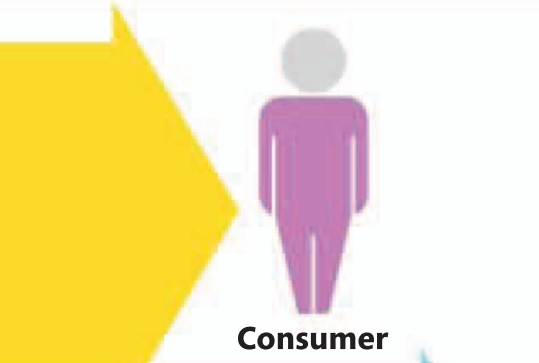
Example E-commerce site selling vitamins; they are sent to customer by mail or delivery service.
Selling through retailers Goods are delivered by producer directly to retail outlets; retailer adds a markup onto the price they pay to producer.
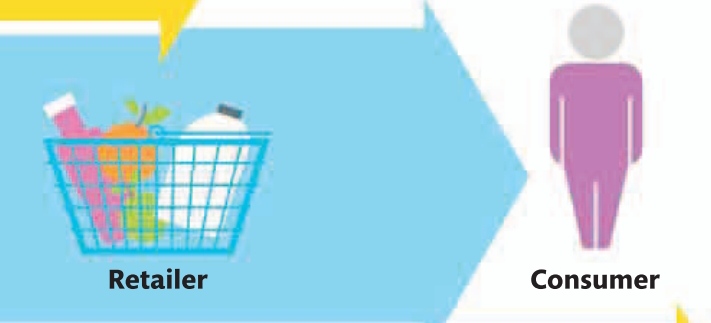
Example Electronics company distributes its television sets to a chain of retail stores.
Selling through wholesalers and retailers Products are distributed in two stages: by producer to wholesaler and then wholesaler to retailer.
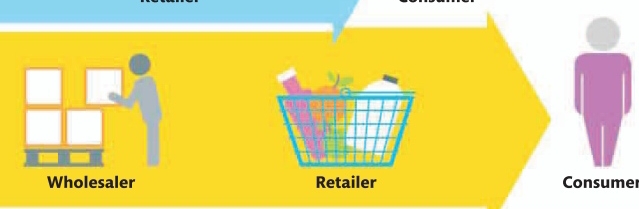
Example Farmer sells apples to wholesaler, who sells them on to supermarkets.
Selling through an agent Products are distributed in three stages: from producer to agent, from agent to wholesaler, and then on to retailer.
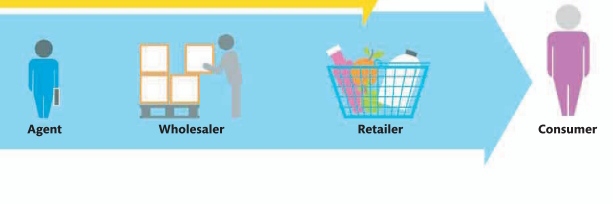
Example Chocolatier in France uses import agent in Japan to sell its products to wholesalers and on to retailers.
NEED TO KNOW
❯ Channel margin The cost intermediary adds to producer’s selling price, which is added to price paid by customer
❯ Push strategy Method in which producer promotes products to wholesalers, wholesalers to retailers, and retailers to customer
❯ Pull strategy Use of advertising and promotion to sell to customer
 Vnotes Education
Leave a comment