
Price is a crucial variable of the marketing mix: it generates revenue, while product, promotion, and place yield costs. Pricing may also be the marketer’s most potent tool because even minor tweaks affect returns.
How it works
To set the price of a product, marketers adopt a pricing strategy based not only on the actual cost of production but also on the perceived attractiveness of the product to consumers. If consumers think a product has a high value, they will be prepared to pay more for it, but if they believe the value of the product is low they will look for the cheapest price among competing products. A business must also take into
account the price charged by rival organizations, particularly in competitive markets. Setting a price above that charged by competitors can only work if the product is superior to others.
Pricing strategies
A number of different strategies can be used to determine the price of a product. Cost-plus pricing is a retail markup used by many companies to ensure a profit is made. For example, adding a markup of 50 percent to a product that costs $2 to make means that every unit will sell for $3, generating a $1 profit.
Pricing matrix: price vs. quality
A product’s quality affects its price tag— the higher the quality, the more money consumers will pay for it—but marketers use strategies that play on the interaction between price and perceived quality.
Low quality
Economy
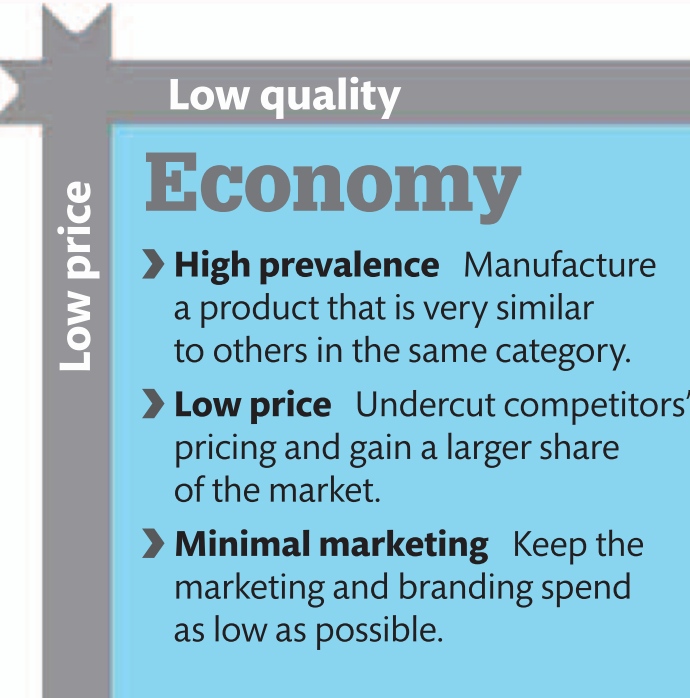
❯ High prevalence Manufacture a product that is very similar to others in the same category.
❯ Low price Undercut competitors’ pricing and gain a larger share of the market.
❯ Minimal marketing Keep the marketing and branding spend as low as possible.
Skimming
❯ High launch price Charge more than usual in the short term while a product is seen as unique.
❯ Correct timing Set a higher price when the business has a temporary advantage in the marketplace, before competing products appear.
❯ Price adjustment Reduce the price once competitors enter the market, or to draw more customers.
High quality
Market penetration
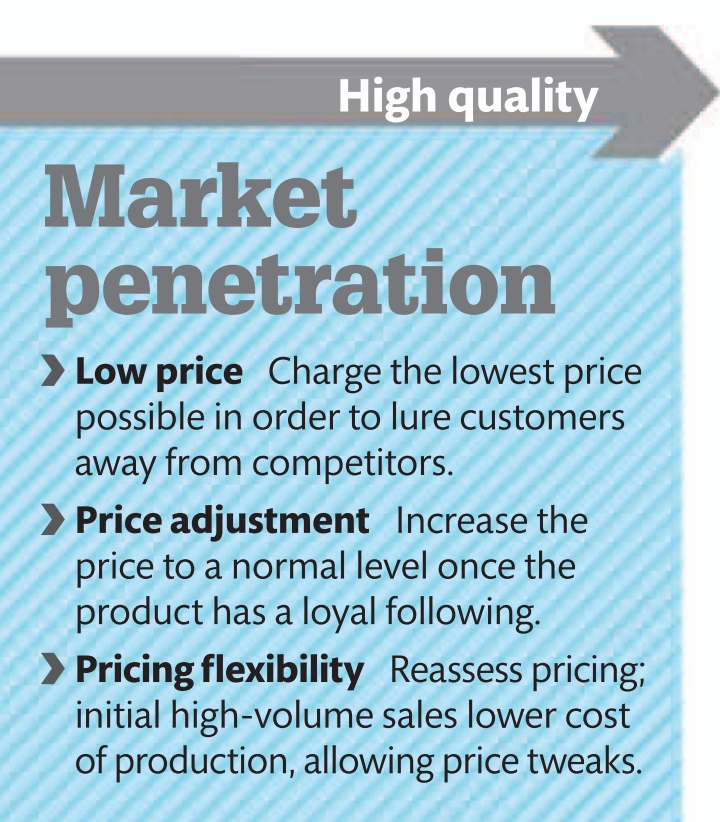
❯ Low price Charge the lowest price possible in order to lure customers away from competitors.
❯ Price adjustment Increase the price to a normal level once the product has a loyal following.
❯ Pricing flexibility Reassess pricing; initial high-volume sales lower cost of production, allowing price tweaks.
Premium
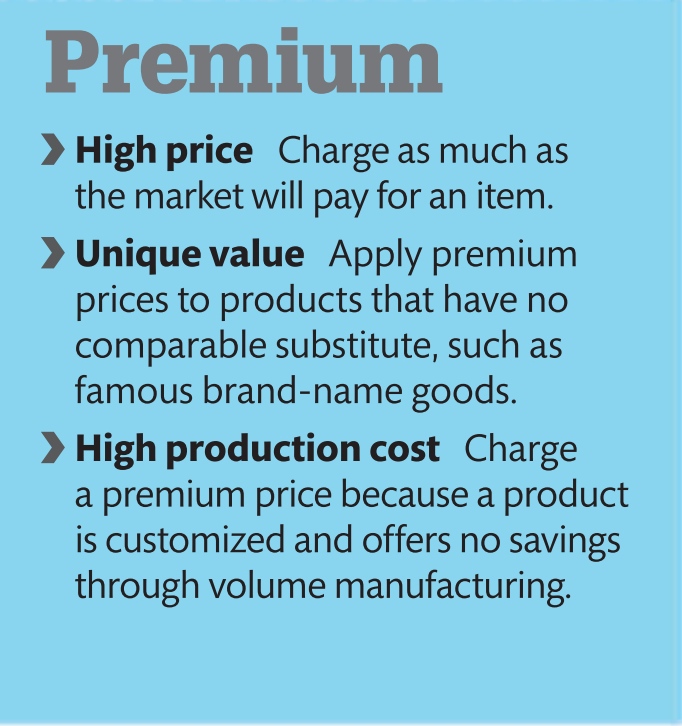
❯ High price Charge as much as the market will pay for an item.
❯ Unique value Apply premium prices to products that have no comparable substitute, such as famous brand-name goods.
❯ High production cost Charge a premium price because a product is customized and offers no savings through volume manufacturing.
Other pricing strategies
Psychological pricing Manipulate a customer’s emotions, appealing to their thrifty side or desire for prestige.
Bundle pricing Offer several products for an overall price, providing better value than buying separately.
Geographic pricing Charge different prices for the same product in different locations.
Non-pricing strategies Avoid adjusting the price to attract sales, promoting superiority of product instead.
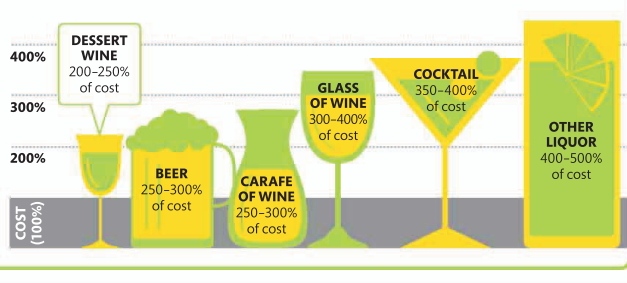
PRICING MARKUP COMPARISON
Different industries adopt different approaches to markups. A markup of two to five times the cost is typically applied to drinks served in bars and restaurants. The highest markup is usually applied to the second-cheapest bottle of wine on the wine list, as people tend to avoid the cheapest item.
NEED TO KNOW
❯ Price, value, and cost Price refers to the amount a product sells for; value refers to the product’s actual worth; cost is the amount that has been spent to manufacture the product.
5%
increase in price is worth more than a 5% increase in market share
 Vnotes Education
Leave a comment