
Existing customers help businesses generate the majority of profit and growth through making additional sales and referrals, and so retaining these customers is a high priority for marketers.
Measure customer retention level Track how many customers repeat purchase or buy more products.
How it works
There are two stages to the process of customer retention: measuring the current rate of retention, and applying strategies to manage and improve it.
Practices include identifying the most valuable customers and nurturing relationships with them. The least valuable or most costly customers may be dropped if they show little development potential.
Identify satisfied customers
Customer referral Measure the number of referrals an individual customer generates.
Loyalty Pinpoint customers who are active in the brand’s loyalty program.
Identify the dissatisfied
Defection Find out why certain customers have left and which competitor they have gone to.
Complaint analysis Examine written customer complaints and call-center records.
Introduce retention improvement strategy
Early warning systems Anticipate any problems and alert customers in advance.
Recovery programs Apologize for any mistakes and make amends to woo dissatisfied customers back.
Customer feedback surveys Listen to customers and identify people at risk of defecting.
Loyalty programs Reward customers with improved incentives for staying loyal.
Boost customer service service
Offer employees incentives to build customer relations.
Monitor and measure by analyzing
Customer satisfaction Assess rate of customer complaints and recommendations.
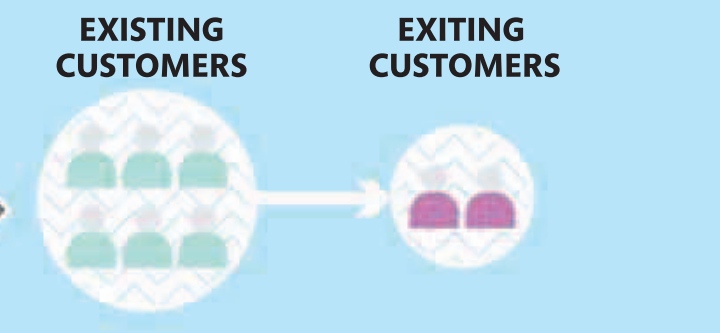
Attrition rate Calculate the number of customers retained (existing), lost (exiting), or gained in a given period.
Revenue targets Measure revenue targets against cost of customer retention efforts.
Upsell and cross-sell leads Identify customers who may buy larger products, or related items.
Net promoter score ® Use management tool to gauge how likely a customer is to recommend company to others.
Customer retention savings Calculate savings made in marketing spend by retaining existing customers.
TOP FIVE REASONS FOR LOSING A CUSTOMER
Senses indifference from provider
Dissatisfied with product or service
Unhappy with price
Lured by competition
Natural attrition (death, relocation)
NEED TO KNOW
❯ Customer lifetime value (CLV) Measure of the amount customer will contribute to company revenue in the long term
❯ Customer retention rate (CRR) The number of customers retained over a given period, expressed as a percentage
❯ Customer acquisition cost (CAC) The amount company spends to gain a customer; also called cost of customer acquisition (COCA)
 Vnotes Education
Leave a comment