
An individual with this eating disorder persistently eats substances that are not food, such as dirt or paint. It can lead to serious complications if the substance is dangerous when ingested.
What is it?
Children and adults with pica may eat, for example, animal feces, clay, dirt, hairballs, ice, paint, sand, or metal objects such as paper clips. It is more common in children than adults—between 10 and 32 percent of children age 1–6 years are affected by pica. The odd eating behavior can create complications such as lead poisoning or intestinal damage from sharp objects. For a doctor to diagnose pica, the pattern of behavior must last for at least one month. After a medical examination to rule out causes such as nutrient deficiency or anemia as the root of the unusual cravings, a specialist health professional evaluates the presence of other disorders such as developmental disabilities or OCD .
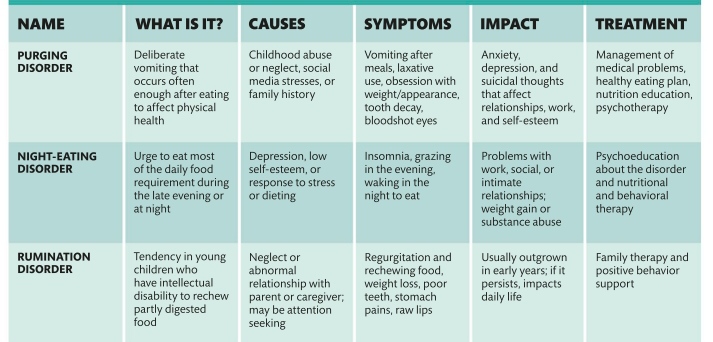
RARER EATING DISORDERS
Irregular eating habits, eating unusual items, distress or avoidance around eating or mealtimes, or concerns about body weight or shape characterize eating disorders.
TREATMENT
❯ Behavioral therapies to associate healthy eating with positive reinforcement or reward. Positive behavior support to address aspects of family and home environment and minimize recurrence.
❯ Medication to enhance dopamine levels; supplements to remedy any nutrient deficiencies.
28% of pregnant women are affected by pica
 Vnotes Education
Leave a comment