
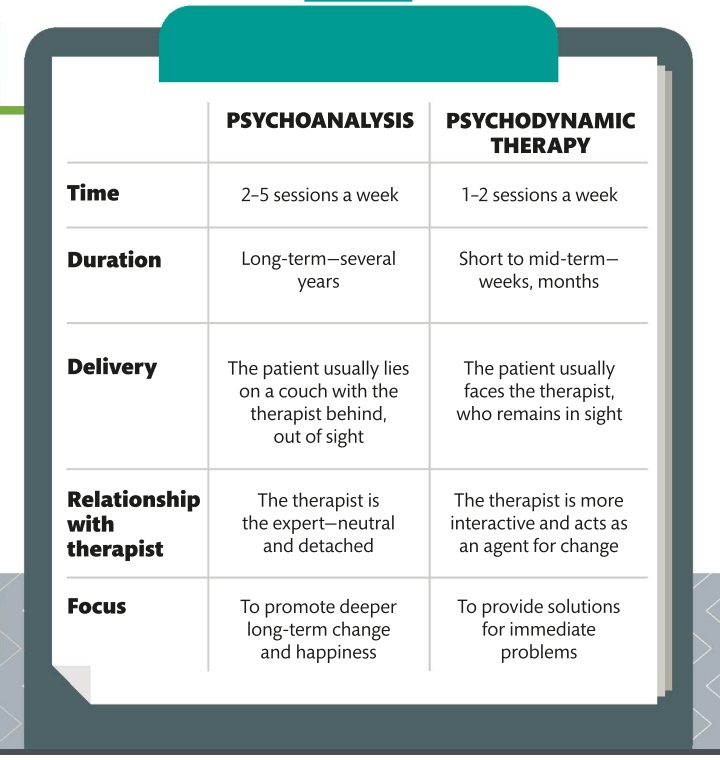
The purposes of psychoanalysis and psychodynamic therapy as specific methods are similar—to integrate the unconscious and conscious mind—but the depths of the processes differ.
What is it?
The founder of psychoanalysis,
Sigmund Freud, developed his “talking therapy” after working in Paris with Jean-Martin Charcot, a neurologist who discovered that his patients’ symptoms lessened after they talked about past traumas. In the early 1900s, Freud
established techniques such as free association, dream analysis, and resistance analysis, still widely used today. Silences in therapy are often as meaningful as what is said. All psychoanalysis assumes that psychological problems stem from the unconscious; that unresolved issues or repressed trauma hidden in the unconscious mind cause symptoms such as anxiety and depression; and that treatment can raise these conflicts to the surface so the client can resolve them.Psychoanalysis often takes years, deconstructing and rebuilding the client’s entire belief system. It benefits those who are robust of mind, with an outwardly successful life, but are aware of long-term worries or torments, such as an inability to stay in a relationship. Psychodynamic therapy is less intense and focuses on present-day problems, such as a phobia or anxiety.
INTERPRETATION The therapist stays relatively quiet, reading between the lines of what the client says to help them overcome subconscious limitations.
THE THERAPIST The analyst listens but does not judge so that the client need not fear saying something shocking, illogical, or silly.
 Vnotes Education
Leave a comment