
Psychotherapies use a range of strategies to help people modify the thoughts, actions, and emotions that are harmful to their physical or mental health, and also to promote improved self-awareness.
Therapeutic action
Psychotherapies are often referred to as “talking therapies” because communication with a therapist is the key agent for change. The aim is to manage adversity; maximize potential; clarify thought; provide support, encouragement, and accountability; and cultivate peace of mind and depth of consciousness. Therapy seeks to improve a client’s understanding of themselves, others, and their relational dynamics. It may also be used to define personal goals and organize behavior into achievable systems.Psychotherapy can uncover old wounds and help a client understand how past negative experiences currently affect them in unhealthy ways. It can also help them change the ways they react to external stimuli, and how they internally process and interpret experiences, allowing them to move beyond current states of thought and behavior. Therapy can empower a client to explore their psyche and spiritual self and to achieve more satisfaction in their lives. It is designed to increase self-acceptance and self-confidence, and to diminish unhelpful negative or critical thinking.
Types of therapy
Therapeutic approaches and methods are as diverse and creative as the mind itself, and psychological progress can be achieved in many ways. The main types of therapy are categorized according to the philosophy on which they are based. Methods of delivery vary and might comprise individual sessions, group therapy, or online guidance and task completion.
PSYCHOANALYTICAL AND PSYCHODYNAMIC
These approaches are based on the concept that unconscious beliefs underlie maladaptive thoughts and behaviors. Gaining an insight into these beliefs can explain and relieve problems. The therapist and client also work to develop healthier ways of dealing with these previously repressed feelings, and to foster the client’s inner resources and capability to manage their troubles.
COGNITIVE AND BEHAVIORAL
These therapies stem from the belief that it is not the things that happen to a person that upset them, but it is the way they think about the things that happen to them, and the meaning that they assign to their experience, that upsets them. Cognitive and behavioral therapies show people that they hold the power to change the way they think about things, and the way they react and behave as a result of these thoughts.
HUMANISTIC
This approach prioritizes listening over observing. To this end, therapists use open-ended questions and qualitative tools to study personality and encourage the client to explore their own thoughts, emotions, and feelings. The therapist sees the client as inherently capable of and responsible for achieving personal growth, and not as a set of flawed unconscious drives.
SYSTEMIC
The “systems” approach enables people to work out issues arising from the interplay of relationships. Therapists can gain deeper understanding of problems by working with everyone in a system (family or group), hearing differing points of view, and watching people interact. This allows people to explore their identity as part of a larger group, and also has the advantage of strengthening their community network—useful for issues that worsen with isolation, such as addiction.
ROLE OF MEDICINE The brain and behavior exert a continual reciprocal influence on one another. Medication can alter brain chemistry to improve mood, concentration, memory, and motivation; increase energy; and decrease anxiety. This improved functioning can alleviate the symptoms of mental illness and enable positive behavioral change.
GROUP THERAPIES
12-step program The 12-step model is a group therapy approach specifically used to tackle addictions (such as to drugs, alcohol, or sex), and compulsive behaviors like eating disorders. An essential part of overcoming addictions or compulsions is support from and connection to a community. Group therapy reduces isolation and associated shame, shows people that they are not alone in their struggle, and provides a network for support and accountability.
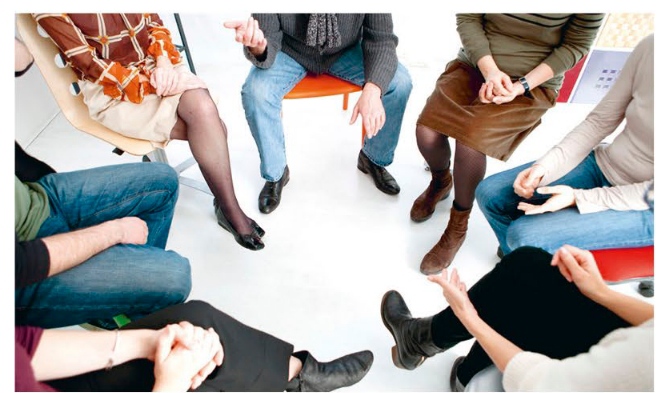
Self-help groups These support groups focus on self-disclosure. Whereas some groups have a professional lead, others are peer-led. Shared experience is valued over professional knowledge.
28%
of people in the UK have consulted a psychotherapist
 Vnotes Education
Leave a comment