
While a merger results in a bigger company, a divestiture reduces the size of a business by breaking it down into smaller components or divisions, which are then sold off or dissolved.
How it works
The typical scenario for a divestiture is a company that is struggling to pay off debt it has taken on to expand into new areas of business that are not yet profitable. To save the rest of the company from the burden of debt, management decides to start a divestiture. Generally, the goal is to shed the least profitable areas of operation, or from the potential buyer’s point of view, those which have promise but are not yet profitable. The process of restructuring by divestiture is designed to free the company of divisions with low return, to reduce debt and financing requirements, and to give the shareholders a stronger return. The market price of the parent company’s shares often bounces back strongly and its spin-off companies may thrive too.
Divestiture in practice
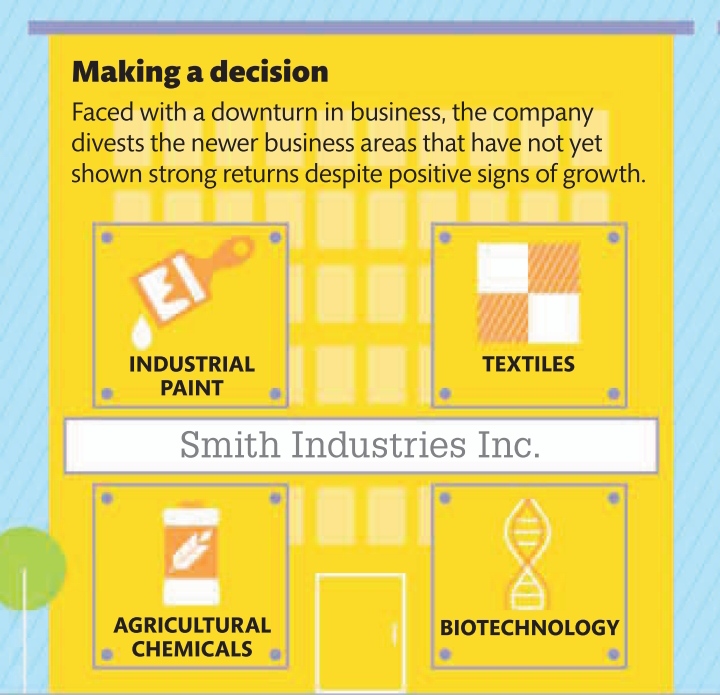
Smith Industries Inc. is one example of an industrial paint conglomerate that has grown rapidly over the past five years, due to an increase in profits from its expanding sales in China. It diversified into agricultural chemicals, textiles, and biotechnology, and set up a separate division for each. Share prices fell in response to poor financial performance.

SUCCESSFUL SPIN-OFFS
Mondelez The spin-off of Kraft Foods owns snack foods Oreos, Ritz, and Trident.
Coach Sara Lee food’s spin-off makes luxury leatherware.
Expedia Media company IAC hived off online travel to Expedia.
The shareholders benefit
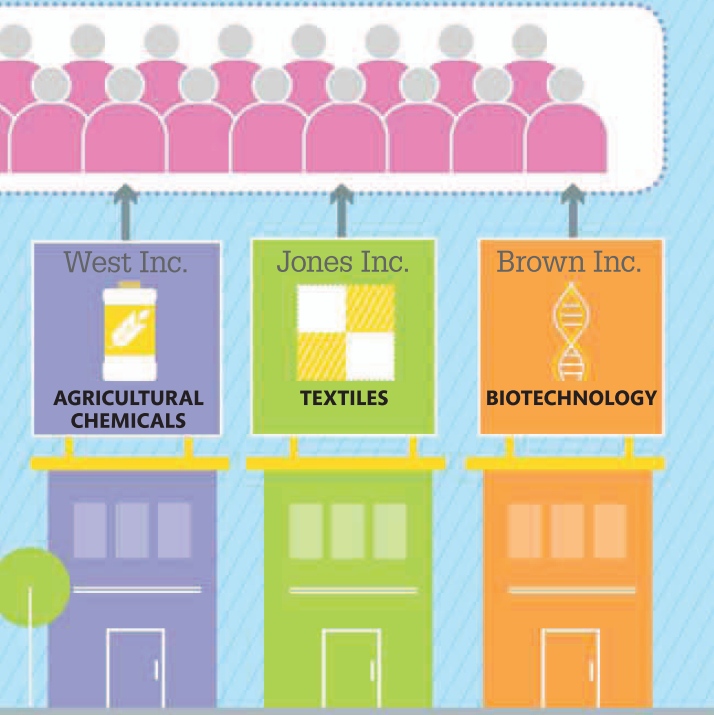
Shareholders in the original company also receive the same percentage holding in shares from the three new companies.
One company becomes four
The three divisions are sold off to separate investors and become three separate companies. Shares for each are sold on the stock market. The parent company is reduced to its core business. Its share price rebounds.
NEED TO KNOW
❯ Spin-off New company formed as the result of a divestiture; also called a hive-off
❯ Tracking stock Special type of shares issued by a parent company for the division or subsidiary they will sell; tracking stock is tied to the performance of the specific division rather than the company as a whole; also known as targeted stock
❯ Letter of intent Letter stating serious intention to do business, often concerning M and A
❯ Reverse merger Not to be confused with a divestiture, this is a quick and cheap method for a private company to go public by buying a shell stock— a public company that is no longer operating because it went bankrupt or was simply closed.
❯ Demerger Term commonly used in the UK for divestiture
52%
the potential rise in a parent company’s share price following a divestiture
 Vnotes Education
Leave a comment