
A serious eating disorder, bulimia is characterized by a person controlling their weight through severely restricting intake, then binge eating and purging the body of the food.
What is it?
People with bulimia have an abnormal fear of putting on weight and so become obsessed with food and dieting. Unlike those with anorexia , they are usually at or near a normal weight for their height and build. However, like a person with anorexia, they have a distorted self-image and believe they are too fat. A person with bulimia may often
appear tense or anxious and behave furtively, rapidly consuming large amounts of food in secret before disappearing to the bathroom to make themselves vomit. This behavior is a mechanism for coping with life events—although in fact it makes daily living a struggle—and is linked to depression, anxiety, and social isolation. Pressure to conform to body shapes promoted by the fashion and beauty industries and a family history of bulimia increase the risk. Bulimia is more common in females, but incidence in males is rising. Puberty and selfconsciousness are often triggers, and boys and girls in their teens are especially vulnerable to bulimia if teased as an overweight child. Bulimia can cause irreversible
damage to the heart, bowels, teeth, and fertility. Treatment depends on the severity of the condition, and recovery can be a long process.
Binge−purge cycle
The person has a low self-opinion and sees losing weight as a way of gaining selfworth. They may also exercise fanatically to burn off the additional calories and avoid social occasions that involve food.
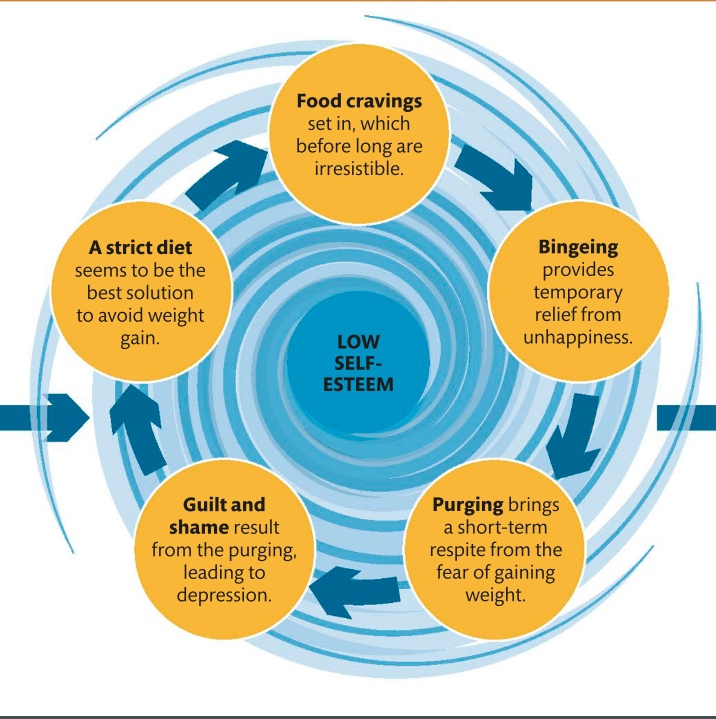
Causes
❯ The individual may have a caregiver who thinks looks are important and criticizes their weight or appearance.
❯ The person may want to take control of an aspect of their lives, particularly if recovering from a traumatic event.
❯ Images of celebrities with flawless, thin bodies trigger the start of a strict diet.
❯ Despair sets in when the person cannot keep to the diet.
Physical effects
❯ Frequent weight gain and loss.
❯ Bad breath, stomach pain, sore throat, and damaged tooth enamel from acid levels in vomit.
❯ Dry skin and hair, hair loss, brittle nails, lethargy, and other signs of poor nutrition.
❯ Heart strain, hemorrhoids, and weak muscles from misuse and overuse of laxatives and diuretics.
❯ Irregular/absent periods in females.
❯ Feeling bloated and/or constipated.
❯ Calluses on the back of hands from induced vomiting.
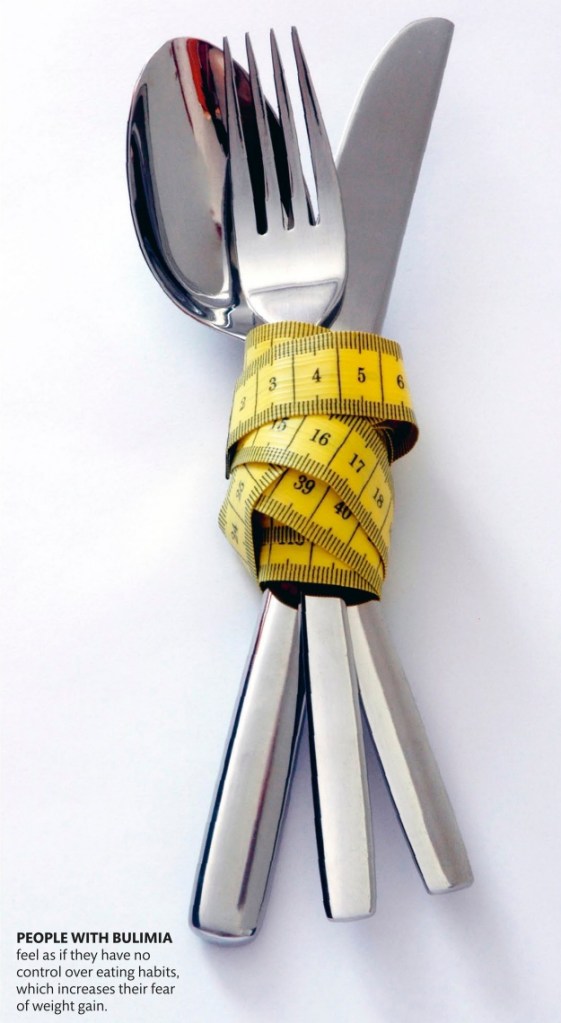
PEOPLE WITH BULIMIA feel as if they have no control over eating habits, which increases their fear of weight gain.
TREATMENT
❯ Psychotherapies such as group therapy, self-help, or one-on-one cognitive behavioral therapy or interpersonal therapy.
❯ Antidepressants prescribed along with therapy.
❯ In-patient treatment needed in extreme cases.
1.5%
of American women have or have had bulimia in their lifetime
 Vnotes Education
Leave a comment